

Which CNC Machined Prototypes for Robot Parts Help Me Reduce Risk Before Production?
2026-05-11
When I work on a robotics project, I rarely worry about only one part. I worry about motion, fit, strength, weight, heat, assembly, testing time, and the very expensive moment when a prototype fails after the design team thought it was ready. That is why I pay close attention to CNC Machined Prototypes for Robot Parts during early validation. In practical prototype development, I see companies such as Ningbo Wangdefu Precision Machinery Co.Ltd. becoming relevant because robotics teams often need accurate machined components that can move from CAD drawings to real-world testing without wasting weeks on uncertain results.
Robot parts are not ordinary mechanical pieces. A housing that looks simple on a screen may need to hold a bearing, guide a shaft, protect sensors, manage cable space, and survive repeated movement. A joint support may seem small, but one wrong tolerance can create vibration, poor alignment, or premature wear. I have learned that prototypes are not just samples for display. They are decision-making tools. The better the prototype, the faster I can confirm whether the design deserves to move forward.
That is where CNC Machined Prototypes for Robot Parts become valuable. They allow me to test parts made from real engineering materials, check assembly accuracy, observe load behavior, and correct design details before mass production begins. For robotics engineers, procurement teams, and product developers, this can be the difference between confident development and expensive trial-and-error.
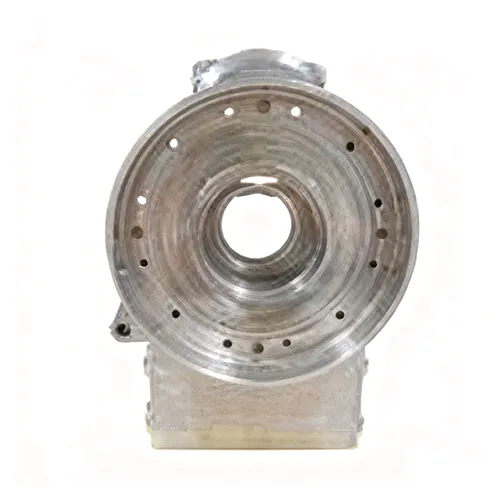
What Makes Robot Part Prototyping More Demanding Than General Machining?
When I evaluate robot components, I usually find that the difficulty comes from the relationship between precision and function. A robot arm shell, joint housing, actuator bracket, sensor mount, gripper component, or structural connector must often support movement while staying light, stable, and repeatable. If the part is slightly distorted, the robot may still assemble, but it may not perform correctly after thousands of cycles.
Robotic systems also combine mechanical, electrical, and control elements. A machined part may need to leave space for wires, fit around motors, support bearings, protect delicate modules, and maintain alignment under changing loads. Because of this, I prefer prototypes that can closely represent final-use conditions instead of purely visual models.
- Dimensional accuracy matters because robotic parts often connect with bearings, shafts, motors, gears, and fasteners.
- Material behavior matters because strength, rigidity, weight, and wear resistance influence real performance.
- Surface finish matters because sliding, rotating, sealing, and assembly surfaces must remain stable.
- Repeatability matters because one successful part is not enough if the next batch cannot match it.
- Lead time matters because robotics teams often revise designs quickly during testing.
In this environment, CNC Machined Prototypes for Robot Parts give me a more reliable path than guessing from drawings alone. A properly machined prototype helps reveal interference, weak geometry, excessive weight, poor mounting choices, and difficult assembly points before the design becomes expensive to change.
Why Do I Prefer CNC Machining When Robot Parts Need Real Testing?
I may use different prototyping methods depending on the project, but CNC machining becomes especially useful when I need real material performance. Printed models can help me understand shape and basic ergonomics, but robotics parts often need stronger validation. If a prototype must support load, align with other parts, or survive movement, I want something closer to the final component.
CNC machining removes material from solid metal or engineering plastic. This gives the prototype better structural integrity and more realistic mechanical behavior. For robot parts, that is important because the test result should tell me something meaningful about the final product, not just the appearance of the design.
I also value CNC machining when a part has tight holes, flat mounting surfaces, complex pockets, threaded areas, or critical contact zones. These features influence how smoothly a robot moves and how reliably it performs. With CNC Machined Prototypes for Robot Parts, I can inspect details, assemble the part into a system, and adjust the design based on real feedback.
| Project Concern | Why It Matters in Robot Parts | How CNC Machining Helps |
| Fit and alignment | Robot joints, housings, and brackets must match motors, shafts, bearings, and fasteners. | Machining supports accurate holes, slots, threads, and mating surfaces. |
| Strength and rigidity | Weak parts can deform under load and affect motion accuracy. | Solid materials provide realistic mechanical testing before production. |
| Weight control | Excess weight can reduce speed, increase energy use, and affect balance. | CNC machining can create pockets, ribs, and lightweight structures based on the design. |
| Surface quality | Moving parts need controlled contact surfaces to reduce friction and assembly issues. | Machining can produce smoother functional surfaces and controlled finishes. |
| Design changes | Robotics development often requires several rounds of improvement. | Small-batch CNC prototypes allow faster revision before tooling or mass production. |
Which Robot Parts Are Usually Suitable for CNC Machined Prototypes?
In my experience, CNC machining is suitable for many robotic prototype parts, especially when the design must be tested under real assembly conditions. I would consider it for both visible structural components and hidden functional parts. The main question I ask is simple: does this part affect movement, fit, strength, or reliability? If the answer is yes, CNC machining is usually worth considering.
- Robot joint housings that need accurate bearing seats and motor mounting areas.
- Arm shells and structural covers that require lightweight strength and clean assembly edges.
- End-effector brackets used for grippers, sensors, welding tools, or inspection modules.
- Actuator supports that must hold moving parts with stable alignment.
- Sensor mounts where positioning accuracy can affect data collection.
- Prototype frames for humanoid robots, service robots, industrial robots, and automation equipment.
- Custom connectors that link multiple mechanical and electronic modules.
For these applications, CNC Machined Prototypes for Robot Parts help me see whether the design is ready for real use. A digital model may look correct, but a machined part shows whether screws are accessible, whether cable routing is reasonable, whether edges interfere with nearby components, and whether the part feels too heavy or too weak.
How Do CNC Machined Prototypes Help Me Control Cost Before Mass Production?
Cost control in robotics is not only about buying cheaper parts. In many cases, the biggest cost comes from discovering problems too late. If I approve tooling before checking the prototype carefully, one small design mistake can become a costly production issue. CNC prototypes help reduce that risk by giving me a practical way to test, revise, and confirm the part before committing to larger production steps.
I use prototypes to answer questions that drawings cannot fully solve. Can the part be assembled quickly? Is the wall thickness reasonable? Are there sharp internal corners that increase machining difficulty? Can the component be simplified? Does the design require unnecessary material removal? Are there features that increase cost without improving performance?
When a supplier understands both machining and application requirements, I can also receive practical feedback during the early stage. This feedback may help me adjust tolerances, choose a better material, simplify features, or improve manufacturability. That kind of cooperation is useful because a good prototype should not only prove the concept; it should prepare the design for production.
- I can identify design flaws before they become production defects.
- I can test real material performance instead of relying only on assumptions.
- I can reduce unnecessary complexity in the part structure.
- I can compare several design versions before choosing the final one.
- I can improve communication between engineering, purchasing, and manufacturing teams.
What Should I Check Before Ordering CNC Machined Prototypes for Robot Parts?
Before I place an order, I like to prepare the project information as clearly as possible. A supplier can work more efficiently when I provide drawings, 3D files, material expectations, surface requirements, quantity, tolerance needs, and application details. For robot parts, it is especially useful to explain where the component will be installed and what function it performs.
I do not need to overcomplicate every tolerance. In fact, one common mistake is making every dimension extremely tight. That can increase cost and machining time without improving the product. Instead, I focus on the features that truly affect function. Bearing seats, shaft holes, mounting faces, assembly interfaces, and moving contact areas usually deserve more attention than decorative surfaces.
| Information I Prepare | Why It Helps the Supplier |
| 3D CAD file and 2D drawing | They help confirm geometry, dimensions, tolerances, and critical features. |
| Material preference | Different metals and plastics affect strength, weight, surface finish, and cost. |
| Application description | The supplier can better understand load, movement, assembly, and performance needs. |
| Critical tolerance areas | This prevents unnecessary tight tolerances across the whole part. |
| Surface treatment requirements | Anodizing, polishing, sandblasting, or other finishes may affect appearance and durability. |
| Prototype quantity | Quantity influences production planning, unit cost, and delivery arrangement. |
When I order CNC Machined Prototypes for Robot Parts, I also pay attention to communication speed. Robotics development often moves quickly, and a delayed answer can slow the entire project. A responsive machining partner can help me confirm feasibility, adjust details, and move from prototype to testing with fewer interruptions.
Which Materials Should I Consider for Robot Part Prototypes?
Material selection depends on the role of the part. For robot structures, aluminum alloys are common because they offer a useful balance of strength, weight, machinability, and appearance. Stainless steel may be better when wear resistance, corrosion resistance, or higher strength is important. Engineering plastics such as POM, nylon, PEEK, or other materials may be suitable for insulation, sliding, lightweight, or low-friction applications.
I usually choose material based on how the part will be tested. If the prototype only needs to confirm appearance and fit, I may choose a more economical material. If the prototype must carry load or simulate final performance, I prefer a material closer to the production version. This makes the test result more valuable.
- Aluminum alloy is often suitable for robot housings, brackets, shells, and lightweight structural parts.
- Stainless steel can be used for stronger parts, wear areas, and corrosion-resistant components.
- POM may work for low-friction parts, guide components, and functional plastic prototypes.
- PEEK may be considered for higher-performance engineering plastic applications.
- Brass or copper may be used when conductivity or special mechanical properties are required.
The right material turns a prototype into useful evidence. If I test a robot joint support in the wrong material, the result may mislead me. If I choose carefully, the prototype can help me judge strength, stiffness, vibration, assembly quality, and long-term design direction.
How Can Surface Finish Influence Robot Part Performance?
Surface finish is easy to underestimate until the prototype reaches assembly. In robot parts, surface quality can affect friction, appearance, fit, sealing, wear, and even cleaning. A rough surface may be acceptable for hidden non-contact areas, but it may cause problems on sliding surfaces, bearing areas, or visible product shells.
For visible robot components, finish also influences product impression. A prototype used for investor demonstrations, customer presentations, or internal approval should look controlled and professional. For functional robot components, finish must support performance first. The best choice depends on whether the part is decorative, structural, moving, or protective.
| Surface Requirement | Typical Purpose | Why I Consider It |
| As-machined finish | Functional testing and cost-conscious prototypes | It is practical when appearance is less important than geometry and fit. |
| Polishing | Visible parts and smoother contact areas | It improves appearance and may reduce friction on selected surfaces. |
| Sandblasting | Uniform matte appearance | It helps create a cleaner, more consistent surface for display parts. |
| Anodizing | Aluminum parts requiring protection and appearance improvement | It can improve surface durability while giving the part a finished look. |
| Deburring | Assembly safety and edge control | It reduces sharp edges that may damage wires, hands, or nearby components. |
What Makes a CNC Prototype Supplier Suitable for Robotics Projects?
When I choose a supplier for CNC Machined Prototypes for Robot Parts, I do not look only at whether they own machines. I look for a partner that understands precision, communication, inspection, and real project urgency. Robotics development is usually iterative. A supplier should be able to support changes, point out risks, and keep the prototype process organized.
A suitable supplier should be comfortable with custom parts, small batches, tight features, multiple materials, and practical inspection. I also prefer a supplier that can discuss manufacturability instead of simply producing exactly what is shown on the drawing. Sometimes a small design adjustment can improve strength, reduce cost, or make the part easier to machine.
- Experience with precision machining helps reduce avoidable errors in complex robot components.
- Custom manufacturing ability supports prototypes that do not fit standard part categories.
- Material flexibility allows better matching between design intent and test requirements.
- Inspection capability helps confirm whether critical dimensions meet expectations.
- Clear communication reduces confusion during drawing review and production.
- Stable delivery planning supports faster development cycles.
For me, the ideal supplier is not just a vendor. It is a technical support point in the development process. A strong supplier helps turn uncertainty into measurable results.
Do CNC Machined Prototypes for Robot Parts Support Faster Design Iteration?
Yes, and this is one of the biggest reasons I use them. Robotics development often requires several rounds of testing. A first version may confirm the general idea, while the second version improves weight, assembly, or strength. A third version may refine the surface, mounting position, or cable path. CNC machining supports this type of practical iteration because it allows customized parts to be produced without waiting for production tooling.
With CNC Machined Prototypes for Robot Parts, I can test a design, find the weak points, update the model, and request another version. This workflow is especially useful for robot joints, humanoid robot shells, automation brackets, and custom mechanical modules where performance depends on both design and manufacturing quality.
Fast iteration does not mean rushing blindly. It means making decisions based on real parts. When I hold a machined prototype, install it, test it, and measure it, I gain information that a meeting or rendering cannot provide. That information helps me move forward with more confidence.
Which Buying Questions Should I Ask Before Sending an Inquiry?
Before contacting a supplier, I like to ask myself several practical questions. These questions make the inquiry clearer and help the supplier respond with more useful suggestions. A vague inquiry can create delays, while a well-prepared inquiry helps both sides move faster.
- What function does this robot part perform?
- Will the prototype be used for appearance review, assembly testing, or load testing?
- Which dimensions are truly critical?
- Which material is planned for the final product?
- Does the part need surface treatment after machining?
- How many pieces do I need for the first round?
- Will I need repeated revisions after testing?
- Are there mating parts that the supplier should understand?
Once I answer these questions, the supplier can better recommend machining methods, material options, inspection focus, and possible design improvements. This makes the prototype stage smoother and reduces the risk of misunderstanding.
Why Should I Treat CNC Machined Robot Prototypes as a Development Investment?
I see CNC Machined Prototypes for Robot Parts as an investment because they protect the larger project. A prototype may seem like a small cost compared with mass production, but it can prevent wrong tooling, poor assembly, weak structure, delayed launches, and repeated redesign. In robotics, where mechanical accuracy affects electronic control and user experience, early validation is not optional. It is part of responsible product development.
A good prototype helps me answer the questions that matter most. Does the design fit? Does it move correctly? Is it strong enough? Is it too heavy? Can it be assembled efficiently? Can it be manufactured consistently? These answers help engineering and purchasing teams make better decisions before the project becomes harder to change.
If I need reliable CNC Machined Prototypes for Robot Parts for a new robot joint, arm shell, structural support, sensor mount, or custom mechanical module, I would prepare my drawings and application details early. For custom machining support, prototype discussion, or project quotation, I can send an inquiry to Ningbo Wangdefu Precision Machinery Co.Ltd. and contact us to discuss the part requirements, materials, tolerances, surface finish, and delivery needs. A clear inquiry today can help turn a robot design into a tested, production-ready component with far less uncertainty.