

Women Pilates Socks Manufacturer: How to Choose the Right Partner for Your Brand
2026-11-02
Most activewear brands don’t think twice about their Pilates socks—until customers start returning them. Then it’s all about grip dots that peel, toe seams that rub, and a manufacturer who won’t pick up the phone. If you’re sourcing women’s Pilates socks, the factory you choose is the difference between a bestseller and a warehouse full of complaints. Here’s what to look for, and how KINDWAY fits into the picture.
Nailing the Non-Slip Sole Without Sacrificing Softness
Most brands treat grip and plushness like rivals—turn up the tread, lose the cushion. The real trick is hiding traction in the places your foot actually lands. Instead of a full rubber lug pattern, the sole gets a thin, nearly invisible web of micro-grooves only under the ball and heel. That keeps the midfoot soft and flexible while the high-pressure zones bite into tile, wet pavement, or stair nosings without a clunky feel.
The compound matters just as much as the pattern. A slightly tackier foam blend, not hard rubber, gives you that barefoot-on-yoga-mat sensation while still passing the dreaded polished-floor test. You get the quiet, cloud-like step of a slipper, but a sudden pivot doesn't turn into a cartoon banana-peel moment.
Wear them hard for a month and the sole stays softer than a memory-foam topper, yet the grip doesn't polish away like cheap EVA. That's the balance: no sticky rubber shine, no stiff board feel, just a sole that reads the room before you do.
What a Pilates Sock Factory Should Know About Toe Grip
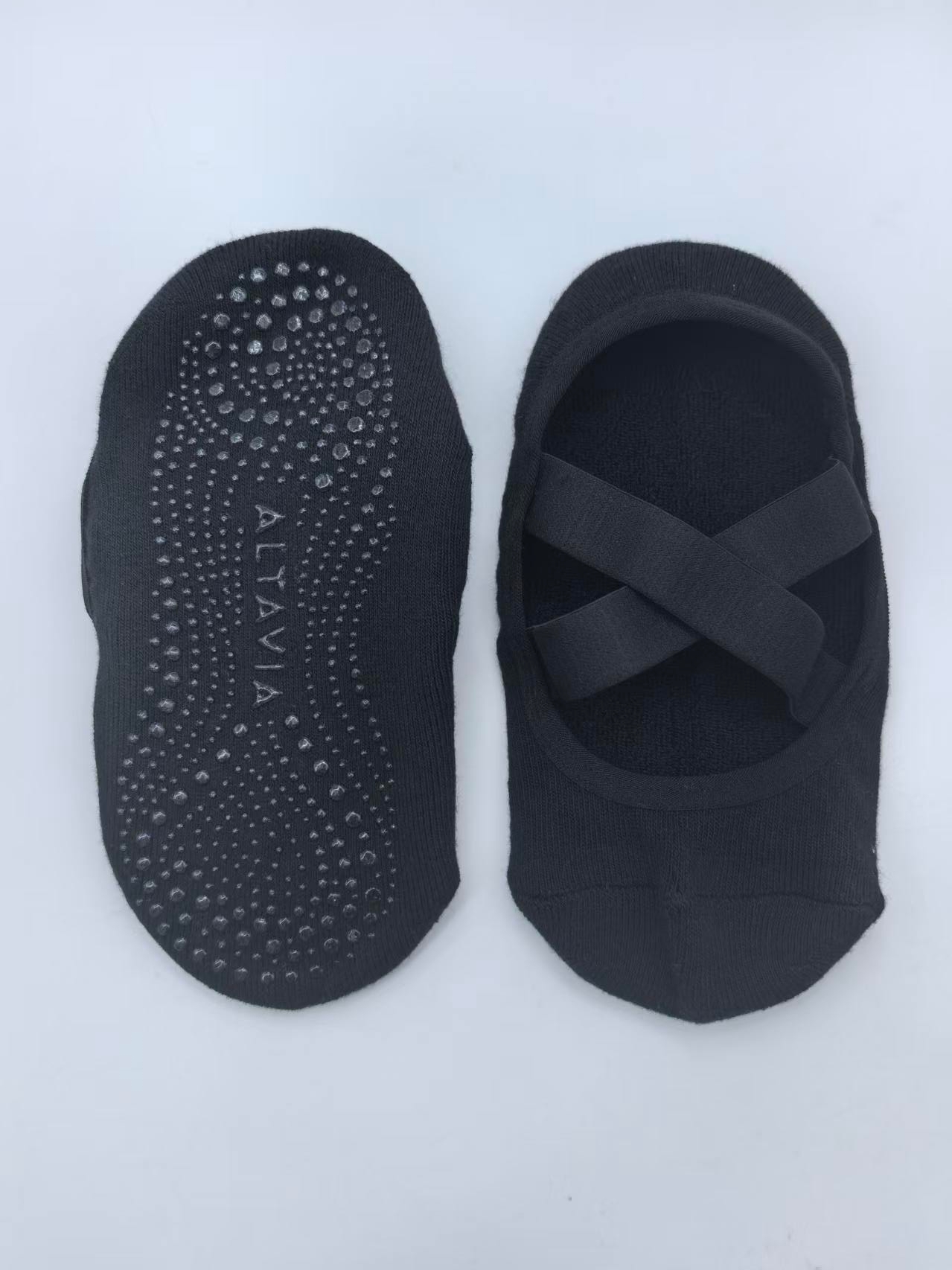
Pilates relies heavily on foot stability, and the toes play a far more active role than most people realize. A sock that allows the toes to spread naturally and grip the mat or reformer carriage gives the practitioner a clearer sense of connection to the ground. When toes are crammed together inside a generic tube sock, that feedback loop is muted, forcing the ankles and calves to compensate. Factories need to view the toe area not as an afterthought but as a functional zone where fabric tension, seam placement, and elastane content all directly affect performance.
From a manufacturing standpoint, the simplest way to support toe grip is to design a sock with a dedicated toe section that matches the natural shape of the foot. Five-toe socks are one option, but even a well-placed seam and a slightly wider toe box can make a difference. The material around the toes should have enough stretch to allow full flexion and extension, yet enough grip to prevent sliding. Many factories add silicone dots or a printed grip pattern on the sole, but placement near the toe pads matters more than coverage area. A cluster of small dots under the ball of the foot and the tips of the toes helps users feel anchored without creating bulk that alters their balance.
Beyond construction, a factory should test toe grip under realistic conditions: a sweaty foot on a wooden reformer, a barefoot-like feel on a textured mat, and repeated washing cycles that can degrade grip coatings. Collecting feedback from instructors who teach footwork-intensive classes often reveals issues that lab tests miss, such as a sock that bunches at the metatarsal arch or a yarn that becomes slippery when wet. Addressing these details separates a generic athletic sock from one that actually improves a Pilates session, and that distinction is what keeps customers coming back.
Do They Treat Your Brand Like a Label or a Product?
A label is something you stitch onto the outside after the real work is done. It tells people what to call what they're already holding, but it doesn't change how it feels in their hands. When a brand gets treated like a label, every decision about it becomes cosmetic: tweak the logo, refresh the color palette, run another awareness campaign. The underlying offering stays the same, so the brand becomes just another name on a crowded shelf. Customers might recognize it, but recognition isn't the same as meaning.
Treating a brand like a product flips that logic. It means the brand itself has to do a job, solve a problem, or create a feeling worth paying for. The name, the voice, the visual system—these aren't decorations. They're functional parts of the experience, like the grip on a tool or the weight of a door. When you build a brand as a product, you're forced to ask harder questions: What does this brand make easier? What tension does it remove? What does it let people say about themselves? Those answers shape everything from the first touchpoint to the last.
The difference shows up in the long game. A label gets replaced when a cheaper option appears or a trend shifts. A product gets defended, recommended, and remembered because it earned its place through use, not just exposure. If your audience can't describe what your brand actually does for them beyond being familiar, you might be running a label. If they'd notice its absence, you've built something closer to a product.
Picking a Partner Who Sweats the Small Stuff
There's a quiet kind of magic in someone who remembers that you take your coffee with oat milk, or that Tuesday nights are for calling your mom. It's not about grand gestures or perfectly timed surprises—it's the small, almost invisible threads of attention that hold a relationship together. A partner who sweats the small stuff notices when your tone shifts just slightly, when you've had a long day before you say a word, when the dish soap is running low and you hate asking for help. These aren't trivial details; they're the evidence that someone is genuinely present, not just passing through your life.
But there's a line between caring about the little things and being consumed by them. A partner worth keeping doesn't turn every forgotten text into a referendum on your love. Instead, they use small observations to make your life easier, not to keep score. They'll grab your favorite snack at the store without being asked, but they won't lecture you for leaving the cap off the toothpaste. The goal isn't perfection—it's attentiveness without anxiety. That balance is rare, and it's worth looking for in the early days when everyone is on their best behavior.
If you're wondering how to spot this quality, pay attention to how someone treats the unglamorous moments: waiting in line, running errands, sitting in traffic. Do they notice the elderly man struggling with his bags? Do they adjust the car temperature before you shiver? Do they ask about the coworker you mentioned once, weeks ago? That's the small stuff—and it's anything but small when it's directed at you.
Why Your Manufacturer's Location Changes Everything
A factory address on the other side of the world might look like a minor detail on a purchase order, but it quietly shapes your entire operation. Shipping lanes, customs clearance times, and regional labor standards don't just add line items to a budget—they set the rhythm of your inventory. When a container gets stuck at a port or a supplier's holiday calendar differs from yours, the gap between "in stock" and "still waiting" becomes very real.
Distance also changes how problems get solved. A production issue caught early by a nearby partner can be fixed with a quick visit or a same-day video call during working hours. With a far-off factory, that same issue might sit for twelve hours before anyone reads the message. The result isn't just slower turnaround; it's a different kind of relationship—one built more on spreadsheets and less on shared intuition.
None of this means local or overseas manufacturing is always better. It means the location is never just geography. It's a choice about lead times, communication depth, and how much control you really have when things deviate from the plan. That choice echoes through your product's quality, your customer's patience, and your team's ability to sleep at night.
When Low Minimum Orders Don't Mean Low Attention
A common assumption among first-time buyers is that placing a smaller order automatically puts you at the back of the line. Yet plenty of suppliers who set low minimums have built their entire workflow around small-batch clients, so your order never gets treated as an afterthought. Instead of being passed to a junior account manager and forgotten, it often lands directly with someone who knows the product line inside out.
The real difference shows in the details. Low minimum suppliers tend to rely on repeat business and word of mouth, so they have every reason to keep you close. You may notice quicker replies to emails, more thorough answers to technical questions, and a genuine willingness to tweak specs—even when the total invoice is modest. That level of engagement rarely comes from factories that only care about filling containers.
It helps to reframe what a low minimum actually signals. In many cases, it signals a supplier who understands that testing a market, launching a niche product, or running a limited drop requires more dialogue, not less. So the next time you hesitate to reach out because your order is small, remember that attention is not a function of quantity—it is a function of how much the supplier values the relationship you are starting.
FAQ
Demand a sole with targeted grip zones that match typical Pilates foot positions—think circles under the ball of the foot and heel, not just random silicone dots. The upper should include a snug arch band and a wide toe box so toes can spread during balance work. Ask for a fabric blend that dries quickly but still feels soft against the skin; nylon-spandex blends with reinforced heel and toe areas tend to outlast cotton mixes.
Request their size chart and ask whether they grade from a women's last or simply shrink a men's pattern. A trustworthy partner will provide separate width options or at least explain how their S/M/L maps to actual foot measurements for women. Ask for fit samples in at least three sizes and have female testers evaluate heel slip, toe pressure, and band tightness during a full Pilates session.
Ask which mills supply their yarns and whether they can provide abrasion test results for the grip print. A manufacturer that hesitates to name fiber content percentages or claims 'premium' without specifics is usually hiding something. For Pilates socks, the grippers should survive repeated washing without peeling or losing their texture, so request a wash test report or a sample that you can machine-wash at least ten times before judging.
Ask to see their latest custom projects with different brands, including close-up photos of logo placement on the cuff, sole, or toe. Inquire about the printing methods they use—silicone transfer, embroidery, or knit-in designs—and the minimum order for each. A reliable manufacturer will tell you which branding techniques are durable on stretchy sock fabric and which will crack or fade, instead of promising unlimited options.
It depends on whether you need fully custom socks or stock designs with custom labels. Many manufacturers require 500 to 1,000 pairs per design for custom knitting, while stock designs with private labeling can go as low as 100 to 200 pairs. Be wary of partners who pressure you into huge first orders without a sample phase; a good manufacturer will suggest starting with a smaller trial run to validate fit and demand.
Slow or vague replies in the early stage often predict trouble later. If a supplier avoids answering direct questions about lead times, defect rates, or payment terms, walk away. During sampling, watch for uneven stitching, grippers placed slightly off-center, or a chemical smell that lingers after airing. A partner who ignores your feedback on a first sample and insists 'that's normal' is not interested in your brand's standards.
Ask whether they offer design files, size grading support, or a library of existing sock patterns you can customize. Some manufacturers help with packaging suggestions, hang tags, or even arrange drop shipping to your fulfillment center. A partner that shares trend insights—like popular grip shapes or seasonal color preferences for women's Pilates socks—adds value beyond the factory floor.
Request documentation such as REACH and CPSIA compliance for the silicone grip and dyes, especially if you sell to the EU or US. Ask for third-party test reports on color fastness, skin irritation, and heavy metal content in the grippers. A good manufacturer will already have these files ready and can explain which regulations apply to your target markets without you having to chase them.
Conclusion
Finding the right women's Pilates socks manufacturer isn't just about checking boxes for grip and fabric. It's about a partner who can nail the non-slip sole without turning the sock into sandpaper—softness still matters when feet are flexing and pointing on a reformer. A factory that understands toe grip won't simply print dots on the bottom; it studies how toes spread during a plank or a roll-up and adjusts the pattern depth, placement, and material so the sock stays anchored without bunching. And the way a factory handles your brand tells you everything: some treat your line like just another label to slap on a generic style, while the right one treats it like a product with its own fit, finish, and feel. That partner sweats the small stuff—yarn twist, seam placement, even the way the cuff holds after washing.
Location also changes the math more than it first appears. A manufacturer close to your primary market can cut lead times and make back-and-forth sampling less painful, while one near quality cotton or grippy yarn suppliers often has better control over material consistency. Yet low minimum orders don't have to mean low attention. In fact, some smaller-batch factories are more willing to refine a toe grip design or match a custom shade than huge production lines that only move at scale. The real question is whether the factory handles your Pilates socks like its own product—sending updates, catching flaws early, and remembering that your customers will judge the brand by how those socks feel during the hundred, not by the logo alone.
Contact Us
Contact Person: Alfred Lee
Email: [email protected]
Tel/WhatsApp: +86 13806701496
Website: https://www.hainingsocks.com/