

White Label IMS Core Network: A Complete Guide to Streamlined Telecom Infrastructure
2026-06-10
Telecom operators are under constant pressure to launch services faster and keep costs low. Yet traditional core networks often become a bottleneck—complex, rigid, and expensive to deploy. What if you could bypass these limitations with a network that’s ready to go, fully customizable, and built on proven technology? That’s exactly what a White Label IMS Core Network offers. Spearheaded by innovative vendors like IPLOOK, this approach is reshaping how carriers build and scale their infrastructure. In this guide, we’ll take a deep dive into the essentials—from core components to deployment strategies—helping you understand why a white label solution might be your smartest move in a competitive market.
A Fresh Look at White Label IMS Core Networks
The landscape of telecommunications is shifting away from rigid, single-vendor lock-ins toward modular, adaptable infrastructures. White label IMS core networks embody this change by offering operators a fully functional, standards-based IP Multimedia Subsystem that can be branded and customized as their own, without the heavy lifting of in-house development. This isn't just about cost savings; it's about reclaiming control over service delivery and innovation timelines. By decoupling the core network from the hardware and the traditional vendor ecosystem, providers can mix and match components that best fit their market—be it voice over LTE, rich communication services, or fixed-mobile convergence—all while maintaining a seamless user experience under their own brand identity.
What often gets overlooked in conversations about white label solutions is the operational agility they bring. Instead of waiting for a vendor's roadmap to align with business goals, teams can iterate rapidly, testing new features or scaling capacity in response to real-time demand. The underlying technology is not stripped down or secondary; modern white label IMS cores are built with cloud-native principles, containerized microservices, and robust APIs that allow deep integration and orchestration. This means a regional carrier or a niche service provider can compete on features and reliability without the upfront capital expenditure that once created a barrier to entry. It flips the script: the network becomes a creative enabler rather than a bottleneck.
Security and compliance, naturally, remain at the forefront. A thoughtfully designed white label IMS core doesn't compromise on encryption, lawful intercept capabilities, or emergency service routing. Instead, it provides a transparent foundation that can be audited and hardened according to the operator's specific regulatory environment. The real differentiation, though, comes from how the team layers its own value on top—be it through specialized analytics, customer-facing provisioning portals, or unique interconnection models. When the core becomes a canvas rather than a constraint, the conversation shifts from “what can the network do?” to “what should we build next?”—and that’s a far more interesting place to be.
Breaking Free from Traditional Telecom Constraints
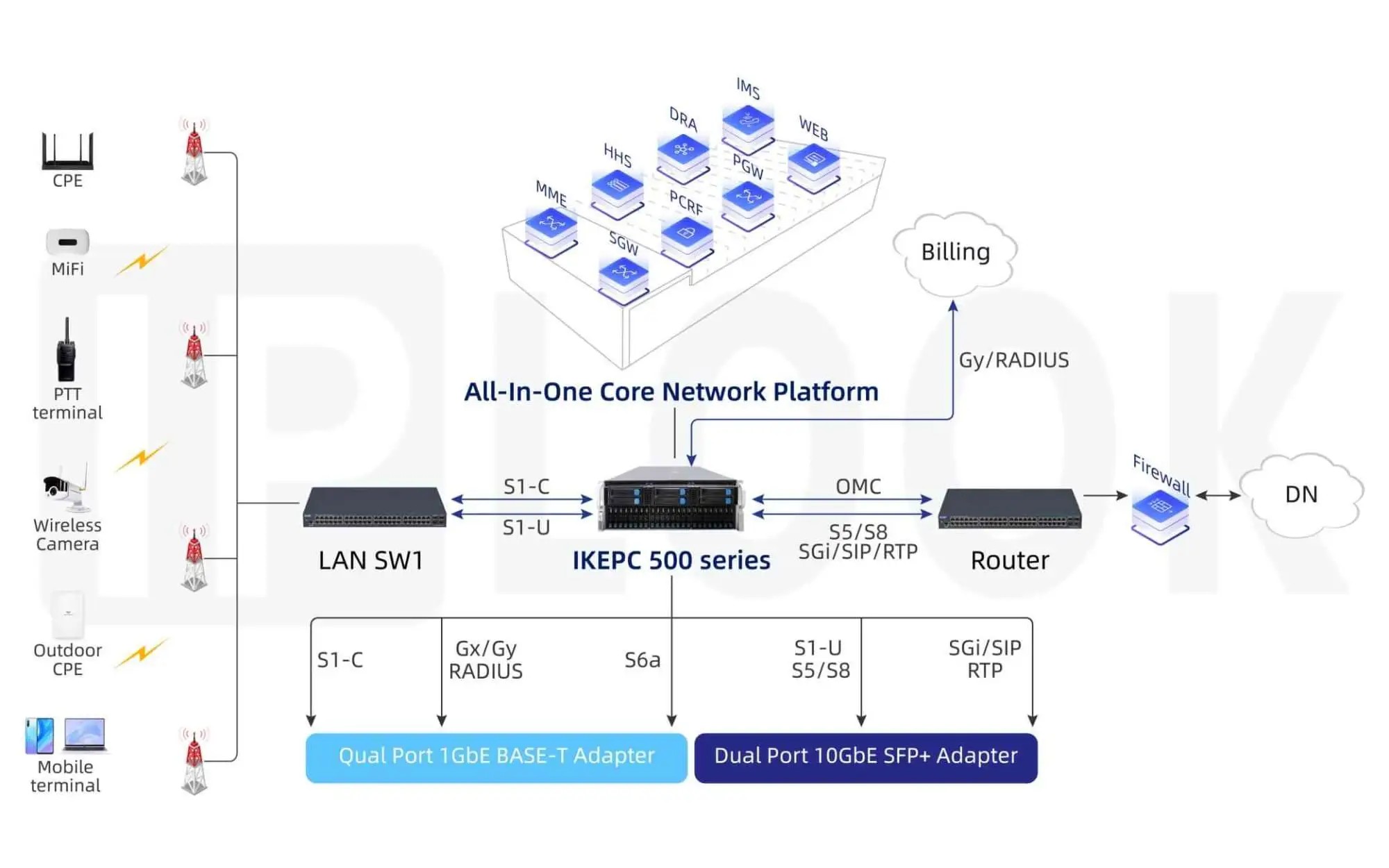
For decades, telecom operators have been shackled by rigid infrastructure and monolithic business models. Moving beyond these limitations means rethinking the very architecture of communication services. It’s about shifting from hardware-defined networks to software-driven agility, where capacity can be spun up in minutes, not months. This liberation isn’t just technological—it’s a mindset that divorces service delivery from the physical constraints of proprietary boxes and fixed pipelines.
Embracing cloud-native principles and open APIs dismantles the barriers that once locked carriers into vendor-specific ecosystems. By decoupling software from hardware, operators can mix and match best-of-breed solutions, avoiding the trap of slow, costly upgrades. The result is a leaner operation that responds to demand in real time, trimming the fat from legacy processes. Innovation no longer waits on the roadmap of a single supplier; it becomes a continuous, community-driven evolution.
This newfound freedom unleashes service creation that traditional silos made impossible. Imagine networks that self-optimize during a live event, or enterprise connectivity tailored through a simple web portal—without the months-long provisioning cycles. Carriers become platforms, not just pipes, enabling on-demand slicing, edge computing, and IoT ecosystems. Breaking free from convention turns telecom from a utility of scarcity into a fabric of possibility, where the customer’s need defines the network, not the other way around.
Building Blocks of a Streamlined Infrastructure
At the core of any efficient system lies a set of well-chosen components that work together without friction. Rather than bolting on solutions as an afterthought, the real progress happens when each element is selected for its ability to communicate seamlessly with the rest. This often means prioritizing modular designs that can be swapped or upgraded individually, allowing the whole to adapt without costly overhauls.
Automation acts as the connective tissue, removing the need for constant manual interventions that slow things down and introduce errors. When repetitive tasks are handled by smart orchestration, teams can focus on higher-value decisions instead of routine maintenance. The goal is not just speed, but a kind of quiet reliability where problems are solved before they become visible.
Finally, true streamlining demands a culture that treats infrastructure as a living, evolving entity. Regular review and ruthless simplification prevent the accumulation of technical debt that gums up progress. By treating clarity and simplicity as design principles rather than afterthoughts, organizations build systems that are not only faster but also more enjoyable to work with day after day.
Seamless Migration Paths to Modern IMS
Migrating to a modern IMS doesn’t have to mean throwing away years of infrastructure investment. Many operators have discovered that a phased approach works best—keep the legacy gear running while gradually introducing virtualized network functions alongside it. This way, teams can test new elements in live environments without disrupting existing services, and subscribers never notice a thing. It’s the kind of real-world path that respects both budgets and uptime.
Another smart tactic is to lean on standardized interfaces and protocol interworking. Instead of a wholesale replacement, you can bridge older TDM or 2G/3G cores with the new IMS layer using gateways and session border controllers that speak both languages. This lets you roll out VoLTE or VoWiFi for some user segments while others stay on circuit-switched fallback, buying you time to sort out device compatibility and roaming agreements without panic.
The real game-changer lately has been container-based IMS functions that slot neatly into existing cloud stacks. Rather than a rigid, monolithic upgrade, operators slice the migration into digestible pieces—spin up a lightweight CSCF here, drop a media resource function there. It’s incremental by design, and the early adopters are already proving that a live network can evolve beneath its own traffic, one careful step at a time.
The Financial Upside of White Label Adoption
Bringing a new product to market usually means burning through cash on research, development, and testing—often with no guarantee of success. White label adoption flips that script. Instead of starting from zero, you license a ready-made solution, stamp your brand on it, and push it live in a fraction of the time. The immediate perk is obvious: you skip the heavy upfront investment and still get a polished, market-tested offering. That capital you conserve can go straight into marketing, customer acquisition, or strengthening your core business.
There's also a quieter revenue stream that kicks in once you're up and running. Because you didn't bleed resources during the build phase, your break-even point sits much lower. Most white label arrangements come with flexible pricing, so you can set margins that actually work for your market. Over time, these products often settle into reliable, recurring income—fees that arrive month after month with little effort beyond routine maintenance. For smaller firms especially, that steady drip of cash can be a lifeline, funding growth without the pressure of constant one-off sales.
Scale matters too. When you're not bogged down by custom development, expanding your portfolio becomes almost mechanical. You can test a new service in a different niche, gauge the response, and pivot quickly—all without hiring a new team or investing in additional infrastructure. That agility lets you chase opportunities that would otherwise be out of reach, turning what could have been a high-risk gamble into a calculated, low-overhead move. Done right, white labeling doesn't just add a product; it reshapes the financial backbone of your entire operation.
Tomorrow’s Telecom: Evolving with White Label IMS
Telecom is hardly the slow, predictable beast it once was. White label IMS has slipped into the equation as a quiet enabler, letting operators sidestep the drawn-out build-or-buy dilemma. Instead of wrestling with proprietary cores, they tap into a shared, proven foundation and layer their own identity on top. The result? A faster path to revenue, fewer headaches around patching and protocol updates, and the freedom to focus on what actually reaches the subscriber.
It’s not just about shrinking go-to-market windows, though. The real shift is how this model opens the door for unconventional players—think utility co-ops, cable providers dabbling in mobile, or enterprise IT teams crafting internal micro-networks. Each can tailor the service fabric to their own customer base without reinventing the wheel. Suddenly, voice, messaging, and rich calling features stop being a differentiator bottleneck and become a utility you shape at will.
Extend the lens to what’s next: network slicing, private 5G, and unlicensed spectrum mashups are all on the table, and a modular IMS backbone is precisely what makes them plug-and-play. Those who latch onto this aren’t just keeping up—they’re rewriting their role from bit-pipe ferrymen to experience architects, all while leaving the heavy regulatory and stack integration grind to the platform underneath.
FAQ
It refers to a pre‑built IP Multimedia Subsystem solution that a provider can rebrand and offer as their own, skipping the heavy lifting of in‑house development. Essentially, you get a fully functional core network under your own name, tailored to handle voice, video, and messaging over LTE or 5G without building it from scratch.
By removing the need for proprietary, siloed hardware and manual integrations. It brings virtualized, software‑centric components that are already tested to work together, so you can deploy services faster, scale with demand, and avoid the usual vendor lock‑in headaches. The result is a leaner, more agile backend that reduces operational friction.
Cost and speed are the obvious ones, but it also comes down to control. A smaller player can launch rich communication services under their own brand without waiting years for a tier‑1 vendor rollout. Plus, you sidestep the massive upfront capital and the complex licensing models that often come with traditional core network gear.
You'd typically look for full VoLTE and VoWiFi support, standard SIP‑based call control, a home subscriber server (HSS), media handling for HD voice, and lawful intercept. Beyond that, good solutions include APIs for customization, support for WebRTC, and the ability to integrate with existing OSS/BSS without a major overhaul.
Sure. Since most white label cores are built on virtualized or containerized architectures, you can add capacity by spinning up new instances rather than swapping out physical boxes. This means from a few thousand subscribers to millions, the growth path is smoother. It also lets you test new services in a sandboxed slice of the network before rolling them out broadly.
A straightforward deployment—assuming your transport and access layers are ready—can take a few weeks to a couple of months. The big variables are the extent of customization you need, regulatory compliance checks like emergency calling, and the complexity of interconnecting with other operators. Pilot phases tend to iron out most kinks before full commercial launch.
The vendor provides the baseline—things like encrypted signaling, fraud detection modules, and standard authentication mechanisms. However, day‑to‑day monitoring, firewall rules, and intrusion response usually fall on the operator. A good provider will offer guidance and tooling, but you still need your own security team to keep everything tight.
One is the integration hitch: even though it's supposed to be plug‑and‑play, fitting it into an existing BSS/OSS can reveal gaps in data models or charging flows. Another is ongoing evolution—you're partly dependent on the vendor's roadmap for 3GPP release compliance and new features. So due diligence on the partner's commitment and support model is crucial.
Conclusion
The traditional telecom landscape often locks operators into rigid, vendor-specific ecosystems that stifle innovation and inflate costs. A white label IMS core network offers a way out, delivering carrier-grade voice, video, and messaging services without the proprietary shackles. By adopting a white label approach, service providers can break free from conventional constraints, customizing their infrastructure to meet specific market demands. The building blocks of such a streamlined system—virtualized network functions, standardized interfaces, and a modular architecture—enable rapid deployment and effortless scaling. This fresh perspective on IMS core networks shifts the focus from monolithic hardware to agile, software-driven solutions that can be tailored, rebranded, and managed with unprecedented freedom.
Moving to a modern IMS doesn’t have to be disruptive. Seamless migration paths allow legacy systems to coexist with next-generation components, safeguarding existing investments while gradually introducing new capabilities. The financial upside is immediate: reduced capital expenditure through off-the-shelf white label solutions, lower operational costs via automation, and faster time-to-revenue for innovative services. Looking ahead, white label IMS networks are poised to absorb emerging technologies like VoLTE, VoNR, and WebRTC, keeping operators at the forefront of a fast-evolving telecom environment. As the industry moves toward fully virtualized and cloud-native architectures, a white label core becomes not just an option but a strategic enabler for sustainable growth and differentiation.
Contact Us
Contact Person: Shimmy
Email: [email protected]
Tel/WhatsApp: 85253392231
Website: https://www.iplook.com