

Vacuum Load Break Switch Manufacturer for Dependable Electrical Distribution
2026-09-06
Power distribution doesn’t forgive shortcuts. When a vacuum load break switch fails, the ripple hits operations, safety, and long-term asset value. That’s why choosing the right manufacturer isn’t a procurement formality—it’s a reliability decision. Deepwill designs switches for exactly this reality, where dependable electrical distribution isn’t promised, it’s engineered.
How Vacuum Interruption Keeps Distribution Networks Stable
In medium-voltage distribution switchgear, vacuum interrupters perform a quiet but critical job: they extinguish an arc before it can escalate into a damaging fault. Because the contacts sit inside a sealed vacuum chamber, there is no gas to ionize and sustain an arc. When the contacts part under load or short-circuit conditions, the metal vapor plasma that briefly forms collapses almost instantly as current crosses zero. This rapid dielectric recovery prevents restrikes and limits the energy released into the network, keeping voltage dips shallow and protecting downstream transformers and cables from thermal stress.
Stability also comes from mechanical simplicity. Vacuum interrupters have short contact travel and relatively low moving mass, allowing faster operation than many legacy air or oil breakers. In coordinated protection schemes, faster clearing times mean the rest of the system sees less disruption. Repeatedly clearing faults without contact erosion extends the service life of switchgear, so protection settings remain consistent over decades. Utilities don't have to worry about degraded interrupting performance causing nuisance trips or delayed fault clearance, both of which can trigger cascading outages on distribution feeders.
Field experience shows that vacuum interruption reduces switching overvoltages in many applications compared with older technologies, especially when paired with modern surge arresters. Less voltage stress on insulation means fewer hidden weaknesses developing at cable joints and transformer windings. In networks with high penetration of distributed generation and frequent load switching, vacuum interrupters maintain their arc quenching characteristics regardless of ambient temperature or humidity. That predictable behavior under varied conditions is what allows distribution operators to keep circuits balanced and stable without constant recalibration or expensive maintenance windows.
Built for Utility Teams That Can’t Afford Downtime
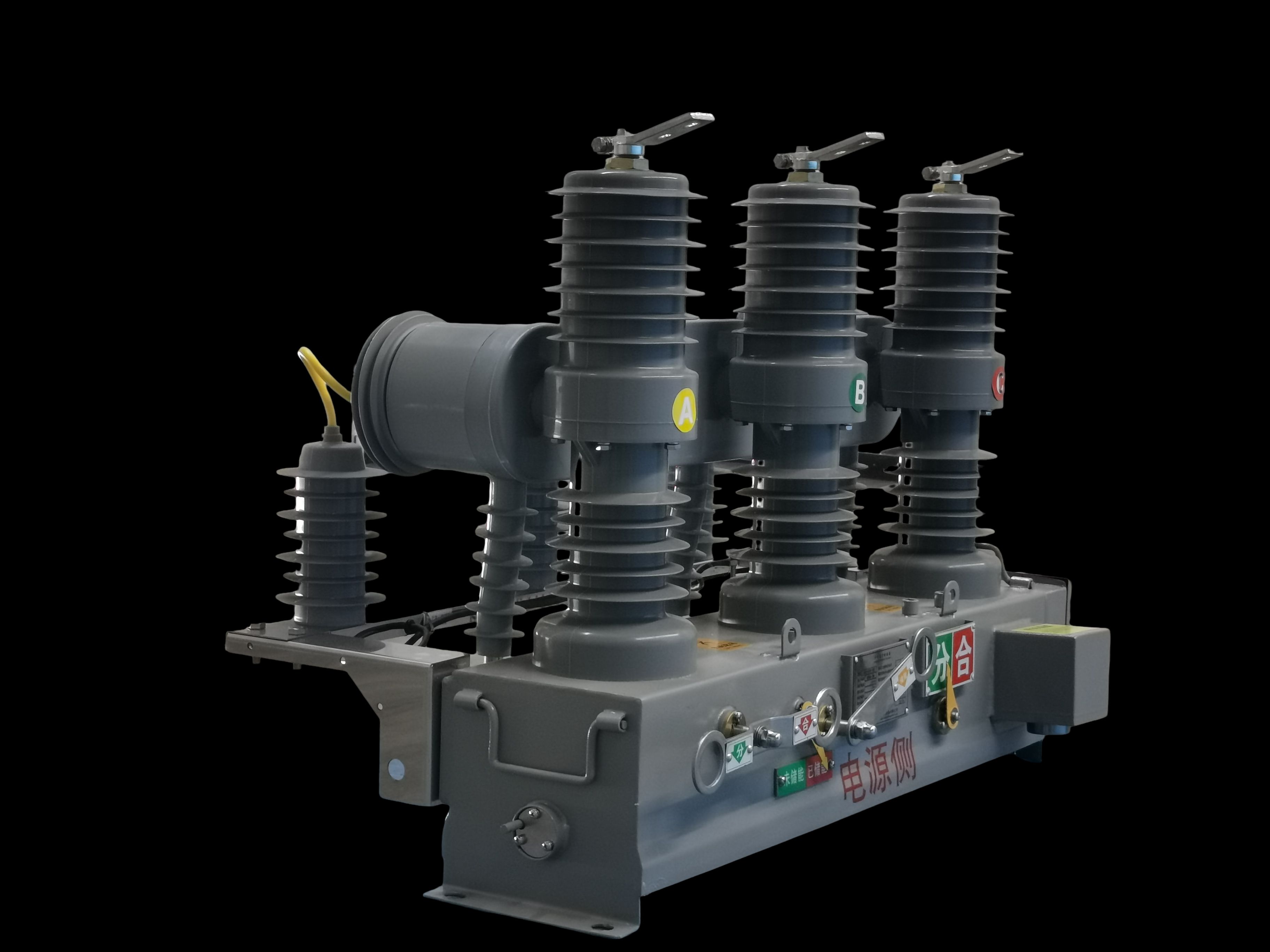
When a pump station loses telemetry at 3 a.m. or a grid substation drops its SCADA link mid-storm, there’s no time to open a ticket and wait. This platform was built around the reality that utility crews live in: hardware that survives voltage swings and temperature extremes, paired with software that keeps polling even when a primary channel goes dark. Redundant cellular and ethernet paths switch silently in the background, so operators see the same field data on their screens without a refresh. No cloud dependency, no single point of failure—just a continuous feed from the edge to the control room.
The real test isn’t the demo environment; it’s the tenth year of service on a pole-mounted RTU in a coastal salt-fog zone. Components are rated for wide input ranges, and firmware updates roll out in stages that let a utility schedule them around shift changes. Every alarm and event gets timestamped locally before it’s forwarded, which means a network blip never turns into a missing log entry. For teams that measure reliability in mean minutes between incidents, the goal is simple: the system should be the least interesting piece of equipment in the yard.
Custom Configurations Without the Long Lead Times
Most vendors treat customization as a detour from the standard product line—a detour that adds weeks to delivery and layers of approval to the process. We built our production flow differently. When you ask for a non-standard voltage, a different I/O layout, or a custom firmware build, the request doesn't sit in a queue. It goes directly to an engineer who can make the call and start the build the same day. The result is a configured unit that ships in days, not the twelve-to-sixteen-week lead time you'll hear from competitors.
This isn't just about speed for its own sake. It's about removing the penalty normally attached to getting exactly what your application requires. We keep a deep inventory of base modules, enclosures, and interface boards on hand, so a custom order starts from hardware that's already been through reliability testing. The only variable is the specific configuration you've requested—and we validate every one of those before it leaves the bench. You skip the long wait without skipping the checks that matter.
What Field Technicians Actually Need from a Load Break Switch
Field technicians rarely speak about load break switches in terms of spec sheets or catalog ratings. What they actually need is a device that behaves predictably when they're wearing insulated gloves, standing in front of a live panel, and the light is less than ideal. The switch should offer a clear, unambiguous open or closed position—visible at a glance, not hidden behind a fogged window or a stiff indicator that requires a flashlight. They want the operating handle to give enough mechanical advantage that a firm pull or push completes the operation without resorting to a breaker bar, yet with enough resistance to confirm the contacts have fully traveled. When a technician can operate the switch by feel and trust the visual confirmation, downtime drops and safety stops being a checklist item and becomes a habit.
Beyond the immediate operation, technicians need a load break switch that doesn't punish them during routine maintenance. Cable termination areas that leave actual room for gloved hands, lugs that accept standard compression tools without awkward angles, and arc chutes or barriers that don't require a second person to remove or inspect. Many older designs force a technician to loosen three different types of fasteners just to access the contact area—that friction gets remembered. A better switch has a hinged front cover with captive hardware, and the phase barriers are shaped so they can be wiped down with a rag rather than disassembled. Small details like a padlock hole that actually fits a standard shackle, or an auxiliary contact block that snaps in without loosening the main terminals, mean the difference between a fifteen-minute isolation and an hour of wrestling with a design that seems to have been drawn without ever being installed.
Finally, field technicians need consistency from one installation to the next. A load break switch that mounts with the same hole pattern as the previous generation, that accepts copper or aluminum conductors without an adapter kit, and that doesn't require a firmware update or a special torque wrench saves real time when a crew is rotating through dozens of sites. If the switch can be padlocked in the open position without a custom hasp, and the test position works exactly the same as the service position, the technician doesn't have to relearn the device every time. The best load break switch is the one nobody complains about at the end of the day—the one that opens when it should, shows what it's doing, and gets out of the way of the person who has to work on it next week.
Materials and Testing That Outlast Harsh Grid Conditions
Real longevity in grid equipment starts with material choices that shrug off the kind of abuse no spec sheet fully predicts. Enclosures machined from marine-grade aluminum or glass-reinforced polycarbonate hold up better than powder-coated steel once salt spray, diesel exhaust, and thermal cycling start working on the surface. Gaskets cut from fluorosilicone instead of standard nitrile stay pliable after years of UV exposure, keeping water and conductive dust out of busbar compartments and relay boards. On the connector side, gold-over-nickel plating on contact pins prevents the slow buildup of oxidation that quietly raises resistance until a hot spot appears. These are not exotic upgrades; they are the difference between hardware that survives a decade near a coastal substation and hardware that needs replacement after three monsoon seasons.
Testing has to go beyond the usual environmental chamber pass/fail. The units that last under harsh grid conditions are cycled through rapid temperature swings from -40°C to 85°C while carrying full rated current, then hit with salt fog, blowing sand, and high humidity in sequence rather than as isolated events. Vibration testing that mimics diesel generator sets and heavy switching operations reveals micro-cracks in solder joints and loosening terminal screws long before field failures appear. One often overlooked test involves partial discharge monitoring on insulation materials after thermal aging, because a polymer that looks fine at room temperature can develop internal voids once it has spent months baking near a transformer. If the insulation does not hold up at elevated temperature and high humidity simultaneously, the equipment will fail on the worst possible day, not in the lab.
Sealing and potting compounds play a larger role than most design reviews admit. Silicone encapsulants with low modulus absorb the stress of thermal expansion without pulling away from PCB edges, while conformal coatings with high dielectric strength keep creepage paths intact under pollution buildup. Bolted connections get serrated washers and thread-locking compounds to fight the constant micro-movement from wind and load changes. Even the labels and cable ties matter: UV-stabilized polyester tags and stainless-steel fasteners prevent the slow degradation that eventually leaves maintenance crews guessing which terminal is which. The result is hardware that gives utilities fewer midnight alarms and fewer truck rolls, because the materials and tests were chosen for the worst stretch of weather, not the average one.
Integrating with Automation and Remote Monitoring Systems
Pulling live equipment data into a central automation platform starts with choosing the right handshake. Many facilities already run PLCs and HMIs that speak Modbus or PROFINET, so the quickest wins come from edge gateways that translate those legacy protocols into MQTT or OPC UA. Instead of forcing every sensor to talk directly to the cloud, a small industrial PC on the factory floor can normalize tag names, apply units, and buffer readings when the network drops. That local buffer alone prevents a five-second WAN outage from turning into a missing shift report.
Once the data flows, the real value shows up in conditional alarm routing. A remote monitoring system that simply emails a PDF every morning gets ignored by the third week. Teams actually respond when a rising vibration trend on a cooling pump triggers a staged escalation: first a text to the on-call tech, then an automated speed reduction command if the condition persists for another twenty minutes. Writing those rules takes time because every false positive erodes trust, so start with two or three failure modes you understand deeply rather than instrumenting everything at once.
Remote access also changes the maintenance conversation. Secure VPN tunnels or reverse proxy connections let a specialist in another state watch live register values while a local mechanic turns a valve. That same session should log every changed setpoint and every firmware upload, with timestamps tied to individual user accounts. It is not enough to see that something was adjusted; an auditor needs to know who did it, from which IP, and whether the change was later reversed. Building that audit trail into the integration from day one is far cheaper than bolting it on after an incident.
FAQ
The main difference lies in the arc quenching medium. Instead of relying on oil, air, or SF6 gas, a vacuum interrupter extinguishes the arc inside a sealed vacuum chamber. This design provides a much faster interruption, reduces contact erosion, and eliminates the need for gas refilling or environmental reporting.
They are commonly installed in secondary distribution networks, transformer protection schemes, industrial feeder circuits, and renewable energy collection systems. Because the switching mechanism remains compact and sealed, it works well in both indoor switchgear and outdoor pole-mounted or pad-mounted enclosures.
Every unit undergoes routine production testing for contact resistance, vacuum integrity, and mechanical endurance before leaving the factory. We also offer versions with stainless steel enclosures, tropicalized coatings, and wide operating temperature ranges from -40°C to +55°C for coastal, desert, or high-humidity locations.
Yes, customization covers rated voltage, rated current, mounting orientation, and terminal arrangements. We can also integrate motorized operating mechanisms, auxiliary contacts, and remote signaling interfaces so the switch matches the existing SCADA or automation setup without major panel redesign.
Each switch passes a sequence that includes a high-voltage withstand test, a partial discharge check, and a mechanical operation test at both rated and boundary temperatures. Type tests for short-circuit making capacity and breaking capacity are performed on representative samples according to IEC or IEEE standards.
Since the contacts are enclosed in a vacuum, there is no oxidation or contamination from the surrounding atmosphere. That keeps contact resistance stable over thousands of operations and removes the need for periodic oil filtration, gas top-ups, or contact cleaning that other interrupting technologies demand.
Yes, we assist with dimensional drawings, mounting recommendations, and on-site supervision when requested. Our engineers also review protection coordination settings and cable termination practices to help avoid misalignment or insulation stress during commissioning.
Conclusion
Vacuum load break switches earn their place in distribution networks by doing one thing exceptionally well: interrupting current inside a sealed vacuum chamber where the arc is extinguished almost instantly. This keeps switching operations clean and predictable, without the gas handling or contact erosion that plague other designs. For utility crews, that translates into fewer unplanned outages and a switch that holds its ratings over thousands of operations. Manufacturers who focus on this technology typically pair the interrupter with a simple, manually or motor-operated mechanism that field staff can operate confidently even under pressure.
Beyond the core interrupter, dependable distribution equipment has to fit the realities of the job site. That means offering pole-mounted, pad-mounted, and submersible configurations with adjustable phase spacing, bushing orientations, and control options—without dragging out delivery schedules for months. Field technicians also expect visible break indication, padlockable handles, and easily accessible test points, because those small details determine whether a switch is actually safe and convenient to use. Materials matter too: stainless steel enclosures, cycloaliphatic epoxy bushings, and electroless nickel plating on moving parts help the switch survive salt spray, extreme temperatures, and years of mechanical cycling. Finally, the ability to add motor operators, auxiliary contacts, and remote terminal units lets utilities integrate these switches into SCADA and automation schemes without replacing them later. A manufacturer that combines vacuum interruption with fast customization, rugged construction, and honest compatibility with monitoring systems provides exactly what distribution networks need to stay stable while budgets and deadlines stay tight.
Contact Us
Contact Person: Julion
Email: [email protected]
Tel/WhatsApp: 8617351370631
Website: https://www.deyunelectric.com