

Ultrasonic Coating System Manufacturer: Key Factors to Evaluate Before Partnering
2026-09-24
Choosing the right ultrasonic coating system manufacturer can make or break your production line—precision, repeatability, and support aren't just nice-to-haves. Before you sign a partnership, you need to look beyond glossy brochures. At Siansonic, we've seen too many teams overlook critical evaluation criteria and pay for it later. This guide walks you through the key factors that separate dependable partners from costly mistakes.
How to Verify a Manufacturer’s Track Record Without Relying on Marketing Claims
Start by pulling the manufacturer’s import and export records from customs databases or third-party trade data platforms. Look for shipment frequency, destination countries, and the types of buyers they serve. A supplier that consistently ships to demanding markets under strict regulatory regimes has a verifiable performance history that no brochure can fake. Cross-check the business license, factory audit reports, and any ISO or industry-specific certificates against issuing bodies, not the manufacturer’s own website.
Request direct contact with at least three current or former clients, preferably ones that operate in your product category and region. Ask pointed questions about defect rates, communication during quality disputes, and how the factory handled rework or late deliveries. Independently search for litigation records, recall notices, or trade complaints tied to the company’s legal name and any past aliases. A clean marketing page often hides a messy paper trail, so dig into local court databases and industry forums where real buyers share unfiltered experiences.
If possible, commission a third-party quality inspection or a surprise factory audit. Auditors who visit unannounced can observe actual production lines, raw material storage, and workforce conditions—details that staged photos and polished videos conveniently omit. Compare their findings with the manufacturer’s self-reported capabilities, and pay attention to small mismatches: an overstated monthly capacity or a missing calibration certificate can reveal how much of the marketing narrative is built on wishful thinking.
The Questions Most Buyers Forget to Ask About Coating Uniformity
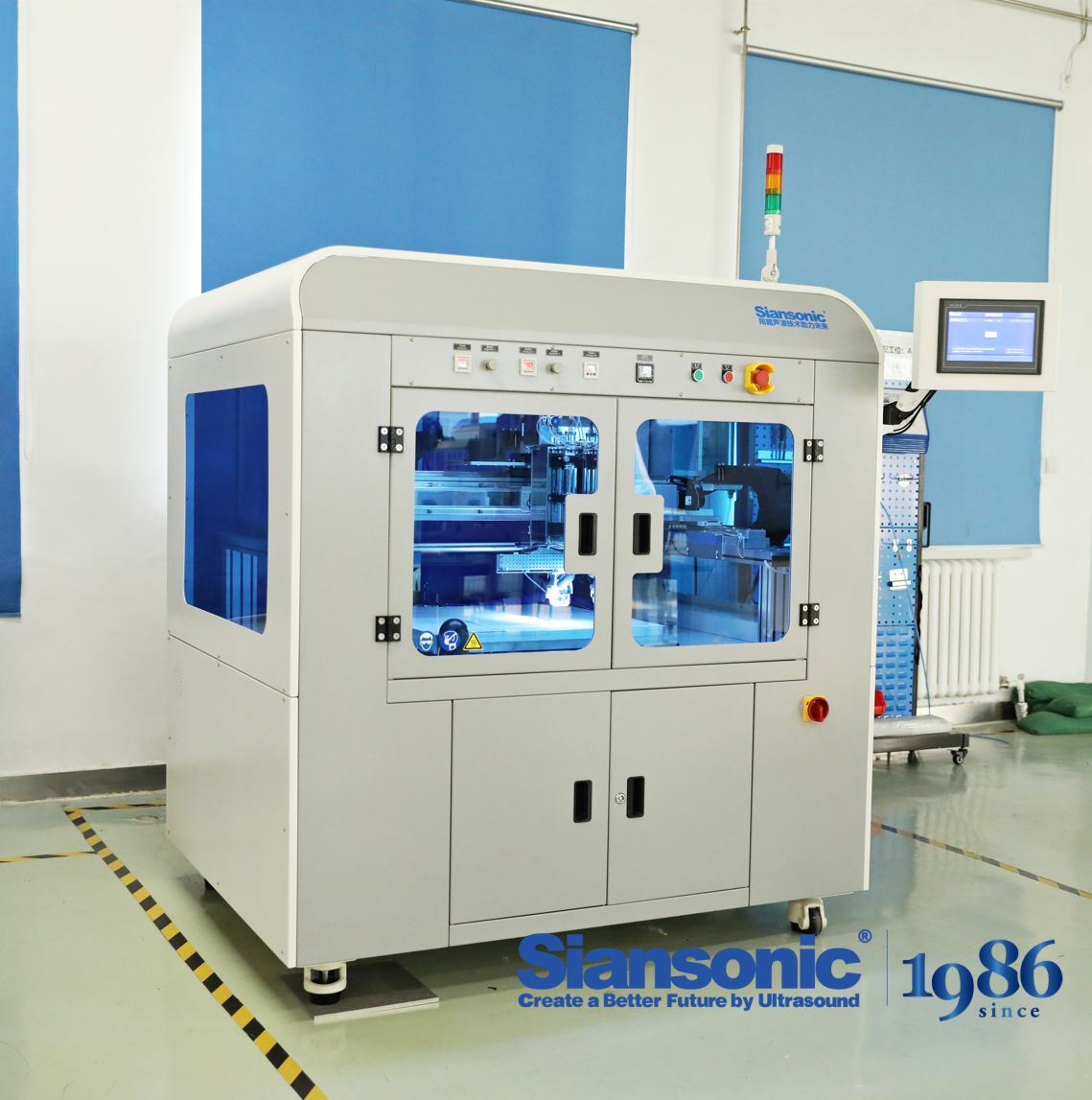
Most buyers spend a lot of time comparing thickness specs on flat test panels, but they rarely ask how that same coating behaves inside a tapped hole or around a sharp edge. Real parts aren't flat, and neither is the film that lands on them. A supplier might quote a uniform 25 microns, but that number often crumbles once you check the recessed areas where coverage thins out or puddles. Asking for actual cross-section data from your own geometry—not a coupon—can reveal gaps that a spec sheet never will.
Another overlooked question is about batch-to-batch drift. A coating might look perfectly even on day one, but what happens three months later when the line speed has crept up or the nozzle wear starts to show? Most buyers forget to ask for control charts or recent SPC data. They assume the process is locked, but uniformity can slide without anyone noticing until a field failure brings it back.
Finally, hardly anyone asks how the coating uniformity holds up under thermal cycling or humidity. A film that measures even at room temperature can develop micro-cracks or thickness shifts after a few hundred cycles. If your part goes into an engine bay or outdoor enclosure, you need to know if the edges stay covered when the substrate expands and contracts. Put the supplier on the spot: ask them to show uniformity measurements from parts that have already been through your expected environmental profile, not just fresh off the line.
Why On-Site Process Development Support Matters More Than Machine Specs
A spec sheet tells you what a machine can do under ideal conditions, but it says almost nothing about how it will behave in your plant. Two identical models with the same throughput and precision ratings often deliver very different results once they meet real materials, fluctuating utilities, and operator habits. On-site process development support closes that gap by tuning the equipment to the actual environment—adjusting dwell times, temperatures, or feed rates after observing how the line really runs, not how the brochure says it should.
Machine specifications are static, but production is not. A slight shift in raw material viscosity or a change in ambient humidity can push a process out of tolerance overnight. Local support engineers bring bench-level problem solving to the floor: they run trials, measure outputs, and tweak parameters until the process stabilizes. This iterative work is rarely captured in a manual, and it is exactly what prevents weeks of scrap and downtime after installation.
Buyers often compare machines by cycle time, accuracy, or energy use, then wonder why the “best” unit underperforms. The missing variable is almost always process adaptation. On-site development support turns a capable machine into a reliable production cell by addressing the unglamorous details—fixture alignment, sensor calibration under vibration, material handling quirks—that ultimately determine yield and repeatability.
What a Manufacturer’s Service Response Time Reveals About Long-Term Reliability
When a manufacturer answers a service request within hours instead of days, it often points to something deeper than a well-staffed call center. It suggests the company has built internal systems that can quickly diagnose problems, locate spare parts, and dispatch trained technicians without fumbling. That kind of operational fluency rarely exists in isolation—it tends to develop only when design, production, and quality control teams already communicate well. Over the long run, the same coordination that speeds up repairs also reduces the number of failures that require repairs in the first place.
Long-term reliability is less about avoiding every possible breakdown and more about how a company behaves when something does go wrong. A manufacturer that responds slowly often lacks either spare part inventory, diagnostic documentation, or the willingness to own a problem after the sale. Each missing piece is a quiet warning: if they cut corners on support infrastructure, they probably made similar trade-offs in materials, testing, or assembly. By contrast, a fast, transparent service response indicates that the manufacturer expects its products to stay in the field for years and has planned accordingly.
That is why experienced buyers look at response time as a reliability signal rather than a convenience metric. A ten-year-old machine will eventually need maintenance, but the difference between a few hours of downtime and a few weeks often traces back to decisions made long before the machine left the factory. When service teams move quickly and confidently, it reflects a culture that treats the product’s entire life cycle—not just the moment of sale—as the manufacturer’s responsibility.
The Hidden Costs That Surface After You’ve Signed the Contract
Most people breathe a sigh of relief once the ink dries, but that signature often unlocks a quiet parade of expenses the initial quote never mentioned. Vendor onboarding fees, mandatory training sessions billed by the hour, and per-user licensing that adjusts upward at renewal are just the opening act. Even the fine print around data migration or API access can turn into a line item you never planned for, eating into budgets that were already stretched thin.
Then come the operational surprises: software that demands hardware upgrades, integration work that requires outside consultants, or support tiers where the promised response times live behind a paywall. These costs rarely appear in the proposal, yet they surface within the first quarter, hidden inside “standard implementation” or “custom configuration” clauses. Without a forensic read of the contract terms, teams find themselves paying for basic functionality they assumed was included.
Over a multi-year agreement, the gap between expected and actual spend widens further. Auto-renewal clauses lock you into inflated rates, while usage limits trigger overage fees that compound monthly. If you didn’t negotiate exit terms, even cancellation carries a price tag—data extraction fees, early termination penalties, or the cost of rebuilding workflows elsewhere. The hidden cost isn’t a one-time sting; it’s a recurring drain that reshapes your P&L long after the celebratory kickoff meeting.
How to Gauge Flexibility When Your Production Needs Shift
Flexibility shows up in the gap between planned output and what actually happens when a change lands. One practical way to measure it is to track the time from receiving a revised schedule to having the first conforming unit come off the line. This number usually reveals more than overall equipment utilization, because a line can look busy while still being slow to pivot. Also pay attention to changeover losses: if a shift in product mix regularly eats hours of run time, that’s a direct cost of inflexibility.
Another angle is to test your constraints on purpose. Run a short batch with a different sequence or route, and watch where the bottlenecks move. If a single operator or a specific fixture holds up the whole adjustment, you’ve found a rigidity point. The same goes for material flow. Flexibility often depends on whether suppliers can handle smaller, more frequent deliveries without long lead times. When you map the recovery time after each unplanned change, the patterns tell you where to invest.
FAQ
Look for a partner who has already worked with materials similar to yours, whether that means thin-film polymers on flexible electronics or conductive inks on glass. Ask for concrete examples of past projects, including viscosity ranges and surface tensions they have handled, rather than relying on general claims about industry experience.
A reliable supplier will provide a detailed acceptance test protocol that measures droplet size distribution, spray pattern width, and thickness variation across a sample coupon. Request the actual test data from a run using your fluid or a close proxy, not just a certificate of conformity.
This is a major differentiator. Ask about the nozzle orifice design, whether they use active anti-clogging features like automatic pulse cleaning, and what maximum particle size or solids loading they have proven in long-duration runs. If they hesitate to share failure cases, that is a red flag.
Some manufacturers only ship hardware, while others will help you map coating windows, adjust standoff distance, and fine-tune ultrasonic frequency for your specific formulation. Clarify how many hours of application engineering are bundled and what the cost structure looks like for additional support.
You want to know whether they build their own piezoelectric transducers or source them from a third party, because that affects lead times, repair turnaround, and long-term consistency. A partner who controls the core technology can usually offer faster iteration when something needs to change.
Modern ultrasonic coaters should record frequency drift, power draw, liquid flow rate, and nozzle temperature in real time. Ask whether the data is stored locally or can be exported to your MES, and whether the manufacturer can perform remote troubleshooting without sending a technician on site.
The same nozzle geometry that works in a lab often fails at production speeds. A strong partner will show you how they maintain coating quality when moving from a single-nozzle benchtop unit to a multi-nozzle array, including how they synchronize overlapping spray patterns and manage edge effects.
Ask for a clear schedule of preventive maintenance tasks, typical spare parts inventory they recommend, and whether they offer hands-on training for your operators. The best suppliers treat the relationship as a long-term service commitment, not a one-time transaction.
Conclusion
Selecting an ultrasonic coating system manufacturer rarely comes down to the spec sheet alone. You need to dig into their actual track record by asking for references from similar applications, not just polished case studies. A vendor can claim uniform films, but the real test is whether they can discuss edge effects, flow rate drift, and how nozzle frequency shifts under continuous use. If they can't walk you through those variables without leaning on marketing language, that's a warning sign. Equally telling is how quickly they show up when something goes wrong: a manufacturer that treats a nozzle clog or generator fault as an urgent issue—not a ticket in a queue—will save you far more downtime than any promised precision figure.
Beyond the machine itself, look at the support structure around it. On-site process development support matters more than a long list of hardware specs because the real challenge is translating your coating chemistry into a repeatable ultrasonic recipe. That means the manufacturer should be willing to run trials with your actual fluid, adjust atomization parameters, and train your operators before you sign. Also, surface the hidden costs early: spare nozzles, generator replacements, software licenses, and recalibration fees can dwarf the initial quote. Finally, probe their flexibility. If your production volume changes or you switch to a more viscous slurry, will they re-engineer the line speed and nozzle configuration, or will they sell you another system? The answers to these questions reveal whether you're buying a tool or entering a long-term partnership.
Contact Us
Contact Person: Ivy Zhang
Email: [email protected]
Tel/WhatsApp: +86 1081502288
Website: https://www.siansonic.com/