

Top Wire Harness Label Manufacturer for Durable Industrial Identification
2026-09-08
A label that fades under heat or chemicals can turn a routine wire harness audit into a guessing game. In industrial settings, identification isn’t about aesthetics—it’s about uptime, safety, and traceability. That’s why the top manufacturers are judged by how their labels survive, not just how they look on day one. Xinsen has built its reputation on that exact standard, and this article breaks down what truly makes a wire harness label durable enough for the job.
Where Labels Face Their Harshest Critics on the Factory Floor
A label that looks flawless in a design review meets a very different audience once it hits the production line. Grease-stained fingers, solvent splashes, metal shavings, and constant friction turn printed text into a smudge within days if the material or adhesive wasn't chosen for the actual work environment. Floor supervisors and maintenance crews don't care about brand guidelines—they care whether the serial number survives a washdown cycle or whether a safety warning stays legible under low light after six months of heat cycling.
Line operators run their own informal durability tests, scratching at edges with a thumbnail, spraying nearby surfaces with cleaning agents, or leaving samples taped to a machine panel just to see what happens by Friday. Any label that curls, fades, or peels becomes a topic of conversation at shift handover. The harshest critics aren't in a conference room; they're the ones who have to squint at a barcode through a layer of dust and still get the scan on the first try.
Suppliers who spend a day on the floor quickly learn that compliance logos mean nothing if the laminate separates after a few hundred cycles. The factory's verdict is direct and nonverbal: labels either remain readable and adhered under real operating stress, or they get replaced with something that does.
What Separates a Wire Harness Label That Lasts From One That Does Not
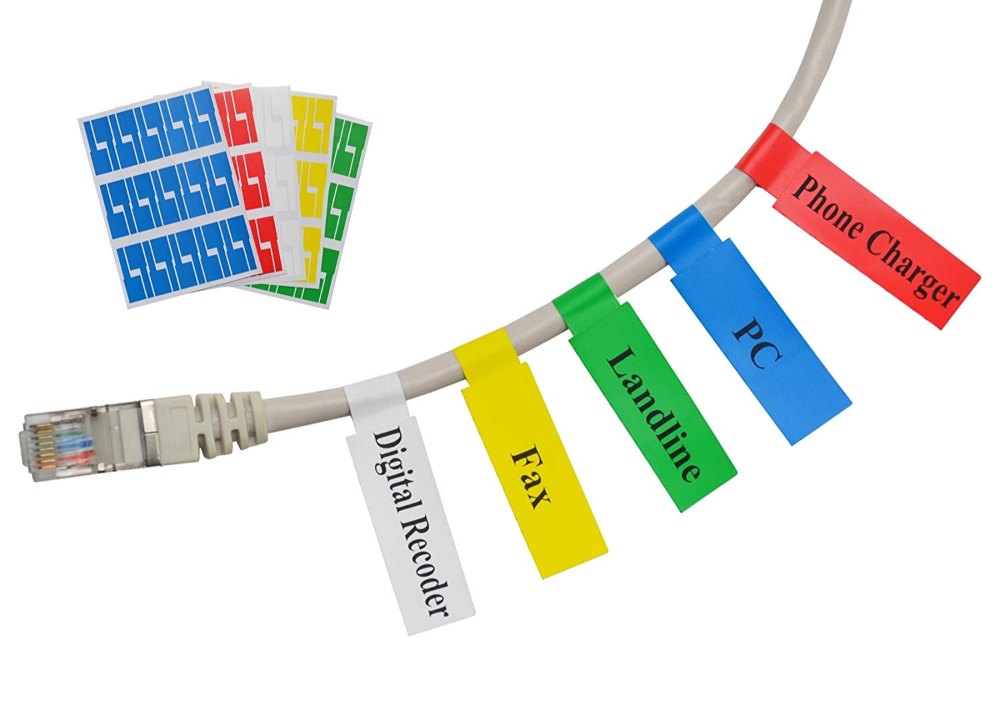
In demanding environments like automotive engine bays or industrial machinery, a wire harness label faces constant threats: heat, moisture, abrasion, chemicals, and UV exposure. The difference between a label that survives years of service and one that peels or fades often comes down to material selection. Durable labels are typically made from polyester or polyimide films with industrial-grade adhesives engineered for specific substrates. A label slapped on with a generic office-grade adhesive might hold initially, but once temperatures fluctuate or oil splashes reach it, the bond weakens and the print starts to lift.
Print technology plays an equally critical role. Labels produced with thermal transfer printing and resin-based ribbons are far more resistant to smearing and solvent attack than those printed with wax ribbons or direct thermal methods. The resin fuses into the label surface, creating a nearly permanent mark. On the other hand, direct thermal labels—commonly used for shipping—depend on heat-sensitive coatings that darken irreversibly under high heat, making them a poor choice for harnesses near exhaust components. The choice of print method isn't just about legibility; it's about whether the wire identification remains readable after repeated exposure to cleaning agents and engine degreasers.
Finally, the installation and design of the label itself can be the deciding factor. Wraparound labels that fully adhere to themselves create a self-laminating shield, protecting the printed area from direct contact with fluids and friction. Flag-style labels may offer more visibility but leave edges exposed. Even the surface preparation matters—dust, oils, or silicone mold release agents on a wire or cable jacket can silently sabotage adhesion. A label that lasts is one that was chosen for the exact wire diameter, jacket material, and environmental profile it will encounter, not just picked from a generic bin.
Choosing Materials Like an Engineer, Not a Salesperson
A salesperson will hand you a glossy brochure and talk about how many units they have shipped. An engineer asks a different question first: what load will this part actually see, and how is it going to fail when it does? That shift in mindset changes everything. Instead of starting with brand loyalty or a vendor's claim, you pull the datasheet and look for yield strength, elongation at break, UV resistance, and chemical compatibility. You then build a small test rig out of scrap and run the material through thermal cycling until it cracks, because trusting a spec sheet alone is how you end up with warped parts on a summer roof.
The real filter is application-specific performance. A polymer that looks fantastic in a demo can absorb moisture and lose thirty percent of its stiffness in a humid climate. An engineer will ask for test coupons machined to the final wall thickness, not just standardized bars, and will expose them to the same fluids, temperatures, and vibration the product will face in the field. It is not enough to know that a material is food grade or UL listed; you need to know at what temperature the flame rating was tested and whether the impact data came from notched or unnotched samples. Those details separate a material that works on paper from one that survives ten years.
Cost also looks different through an engineering lens. A salesperson quotes price per kilogram and stops there. An engineer multiplies by scrap rate, tool wear, secondary finishing, and the cost of a field failure. A cheaper resin that needs twice as much cycle time or generates rejects at the gate may actually be the expensive option. You ask the supplier for a first-article inspection report and, if possible, a root cause analysis from their last rejected batch. When you compare two candidates, you compare total cost per successful part in service, not the invoice line. That is how you choose materials like someone who has to sign off on the warranty, not someone who earns a commission.
Custom Labels That Fit Your Harness, Not a Catalog Number
A label that fights your harness is worse than no label at all. Generic catalog numbers assume a one-size-fits-all shape, which rarely survives the bend radius, insulation thickness, or connector spacing you actually work with. Custom labels start from the physical harness in front of you, so the adhesive lands where it can grip, the text stays legible after wrapping, and the edges don't lift on tight curves.
You also stop paying for wasted material and rework loops. Instead of trimming stock labels or layering two sizes to get coverage, you get a die-cut that follows the bundle circumference, the flag length you need, and a print area sized for your wire ID scheme. The result is a label that looks like it belongs on the assembly, not a part number someone else guessed at.
Meeting Industry Specs Without Making You Decode a Manual
Nobody gets excited about flipping through a hundred pages of technical fine print just to confirm a machine meets the latest safety standards. That's why this system handles the heavy lifting upfront. Every relevant industry specification is already built into the core logic, so the moment you power it on, it knows exactly what to check, measure, and report. You don't have to translate jargon or cross-reference tables—the compliance work happens quietly in the background.
Instead of handing you a binder and wishing you luck, the interface shows clear, plain-language statuses. A green check means you're aligned with the current spec. A yellow notice tells you what needs attention and why, without sending you on a scavenger hunt for clause numbers. If an update to a standard rolls out, the system adapts its internal guidelines automatically, so what was compliant yesterday doesn't silently become a violation tomorrow.
The real payoff is time. Your team can focus on actual production or service delivery, not on manual interpretation. Audits become a matter of exporting a report instead of assembling a paper trail from memory. Meeting industry specs stops being a project and starts being a default setting—no decoder ring required.
From First Prototype to Full Production Keeping Every Mark Identifiable
Early prototypes rarely receive the attention they deserve. A rushed bench build or a hand-soldered first unit often carries scribbled notes, half-removed labels, or no permanent identifier at all. That changes the moment a design moves toward repeatable manufacturing. Every board, casting, and assembly starts carrying a mark that ties back to a specific revision, material lot, and test record. The trick is making that mark survive the same processes the part itself goes through—heat, solvents, abrasives, and occasional rough handling on the line.
Rather than treating identification as an afterthought, the marking method gets chosen alongside the first production tooling. Laser etching, pad printing, or metal stamping each leave a different kind of trace, and the choice depends on what the surface will endure later. What matters is that the identifier remains legible after coating, washing, or thermal cycling. When a field return shows up months later, the mark should still point cleanly back to the prototype batch, the exact production run, and the test station that signed off on it. No guessing, no missing history.
FAQ
You want a supplier that understands harsh industrial environments—labels must survive heat, chemicals, abrasion, and UV exposure without fading or peeling. Look for proven materials like polyester or polyimide and printing methods that won't smear.
Clear, long-lasting labels make troubleshooting significantly faster. Technicians can trace circuits and connections without guessing, which reduces downtime and prevents costly mistakes during repairs or upgrades.
Yes, when produced with UV-stable materials and strong adhesives, they hold up against sunlight, rain, and temperature swings. Always confirm the manufacturer tests for outdoor exposure if that's your use case.
Thermal transfer printing is often preferred because it produces crisp, smudge-resistant text that can withstand repeated handling and exposure to oils or solvents. Some manufacturers also offer laser marking for extremely tough environments.
Most top manufacturers provide custom die-cutting and pre-printing services. You can specify exact dimensions, hole patterns, and text or barcode content, so labels arrive ready to install.
Adhesive is critical—labels often wrap around cables or uneven surfaces. A high-tack, pressure-sensitive adhesive with good shear strength prevents flagging and peeling, even on small-diameter wires or high-flex applications.
Automotive, aerospace, industrial machinery, and energy sectors rely on them heavily. Any field where equipment operates in tough conditions and downtime is expensive will benefit from reliable identification.
Request samples and test them in your actual environment. Reputable manufacturers will provide data on abrasion resistance, temperature range, chemical resistance, and accelerated aging tests.
Conclusion
On the factory floor, wire harness labels face a brutal gauntlet: oil spray, vibration, chemical washdowns, and constant abrasion from moving cables. The labels that survive are not accidents—they are engineered choices. A top manufacturer knows that durability starts with material selection, not marketing gloss. Polyester and polyimide films outperform vinyl when heat and solvents are present, while aggressive adhesives must bond to low-surface-energy jackets like cross-linked polyethylene. Rather than pushing a catalog part, the right partner examines bend radius, wire gauge, and exposure timeline before recommending a construction. That is the difference between a label that peels off in a month and one that remains legible after years of service.
Compliance should not feel like decoding a manual. Leading suppliers print UL, CSA, and SAE symbols directly onto the label, integrating them into the layout without sacrificing clarity. Custom shapes, color coding, and variable data—from barcodes to sequential serial numbers—are cut to fit the harness bundle, not forced into a standard rectangle. From first prototype to full production, every mark stays identifiable because the printing process is matched to the substrate, whether thermal transfer, laser, or inkjet. The result is industrial identification that holds up under scrutiny, batch after batch, without someone in the supply chain having to ask what the spec actually means.
Contact Us
Contact Person: Yara
Email: [email protected]
Tel/WhatsApp: +86 13505426090
Website: https://www.qdxspack.com/