

Top Thread Button Bit Supplier for Durable Rock Drilling Tools
2026-09-10
Ask any driller what separates a productive shift from a frustrating one, and the answer often comes down to the bit. A top thread button bit supplier doesn't just sell steel — they deliver the consistency and toughness that keep durable rock drilling tools in the hole longer. That's the reputation PULANKA has earned on job sites where downtime isn't an option. In the sections ahead, you'll see exactly what makes a supplier worth trusting and why the right bit changes everything.
Carbide Grade Selection Secrets Behind Long-Lasting Thread Button Bits
Most buyers assume the hardest carbide grade always lasts longest, but that's how you end up with snapped inserts on a tough granite face. For threaded button bits, the real trick is reading the rock's abrasiveness and the hammer's impact energy together. A fine-grained WC-Co grade with 6% cobalt gives you high hardness (around HRA 90) and great wear resistance in hard, non-abrasive formations, but it shatters under fatigue from high-frequency percussion. Coarser grains with 8-10% cobalt sacrifice a little hardness for much better impact toughness, letting the button absorb shock without cracking.
Thread button bit failures rarely show up as even wear. You'll see chipped edges, broken buttons, or whole inserts falling out of the steel body. Those point to a mismatch between carbide grade and brazing or heat treatment. A common field secret is to examine used buttons: if the wear flat is polished and mushroomed, the grade is too soft and deforming. If you find micro-chipping or clean fractures, the grade is too hard for the impact load. Matching the grade to the bit's flushing design also matters because poor chip evacuation creates secondary grinding that erodes the steel around the carbide, making even a perfect grade look bad.
Long life comes from choosing the grade that fails by slow, predictable abrasion rather than sudden breakage. Start with the rock type: hard, abrasive quartzite needs a harder fine-grained grade with lower cobalt (6-7%), while broken, blocky ground demands a tougher coarser grade with 8-12% cobalt. Always track cost per meter drilled, not the sticker price of the bit. A slightly softer grade that wears 15% faster but never snaps will beat a brittle premium grade that loses three buttons in the first 50 meters. That's the real selection secret behind drill bits that outlast the competition.
Why Thread Geometry Matters More Than You Think for Rock Drilling
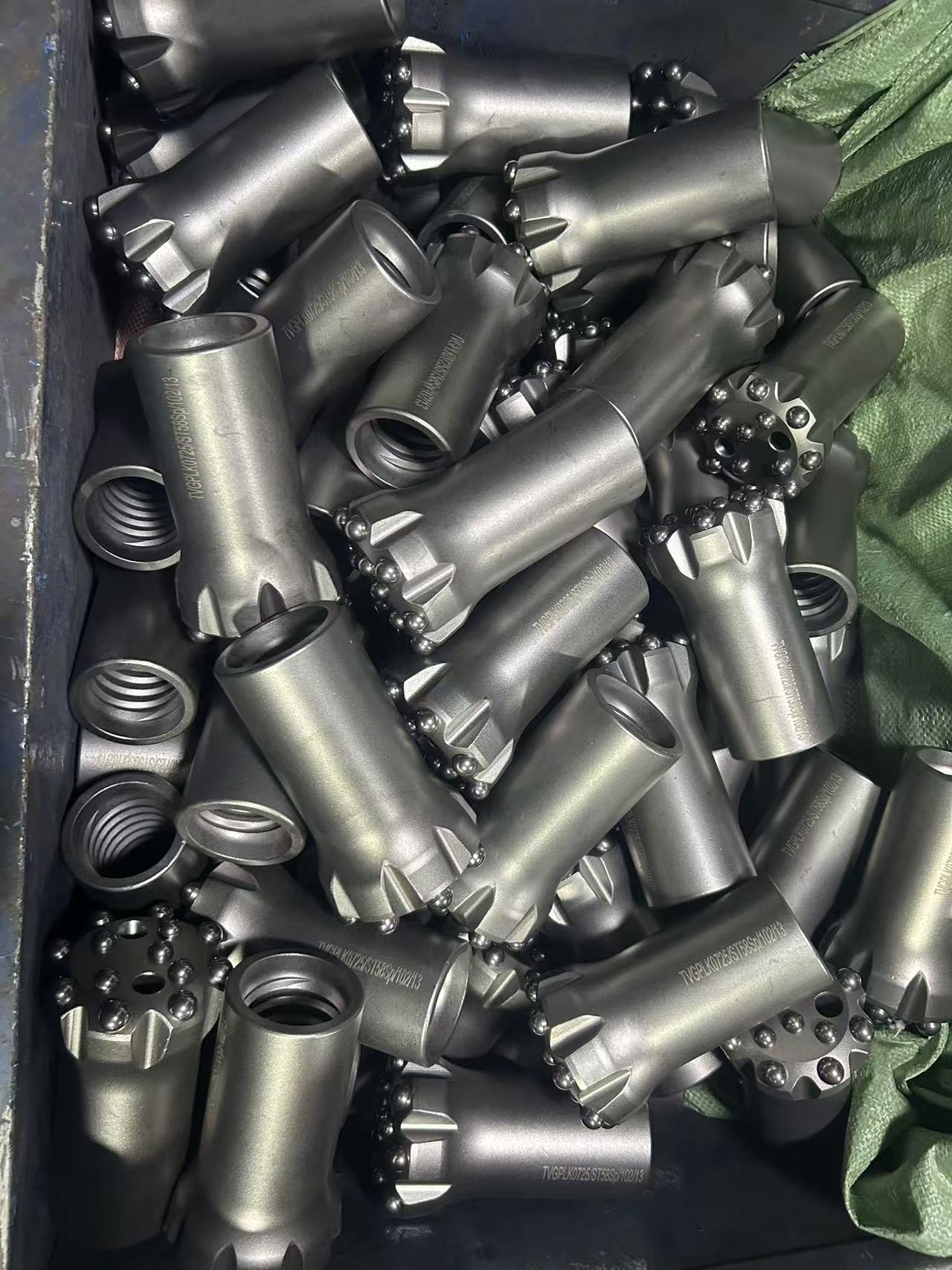
Most drillers view thread geometry as a minor detail on a spec sheet, but the shape, pitch, and flank angles of a rock drill thread quietly dictate how energy travels from the hammer to the bit. A steep thread flank, for example, can concentrate stress at the root and invite fatigue cracks, while a shallower, more rounded profile spreads the load across a larger contact area. In hard, fractured ground, that difference shows up as premature rod failures or a noticeable drop in penetration rate, even when every other parameter looks identical on paper.
The real surprise is how much thread fit influences coupling stiffness. Loose or poorly matched threads create micro-slippage under each impact, turning valuable percussive energy into heat and wear instead of rock breakage. Over hundreds of blows per minute, this inefficiency compounds, shortening the service life of shanks and couplings. A well-designed thread, on the other hand, locks the joint tight enough to behave almost like a solid bar, preserving the sharp, high-frequency pulse that efficient drilling depends on.
Maintenance habits also shift once thread geometry is taken seriously. Instead of simply greasing threads and hoping for the best, experienced crews check for uneven polishing or galling that reveals misalignment long before a failure occurs. Small changes such as switching to a double-start thread or adjusting the make-up torque can yield measurable gains in rod life and hole straightness, proving that this overlooked geometry is often the quiet lever between a frustrating shift and a productive one.
From Granite to Hard Rock: Matching Bits to Real Job Site Demands
Granite punishes bits that rely on sharpness alone. Its crystalline structure grinds cutting edges down fast, so a bit that works beautifully in sandstone can be scrap metal by lunch. On real sites, the first question isn't what the bit is made of, but how the rock fails. Granite tends to fracture in small, sharp chips, which means the bit needs enough impact energy to keep breaking fresh surface without overheating the carbide. If the rig lacks the weight or rpm to maintain that bite, switching to a harder grade of carbide won't help; you'll just polish the buttons and stall progress.
Hard rock isn't one category, and neither is the right bit. A dense basalt with high compressive strength demands a different geometry than a fractured quartzite that chews up steel bodies. Match the bit to the failure mode, not just the label on the rock. Look at the drilling logs, the dust color, the sound from the hole. Sometimes a bit with wider flushing channels outperforms a nominally harder one because it clears cuttings before they re-grind the face. Other times, reducing the number of buttons but increasing their protrusion gives the percussion enough reach to pop chips loose. The field tells you what the spec sheet can't.
Wear Resistance That Actually Shows Up in the Field—Not Just Spec Sheets
Lab tests can make any material look tough. Drop a tungsten carbide coupon on a polished abrasion wheel and you will get a neat number that sales teams love to quote. But put that same alloy into a chute handling crushed granite day after day, and the story often changes. True wear resistance is not a single data point. It is how the surface holds up when abrasive particles hit at odd angles, when moisture mixes with dust into a grinding paste, and when impact loads arrive without warning. We have seen materials with lower hardness ratings outlast harder competitors simply because their microstructure absorbed micro-impacts instead of chipping away.
The gap between spec sheets and the field shows up in unexpected ways. A liner that scores well on a standard rubber wheel test might fail in a cement plant because the test never accounted for thermal cycling. Or a hardfacing wire that looks great in a bead-on-plate demo can spall off a bucket lip after a few hundred hours of digging in rocky soil. What matters is not the single abrasive condition but the combination: sliding wear plus corrosion, or high-stress grinding plus fatigue. Materials that thrive in real conditions are usually the ones engineered for that specific mix, not the ones chasing the highest hardness number.
That is why we stopped publishing only polished wear data and started showing field results with all their messiness. Photos of worn plates after 2,000 hours in a quarry, side-by-side comparisons from actual conveyor transfers, and tear-down reports from customers who keep their own hour meters. Those records tell you what a spec sheet cannot: how the material behaves when maintenance is delayed, when feed size varies, and when nobody has time to clean the equipment. Wear resistance that shows up in the field is the only kind worth paying for.
What to Look for Beyond the Price Tag in a Thread Button Bit Supplier
Price alone hides crucial differences in carbide grade and heat treatment. Ask for the specific tungsten carbide grade used for the buttons and the steel quality of the bit body. A supplier that openly shares material certifications and can explain how their bits perform in fractured or abrasive rock is far more valuable than one offering the lowest unit cost. Look for evidence of controlled cooling after brazing, because poor thermal treatment leads to premature button loss.
Beyond the bit itself, assess the supplier's ability to respond when conditions change. Do they offer re-grinding services, on-site support, or failure analysis when a bit breaks earlier than expected? A dependable partner will ask about your drill rig parameters, rock hardness, and flushing pressure before recommending a product. If they never mention air pressure or rotation speed, that's a red flag.
Finally, check inventory depth and delivery consistency. A thread button bit that sits in customs for three weeks can halt an entire project. Ask for realistic lead times, stock levels for common thread sizes, and whether they can ship partial orders in an emergency. Suppliers with local warehousing or established logistics partners reduce your downtime risk, which often outweighs a few dollars saved per bit.
Extending Bit Life: Practical Insights from Top Drilling Teams
Ask any crew that's chased bit records on deep laterals, and they'll tell you the same thing: you don't buy bit life off the shelf, you earn it in the gray zone between formation change and dull grade. Top teams obsess over the last 15 percent of a run, where vibration spikes and cutting structure starts to fail before the average driller notices. They log dull photos like evidence, track shoulder wear against torque spikes, and pull bits not when they're done, but when the cost per foot curve ticks upward for the third stand in a row.
One practical trick that separates the best from the rest is treating hydraulics as a wear-rate dial, not a cleaning checkbox. On a recent Wolfcamp campaign, a team dialed back flow rate by 8 percent while holding RPM steady—bit life jumped 22 percent on identical formations because they stopped eroding the cone shell before cutting structure degraded. Another crew in the Bakken started swapping nozzles based on cuttings size distribution from the shaker, not just pressure charts. Their record run wasn't about a magic bit; it was about matching hydraulic energy to the exact moment the formation turned abrasive.
But the real edge comes from feedback loops that feel almost personal. Drillers who mark each connection with a two-word note—"smooth" or "grinding"—build a pattern no dashboard captures. One operator in the Permian pushed a PDC bit 40 percent farther than offset wells by simply refusing to rotate through suspected chert stringers at full weight. They eased off, let the bit skim, then loaded back up. No new technology, no fancy cutter grade. Just a team that read the torque curve like a language and treated bit life as something you negotiate with the rock, not demand from it.
FAQ
The durability comes from the grade of tungsten carbide used in the buttons and the heat treatment of the steel body. A well-made bit keeps the buttons from shearing off under high impact and resists the constant abrasion of rock cuttings. Threaded designs also provide a tighter connection to the drill string, reducing energy loss and wobble.
Check the drill rod specifications first. Common options include R32, R38, T38, T45, and T51. The pitch must match your existing rods and shanks, or you'll end up with poor energy transfer and premature wear. If your equipment manual is unclear, a quick photo of the rod end sent to a supplier is usually enough for them to identify it.
They can, but you may need to adjust the button shape and protrusion. For abrasive hard rock, a bit with more spherical buttons and a heavier body works better. For softer, fractured ground, sharper buttons with more aggressive flushing holes clear cuttings faster. It's rarely one-size-fits-all.
Re-grinding the buttons before they become too flat is the biggest factor. Also, keep the air pressure high enough to flush cuttings out of the hole, lubricate the threads regularly, and never let the bit sit in water after use. Simple habits like these often add 30–50% more meters.
The bit itself can be the same, but underground work sometimes requires a shorter overall length for tight headings and better collar design to handle curved holes. Surface drilling usually allows longer bodies and more aggressive flushing. The thread connection, though, stays the same so the bits work with either setup as long as the rig pressure is suitable.
Ask for the grade of tungsten carbide and the hardness test results. Reputable suppliers use material with a Rockwell hardness in the high 80s to low 90s and will share micrographs or batch certificates. If a seller refuses to provide any material data, that's a warning sign.
A specialist can match the bit to your specific rock report instead of selling you a generic part. They also tend to stock replacement buttons and offer re-grinding services, which keeps your overall cost per meter lower. That kind of support is hard to find at a general tool shop.
Yes. If you share a brief description of the rock type, drill rig, and hole diameter, a good supplier will adjust the number of buttons, their spacing, and the flushing grooves accordingly. It doesn't cost much more for a small batch, and the improvement in penetration rate is often immediate.
Conclusion
A thread button bit only lasts as long as the decisions behind its design, and the best suppliers treat carbide grade selection as a non-negotiable starting point. Instead of chasing one hardest grade, they balance toughness and wear resistance based on the rock you actually face—granite demands a different compromise than abrasive sandstone. Thread geometry quietly decides whether energy transfers cleanly into the rock or gets lost in vibration and premature shoulder wear. Top drilling teams look for suppliers who can explain why a specific thread profile, flank angle, and button layout suits the job, not just hand over a catalog. Matching the bit to real site conditions, from fractured ground to massive hard rock, separates a tool that eats meters from one that burns inserts before lunch.
Field results matter more than spec sheet promises. A supplier worth keeping will show wear patterns from actual jobs—shoulder rounding, face washout, body erosion—and explain what they changed to fix it. Price becomes secondary when you measure cost per drilled meter rather than upfront invoice. The most useful suppliers act like extended members of your drilling crew: they ask about your compressor, rig setup, and flushing pressure, then recommend adjustments or bit tweaks that add hours to each sharpening cycle. Those practical insights, gathered from high-volume drillers, often do more for bit life than any marketing claim. Durable rock drilling tools come from suppliers who understand that carbide grade, thread geometry, and field feedback are one connected system—not isolated features to upsell.
Contact Us
Contact Person: Elma
Email: [email protected]
Tel/WhatsApp: +86 13738628777
Website: https://www.pulankagroup.com/