

Top Rubber Profiles Extrusion Line Technologies Transforming Production Efficiency
2026-11-16
Rubber profile extrusion has come a long way, and today's line technologies are pushing efficiency to levels that were unthinkable a decade ago. Whether you're chasing tighter tolerances or faster changeovers, the right machinery makes all the difference. That's where SFC comes in—with extrusion solutions engineered to maximize output while minimizing downtime. Here's a look at the top technologies driving this production revolution.
Real-Time Die Adjustment Slashes Scrap Rates
In most press shops, scrap shows up long after the die has drifted out of tolerance. By the time an operator catches the thinning or edge burrs, hundreds of parts are already in the reject bin. Waiting for end-of-batch inspection turns a minor shift in material hardness or die temperature into a costly pile of waste.
Real-time die adjustment changes that sequence. Sensors embedded in the tooling stream force, clearance, and temperature data to a controller that compares each hit against the golden part signature. If the draw bead pressure or punch-to-die gap starts to wander, the system corrects it within a few strokes, not after a reel change. One Midwest stamping line saw its wrinkle-and-split scrap rate fall from 4.7% to 0.8% in the first week of closed-loop control.
The payback goes beyond fewer rejected parts. Operators stop sorting through bins of borderline pieces and start watching trend lines that predict when a die insert needs service. Material utilization climbs, press uptime holds steady, and the next job starts closer to nominal than the last one finished.
Hands-Free Feeding Keeps Lines Moving
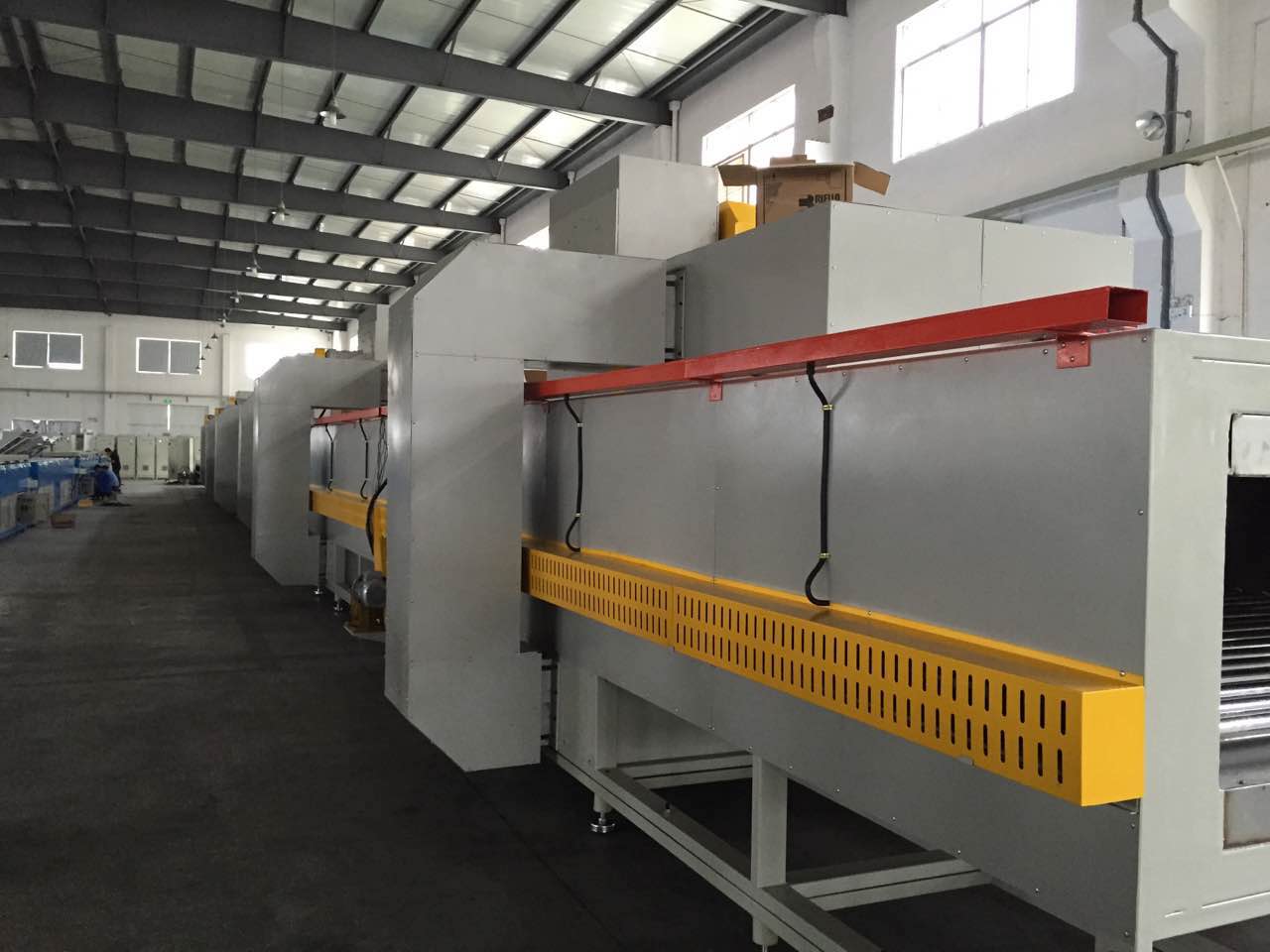
The real bottleneck in most feeding lines isn't the machine speed—it's the operator's hands. Every manual adjustment, every repositioned part, every cleared jam eats seconds that multiply across a shift. Hands-free feeding eliminates that constant touching. The system takes the part from the stack, aligns it, and feeds it into the press or die without a single pause for human intervention. What used to require two people and a stopwatch now just happens.
Think about what that does to your throughput. A line that stuttered along at 20 parts per minute suddenly runs smoothly at 26 or 28, not because the machine got faster, but because the hesitation disappeared. There's no waiting for an operator to turn around, no fumbling with a misaligned blank, no safety gate opening and closing for every cycle. The line just flows. And when the line flows, your takt time stops being a theoretical number and starts matching the actual rhythm of production.
The real advantage isn't just speed—it's consistency. Human hands have good days and bad days. They get tired, distracted, or just slightly off. Hands-free feeding doesn't care if it's hour one or hour ten. Every part enters the machine at the same angle, the same depth, the same precise moment. That kind of repeatability doesn't just keep the line moving; it keeps your scrap rate down and your die life up, because the press never sees a misfed part. The line keeps moving, and so does your bottom line.
Smarter Motors Cut Energy Use Without Sacrificing Speed
Traditional motor designs often force a trade-off: either run at high speed and burn excessive power, or throttle back and lose performance. Smarter motors take a different route by embedding real-time control logic that adjusts current and voltage on the fly, matching output precisely to the load without ever hitting unnecessary peaks. This means the rotor can spin at full speed while the drive system hovers near its most efficient operating point, wasting far less energy as heat or vibration.
A key enabler is the move away from fixed-frequency drives toward adaptive modulation. Instead of pushing a constant waveform, these motors sample shaft position and torque demand thousands of times per second, then reshape the magnetic field to minimize losses. Some designs also use lighter rotor materials or segmented stators that reduce eddy current drag at high RPM. The result is not a slower motor but one that reaches top speed with a noticeably lower power draw.
In practice, factories and HVAC systems running these motors see double-digit percentage drops in electricity use while maintaining identical throughput. A conveyor line can keep its rapid cadence, and a cooling fan can sustain high airflow, yet the monthly energy bill shrinks. No compromise on speed, just a smarter path from the wall socket to the shaft.
Vision Systems Catch Defects Before They Leave the Line
Manual inspections have a hard time keeping pace with modern line speeds, and even the most attentive operator can miss hairline cracks or subtle surface blemishes. Vision systems change that equation by placing high-resolution cameras and tightly controlled lighting right where parts are made. Every unit gets scanned in milliseconds, and the software compares what it sees against a digital reference model. A deviation as small as a fraction of a millimeter is enough to trigger a flag before the part moves to the next station.
The real value comes from combining multiple inspection angles with smart illumination. Side-lit cameras reveal texture irregularities that top-down views would never catch, while strobed lighting freezes motion on fast conveyors. Algorithms don't just look for obvious breaks; they measure dimensional drift, coating thickness, and even print registration. If a parameter drifts outside the allowed band, the system rejects the item or reroutes it for rework, often without slowing the line.
What ends up leaving the plant is the result of an automated quality gate that never tires. Operators get annotated images of every failed part, so root-cause analysis happens in minutes instead of after a customer complaint. Scrap rates drop because problems are caught at the source, not at final audit. The line keeps moving, but defects don't.
Tool-Less Changeovers Unlock Smaller Batch Profitability
Most changeovers still eat up time because someone has to hunt for a wrench, loosen a dozen bolts, and fiddle with shims until the alignment looks right. Tool-less systems strip that routine away. Clamps, locating pins, and quick-release levers take over, letting an operator switch a line in minutes instead of losing half a shift. The real shift isn't just speed—it's that changeover stops being a special skill and becomes something anyone on the floor can do without waiting for maintenance.
When setup drops from forty-five minutes to five, the math changes fast. A shop no longer has to run huge batches just to bury the cost of downtime. Smaller runs stop looking like a penalty and start making sense against actual demand. That pulls down finished-goods inventory, frees up cash, and lets the plant say yes to orders that would have been laughed off a year ago.
Profitability then comes from reclaimed hours and lower carrying costs, not from forcing bigger lot sizes. Each machine gives back productive time that used to leak into setup, and that time turns into billable output. Smaller batches become a way to charge for flexibility rather than a reason to lose margin.
Sensor Networks Turn Downtime into Scheduled Tune-Ups
Unexpected equipment failures used to mean frantic calls, rushed repairs, and hours of lost production. With sensor networks woven into the machinery, that reactive scramble is fading. Vibration monitors, thermal probes, and pressure gauges now stream continuous performance data, flagging subtle shifts long before a breakdown becomes unavoidable. Maintenance teams see the warning signs early, so they can schedule work during planned lulls instead of waiting for a catastrophic stop.
Think of a pump bearing slowly wearing down. Traditional calendars might call for lubrication every ninety days, regardless of actual condition. A sensor network, however, tracks temperature spikes and increased friction in real time. The data tells you the bearing is degrading faster than expected, so you pull the pump offline next Tuesday during a shift change. That turns a potential midnight emergency into a thirty-minute bearing swap with the right crew already on site.
The shift changes more than just scheduling. It reshapes budgets, because emergency repairs almost always cost more than planned ones. It reduces inventory guesswork, since you know which parts are truly wearing out. And it builds confidence across the floor—operators trust the equipment more when they see maintenance happening on a steady, predictable rhythm rather than in a panic. Sensor networks don't eliminate wear and tear, but they hand you back control over when you deal with it.
FAQ
Advanced gear pump extrusion systems paired with laser-based dimensional scanning have become pivotal. They maintain consistent material flow and allow real-time corrections, cutting scrap rates dramatically compared to older screw-only setups.
By applying controlled negative pressure around the extrudate, vacuum calibration locks the profile's shape immediately after the die. This reduces downstream deformation and lets lines run faster without sacrificing tolerances, especially for complex geometries.
Rubber generates heat from internal friction, which can scorch the compound. Multi-zone oil-based thermal regulation in barrels and screws, combined with chill rolls after the die, keeps heat in a narrow band so operators can push throughput without burning batches.
Automated splice detection and auto-cutoff systems flag inconsistencies before they become jams. Paired with predictive maintenance sensors on gearboxes and motors, these systems let teams fix small issues during planned pauses instead of facing sudden line stops.
Yes. Co-extrusion allows a rigid core and a softer sealing lip to be formed in one pass. That eliminates secondary assembly steps and lets designers create profiles with dual hardness zones, improving product performance and simplifying inventory.
Modern screws use barrier flights and mixing pins that distribute shear more evenly. This reduces local overheating and improves plasticizing rates, so even stiff EPDM or silicone compounds extrude smoothly at higher line speeds.
Look for microwave or salt-bath continuous vulcanization units with closed-loop temperature feedback. These systems cure the rubber profile uniformly without the slow heat transfer of traditional hot air tunnels, so line speed is no longer limited by curing time.
Infrared preheaters before the die and AI-driven process optimization are gaining traction. Infrared cuts warm-up time and stabilizes viscosity, while machine learning models adjust screw speed, temperature, and puller tension in real time based on historical profile quality data.
Conclusion
Rubber profile extrusion has shifted from a trial-and-error process into a tightly controlled discipline. Modern lines now adjust die openings on the fly, reacting to material viscosity and temperature swings before scrap can accumulate. That alone turns what used to be an hour of wasted compound into a minor blip. Automated feeding systems keep the hoppers full without an operator hovering nearby, so the line never starves or gets overpacked. Meanwhile, the motors driving these extruders have become far more intelligent. They scale torque to the exact load, reducing energy draw during low-demand stretches while holding line speed steady where it matters.
Downstream, vision systems now inspect profiles continuously, flagging surface flaws and dimensional drift before bad product reaches packaging. When a new profile or color is required, tool-less changeover setups let crews swap dies and calibrators in minutes rather than hours, making short runs economically sensible. Vibration and temperature sensors spread across the line feed into a central monitoring system that predicts bearing wear and gearbox issues, so maintenance happens during planned pauses instead of after a breakdown. Together, these technologies remove the guesswork and idle time that used to eat into margins, allowing manufacturers to run smaller batches, cut waste, and keep throughput high without adding staff or floor space.
Contact Us
Contact Person: Chen Zhengwei
Email: [email protected]
Tel/WhatsApp: +86-13963975727
Website: https://www.sfcrubbermachine.com