

Top Rack Mount Static Var Generator Suppliers in China You Should Know
2026-11-16
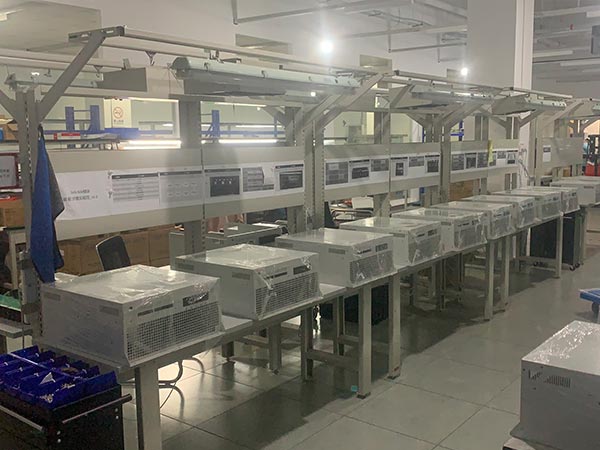
Sorting through rack mount static var generator suppliers in China usually means wading through a lot of identical spec sheets and copied marketing claims. The real differences show up later: in reactive power response under fluctuating loads, in thermal performance inside a crowded cabinet, and in whether the supplier can actually support a project after the invoice clears. That’s why this shortlist focuses on manufacturers with proven field records—and it includes GEYA, a supplier that has earned repeat orders by keeping its designs straightforward and its delivery timelines credible.
Why Chinese Rack-Mount SVG Suppliers Are Gaining Ground in Export Markets
Over the past decade, Chinese manufacturers of rack-mount static var generators (SVGs) have quietly moved from being cost-driven alternatives to preferred partners for utilities and industrial plants across Europe, Southeast Asia, and Latin America. The shift is less about price undercutting and more about a deliberate upgrade in engineering depth—think modular power stacks, faster reactive power response down to a few milliseconds, and integration-ready communication protocols that match local grid codes without painful customization.
One overlooked reason is the tight feedback loop between domestic demand and export refinement. China's own grid modernization push has forced suppliers to solve real problems—voltage flicker in dense industrial parks, harmonic resonance near renewable clusters, and harsh ambient conditions in remote substations. Those hard-won lessons get baked into standard products, so an exporter shipping to a Chilean mining operation or a German automotive plant delivers gear that has already survived comparable stress at home.
There is also a quieter advantage: local engineering support. Rather than selling boxes and disappearing, leading Chinese SVG makers now station application engineers in key markets, stock critical spare parts regionally, and offer firmware updates tuned to local tariff structures. That service layer, combined with shorter lead times than many European incumbents, is converting cautious first-time buyers into repeat customers who value uptime over brand nostalgia.
The Most Common Spec Misreadings in Rack-Mount SVG Datasheets
One of the most persistent errors is treating the kvar rating as if it were kW. A rack-mount SVG rated at 100 kvar does not supply 100 kW of active power; it shapes reactive current to correct power factor or stabilize voltage. Datasheets often state this only in a footnote, so engineers can mistakenly size conductors, fuses, or backup generation around a number that never appears on the AC bus.
Voltage tolerance is another field where quick scans lead to trouble. A bold “480 V” rating may sit next to a far more restrictive continuous operating range—sometimes ±10%, sometimes as tight as ±5% for sustained operation. Skipping that line means a unit can trip on a mild overvoltage or refuse to start during a brownout, turning a routine commissioning into a drawn-out site visit.
Response time specs are routinely misread as end-to-end correction speed. A datasheet may promise “full reactive response in under 5 ms,” but that figure usually excludes sensing, controller computation, and communication delays. In practice, a step change in load can take 15–30 ms before the SVG reaches the commanded output. That gap matters for flicker-sensitive processes, where even a few milliseconds of uncorrected reactive swing can produce visible light variation.
How Leading Manufacturers Handle Thermal Management in Compact Enclosures
Thermal management in tight enclosures often starts with material selection, not added hardware. A handful of forward-thinking manufacturers now mold chassis from thermally conductive polymers, blending graphite or ceramic fillers into the resin to spread heat across the entire shell. This approach removes the need for separate metal heat sinks while keeping the unit lightweight and sealed against dust and moisture.
When passive conduction alone falls short, designers turn to micro-scale active measures that stay hidden inside the housing. Piezoelectric fans thinner than a credit card move air across hotspots without the noise or bulk of rotary fans. Some builds embed temperature-sensitive wax actuators that open tiny vents only when internal readings climb, preserving the IP rating during normal operation.
For fully sealed compact units, the most effective tactic is often to rethink the thermal path from silicon to skin. Teams use infrared cameras during prototyping to identify dead zones, then shift high-power components toward outer walls or add thin vapor chambers that pull heat to cooler corners. Localized wall thickening or external micro-fins then enhance natural convection without changing the enclosure footprint.
What Changes When You Move From Wall-Mount to Rack-Mount SVG
One of the first things you notice is how the mounting points shift. A wall-mount SVG typically bolts directly to a solid wall, so the rear panel stays accessible and the unit's weight transfers straight into the building structure. In a rack, that load moves to the vertical rails, and the chassis often needs different brackets or slide rails. If the rack is densely populated, the SVG may end up sandwiched between other devices, which changes how you plan the front-to-rear airflow right from the start.
Cable routing also gets more deliberate. On a wall, you can bring conduits in from almost any direction and leave a comfortable service loop. Inside a rack, the cables usually enter from the top or bottom and share space with dozens of other connections. That means you'll likely use horizontal or vertical cable managers, and the input/output terminals may be repositioned to reduce strain. Maintenance access changes too—instead of standing beside a wall-mounted unit, you now pull the SVG forward or work through a hot-aisle/cold-aisle layout.
Heat and noise don't disappear; they just get concentrated. A rack-mount SVG sits closer to other heat-producing equipment, so its internal fans may run harder to maintain the same inlet temperature. You might need blanking panels to prevent hot air recirculation, and the overall acoustic profile changes because a closed rack door can muffle fan noise but also trap heat. If the room has raised floors or overhead cooling, those ducts now interact with the rack's airflow pattern more directly than with a wall-mounted unit.
Signs a Supplier Actually Tests Full Performance Before Shipping
A supplier that genuinely runs full performance tests before shipment rarely hides behind a single “pass” stamp. Look for time-stamped test logs with raw data such as continuous load, voltage fluctuation, and temperature curves. If the packing list includes the test bench ID, operator name, and sampling ratio, that is usually a stronger signal than a verbal guarantee. Factories that test thoroughly tend to keep these records on file and can share them without hesitation.
Another clear sign is whether the test conditions match real-world use. A motor supplier that only runs a no-load spin is not doing full performance validation. But if they can provide a load torque curve, startup current, and temperature rise under continuous rated load, they are pushing the unit to its actual limits. Buyers should also ask for rework records. A healthy testing process produces some “fail—repair—retest” loops. A batch with zero failures and zero retests can be more suspicious than reassuring.
Pay attention to how the supplier handles transparency. Willingness to offer third-party witness testing or a live video walkthrough of the test bench is a strong indicator. If a supplier can show real-time meter readings or let you remotely spot-check a unit during load testing, they likely have nothing to hide. On the other hand, a polished certificate that comes with no test photos, no calibration records for the equipment, and no traceability code often means the “full inspection” exists only on paper.
Which Grid Codes Matter for Rack-Mount SVG in Different Regions
Grid codes shape how rack-mount static var generators must respond to voltage disturbances, harmonic limits, and reactive power dispatch. In Europe, EN 50549 and the network-specific requirements of countries like Germany (VDE-AR-N 4110/4120) push devices to support fast fault ride-through, continuous reactive current injection, and strict total harmonic distortion ceilings below 5%. Meanwhile, in North America, IEEE 1547 and UL 1741 SA dominate, focusing on interoperability with utility commands, anti-islanding, and ride-through curves that differ notably from European profiles, especially under low-voltage ride-through scenarios.
Across Asia, the picture splinters further. China’s GB/T 37408 and grid company specifications demand wide voltage and frequency operating ranges, often requiring rack-mount SVG units to sustain reactive output during severe sags lasting several seconds. India’s CEA technical standards emphasize reactive power support at the point of common coupling, with specific power factor and response time mandates that influence hardware sizing and control loop tuning. Manufacturers targeting these markets must adapt firmware, filter design, and even IGBT derating to match local harmonic and flicker constraints like those in Japan’s JEC-2470 or Korea’s KEPCO guidelines.
Rather than chasing a single global code, experienced integrators map each region’s grid code to concrete SVG features: adjustable Q(V) curves, asymmetric fault handling, and harmonic compensation up to the 25th order. For rack-mount systems, physical constraints—such as limited cabinet depth and shared DC bus dynamics—mean that meeting codes like Australia’s AS/NZS 4777.2 requires careful derating of power modules during high-temperature events and prioritizing voltage regulation speed over steady-state accuracy. The most practical approach treats grid codes not as checklists but as design targets that inform everything from reactor inductance to the rate of reactive current slew during transient events.
FAQ
A few names consistently come up in field conversations: Sinexcel, Hopewind, and Sieyuan Electric all have rack-friendly SVG lines. They differ in the way they handle module redundancy and control interfaces, so it pays to request a live demo or a reference site visit before committing.
The obvious difference is the 19-inch rack form factor, which saves floor space in cramped electrical rooms. Beyond that, rack mount designs usually emphasize front-to-back airflow, hot-swappable power modules, and cleaner integration with existing UPS or battery cabinets. The trade-off is often a lower per-module kvar rating compared to large standalone systems.
Look past glossy brochures and ask for third-party type test reports, especially for harmonic performance and response time. Check how long the supplier has been shipping this exact rack platform, not just SVGs in general. Also clarify who handles firmware updates and whether spare modules can be sourced locally or need to be shipped from China.
In my experience, data centers and telecom switching rooms are the biggest adopters because they already standardize on 19-inch racks. You will also see them in commercial buildings where the electrical room is too tight for a dedicated SVG cabinet, and in light industrial plants that need local power factor correction near sensitive production lines.
Most rack mount units target low voltage 400V systems, with individual modules typically rated between 30 and 100 kvar. Because they are modular, you can parallel several units in one rack to reach 300 kvar or more. Higher voltage options exist but usually shift to cabinet style designs.
Many established suppliers offer export oriented versions with CE, UL, or CSA markings, but you should not assume every model carries these. Ask specifically which certifications apply to the rack mount line, and check whether the supplier has local service partners or at least a remote diagnostics portal in your time zone.
Front-to-back airflow is important if the unit will sit in a hot aisle containment setup. Pay attention to the fan type and whether it uses automatic speed control, because constant high speed fans create noise problems in occupied spaces. Also request the derating curve: some units start losing capacity above 40 degrees Celsius, which can surprise you during summer peaks.
It mainly handles reactive power and voltage dips that UPS systems do not always correct. By keeping the power factor close to unity at the point of common coupling, it reduces current loading on transformers and cables, which frees up capacity for additional IT load. This can also lower utility penalties if your site is billed for poor power factor.
Conclusion
Chinese rack-mount static var generator (SVG) suppliers have steadily moved from niche afterthoughts to serious contenders in export markets, largely because they combine aggressive pricing with modular designs that scale easily across 19-inch enclosures. One frequent trap in datasheets is mistaking nominal kvar for actual continuous reactive output at rated temperature; many units derate substantially above 40°C, and response speed figures often refer to no-load conditions. Leading manufacturers address thermal issues by using variable-speed fans, internal temperature monitoring with automatic derating, and thermally isolated power stages rather than one large heatsink. The shift from wall-mount to rack-mount units also brings different expectations: rack installations often share airspace with networking gear, so exhaust direction and acoustic noise become real constraints that rarely bother wall-mounted systems.
A reliable supplier tends to show evidence of full-performance testing before shipment—not just a basic run, but a sequence that includes full kvar output at maximum ambient temperature, step-response checks from inductive to capacitive mode within milliseconds, and harmonic load simulation. Buyers should ask for test reports with serial numbers, not marketing claims. Grid code awareness matters as well: rack-mount SVGs sold into Europe often need to handle EN 50160 voltage characteristics and specific fault-ride-through behavior, while North American projects lean on IEEE 519 harmonic limits and utility-specific interconnection requirements. In Asia, standards like GB/T 15543 for voltage fluctuations and regional grid codes for wind or solar integration can add further layers. Suppliers that openly discuss which grid codes they have tested against—and provide adaptation support—stand out from those shipping generic hardware.
Contact Us
Contact Person: Leo
Email: [email protected]
Tel/WhatsApp: +86-13567770207
Website: https://www.geyapower.com/