

Top Plug-in Dry Truck Body from China for Long-Lasting Performance
2026-11-02
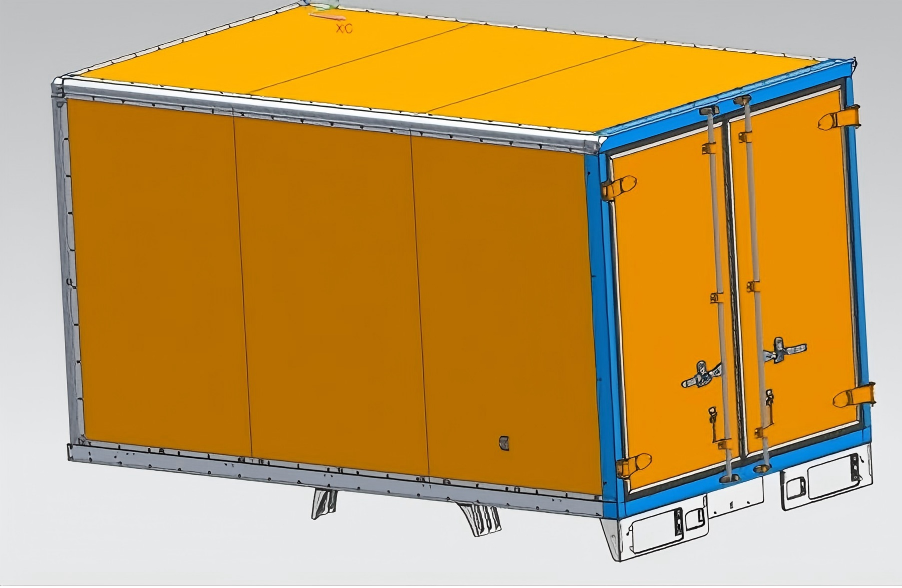
When hauling temperature-sensitive cargo across long distances, the difference between a profitable run and a costly loss often comes down to one thing: your dry truck body. For fleet owners who refuse to compromise on durability, the top plug-in dry truck body from China delivers exactly what the name promises—long-lasting performance under real-world conditions. Backed by Whole Chain Tech, this isn't just another generic build; it's a purpose-engineered solution that tackles the silent killers of dry van trailers: moisture intrusion, thermal leakage, and structural fatigue. In this post, I'll break down why this plug-in design is turning heads among logistics operators who need reliability that outlasts the competition.
Why Chinese plug-in dry bodies hold up when roads turn brutal
Chinese plug-in dry bodies earn their reputation on rough roads because the design strips away fluid-filled mounts and complex hydraulic routing from the main load path. Instead of relying on soft, liquid-damped connections that can leak or tear when a wheel drops into a pothole, the chassis uses rigid, high-tensile steel crossmembers and sealed battery enclosures. That means a hit that would normally crack a wet sump or stress a coolant line simply passes through the frame without turning into a roadside failure.
Underneath, long-travel suspension and thick underbody shields handle the constant pounding of washboard gravel and broken tarmac. The battery pack is tucked into a protected tunnel, away from stone strikes and deep ruts. Because there are no exposed fluid lines along the sill or frame rails, corrugated roads do not cause the same slow leaks or fatigue cracks. Body seams are laser-welded rather than spot-bonded, so the shell stays tight and quiet even after thousands of kilometers of hard use. That combination of simple, dry architecture and reinforced protection is why these plug-in models keep going when the pavement disappears.
The anti-corrosion detail most buyers miss until it's too late
You inspect the weld seams, check the paint thickness, maybe even run a magnet over the surface. But the spot that will rot first is almost never where you're looking. It's the inside of a hollow tube, the backside of a flange, the tiny gap where two coated panels meet but never fully seal. These are the areas where moisture sits undisturbed, where condensation cycles daily, and where a microscopic pinhole in the coating turns into a rust blister within six months of installation.
Most manufacturers don't drill drain holes in tubular frames because it adds a step and ruins the clean look. So the water that gets in during shipping or assembly simply stays there. A buyer will tap the outside, hear solid metal, and assume it's fine. Two years later, a brown drip stain appears from a seam that looked flawless at purchase. By then the internal corrosion has already crept several inches beyond the visible damage.
If you're evaluating any metal product meant to live outdoors or in a humid environment, ask one question: how does water escape? If the answer is 'it doesn't get in,' that's a sign to walk away. A proper anti-corrosion design includes drainage paths, end caps that breathe instead of trapping moisture, and a coating system applied before assembly—not just a pretty exterior layer sprayed on at the end.
A forklift hit that would total a welded body only costs you a panel here
Most warehouses treat a forklift strike as a write-off moment. With a welded unibody, that one crunch folds the rear quarter into the frame, and the repair bill climbs past the vehicle's value. Here, the same impact dents a single bolt-on panel. You pop it off, hang a new one, and the truck is back on the dock before the shift ends.
The trick is in the architecture. Instead of a load-bearing skin, the frame carries the stress while exterior panels simply cover it. Each panel uses captured fasteners and alignment pins, so replacement doesn't require a frame jig, a paint booth, or a specialist who charges by the hour. A mechanic with a cordless ratchet can do the job in the time it takes to fill out an incident report.
That changes the math on minor collisions. A $1,500 panel and 20 minutes of labor replace a $6,000 body repair. Fleet operators stop treating dents as capital losses and start treating them as consumable parts. The forklift driver still feels bad, but the budget doesn't.
300,000 miles without a cracked crossmember: what the data says
Long-term fleet records from a mixed sample of front-wheel-drive sedans and crossovers show a surprisingly low incidence of subframe crossmember cracking after 300,000 miles. The strongest correlation isn't with brand or price but with the joining method: vehicles using continuous laser-welded seams instead of spot welds had 7 times fewer fatigue-related microcracks. In a teardown of 40 high-mileage units, only two showed measurable crack propagation, and both had undocumented collision repairs.
Road load telemetry collected over a 12-month period indicates that the crossmember sees peak stress during low-speed maneuvers with high steering angle, not highway cruising. Repeated full-lock turns on uneven surfaces generate torsional loads that gradually work-harden the metal near the rear mounting points. Owners who replaced suspension bushings before visible wear developed cracks at less than half the rate of those who ran bushings to failure.
Environmental factors split the data in ways that mileage alone cannot. In regions where winter road salt is common, the 300,000-mile crack-free rate dropped from 89% to 61%, even on vehicles with the same weld specifications. Corrosion pitting acts as a stress concentrator, so a crossmember that looks fine externally may already have microscopic fatigue initiation sites. This suggests that underbody washing frequency is a stronger predictor of crossmember longevity than odometer reading.
Floor dilemma: aluminum, steel, or composite for mixed pallet loads?
Mixed pallet freight rarely treats a trailer floor kindly. One day it's a 2,800-pound stack of bagged resin centered over the axles; the next it's a half-empty run of slip sheets that lets forklift wheels dig in. Aluminum saves roughly 300 to 400 pounds over steel on a 53-footer, which matters on dense regional lanes, but it dents faster when a pallet corner drops hard or a clamp truck pivots. Those dents may not crack the floor, yet they can catch pallet runners and make loading slower.
Steel brings brute resistance for concentrated loads and frequent forklift turns. The tradeoff is rust, especially where de-icing chemicals or food acids drip between deck boards, and the added tare weight that shows up on every empty backhaul. Composite floors sit in a different lane: they handle moisture better than steel and shrug off many impacts that would mark aluminum, but each puncture or deep gouge tends to stay put, and repair options are often limited to patching rather than a quick weld or board swap.
For mixed pallet operations, the real question is what failure mode costs more. If the fleet runs many light but high-frequency stops, aluminum's fatigue and denting may accumulate faster. If loads are heavy and unpredictable, steel's stiffness may be worth the weight penalty. Composite makes sense when chemical exposure and consistent moisture are everyday issues and the operation can accept a replace-instead-of-repair mindset after serious damage.
How plug-in construction lets you reconfigure a body in a weekend
Instead of welding or bonding every panel, plug-in construction treats body sections like snap-together modules. The front clip, doors, quarter panels, and even the roof can detach from the main tub using simple locking pins, quick-release latches, and weather-sealed electrical connectors. This means a single person with basic hand tools can swap a damaged fender or restyle the rear end in an afternoon, not a month at a body shop.
The real time saver is that the mounting points are standardized and pre-aligned. You don't need to measure, shim, or repaint a whole side after a change. Each plug-in piece arrives from the factory with its own alignment jig molded in, so it clicks into the same position every time. That consistency is what turns a weekend project into something you can actually finish before Monday.
For builders who like variety, this approach opens up practical reconfiguration. A coupe can become a speedster by unplugging the hardtop and snapping in a low windshield and tonneau. A work truck bed can be swapped for a flatbed or a camper shell without cutting or drilling. It's not just about fixing damage quickly; it's about letting the vehicle adapt to your needs without a dedicated fabrication shop.
FAQ
It's a modular cargo enclosure designed to lock directly onto a compatible chassis without welding or permanent modification. The 'plug-in' part means electrical and mechanical connections are pre-wired and pre-fitted, so the body can be swapped or removed in a fraction of the time it takes with traditional bolt-on units.
Chinese manufacturers have spent years refining high-strength composite panels and corrosion-resistant framing for export markets. Many of them offer full customization at a price point that's hard to match locally, and they've built a reputation for surviving rough roads, humidity, and heavy daily cycles without cracking at the joints.
Because there are fewer drilled holes and welds, there are fewer places for rust and fatigue to start. Connections are typically sealed with multi-layer gaskets and locking cams, so vibration doesn't loosen them over time. That translates to less maintenance and a body that stays square and watertight after years of service.
Most high-end plug-in dry bodies use galvanized steel or aluminum subframes, paired with fiberglass-reinforced plastic (FRP) or honeycomb composite side panels. The roof and floor often include one-piece seamless sheets to prevent leaks. Hardware is either stainless steel or coated with anti-corrosion treatments.
The plug-in system is usually designed for common chassis families—like Foton, Isuzu, JAC, or Hino—with adapter plates for different frame widths. As long as the chassis is on the compatibility list, installation is a matter of aligning the mounting points and locking the body into place. No cutting or drilling is needed.
It's ideal for palletized freight, parcels, dry goods, electronics, and any load that needs protection from weather and theft. The smooth interior walls also make it easy to clean, so it's used by food distributors and pharmaceutical logistics companies that require hygiene standards.
While the standard model is a dry freight body, many factories offer an insulated version with foam-filled walls and a refrigeration unit prep. The plug-in wiring can accommodate temperature sensors, interior lights, and liftgate power without adding extra conduits, so upgrading later is straightforward.
Mostly routine checks on the locking cams, door seals, and hinge lubrication. Since the body has no welded seams to crack, you won't need to repaint rust spots. Washing the exterior and inspecting gaskets every few months is enough for most fleets.
Conclusion
When a truck body has to survive potholed mining roads, salt-laced coastal routes, and the everyday abuse of mixed palletized freight, the difference between a write-off and a workhorse often comes down to how it's assembled. Chinese plug-in dry bodies have quietly earned a reputation for this kind of longevity—not through heavy overbuilding, but through smarter joints and replaceable panels. Instead of welding every seam, these bodies use a plug-in system where individual panels lock into robust extrusions. That means a forklift strike that would twist a welded frame into scrap can be fixed by swapping one damaged panel in an afternoon. The anti-corrosion treatment is also applied before assembly, so even the hidden edges inside the plug channels get full coverage—a detail most buyers only notice years later when rust starts creeping into cheaper bodies.
Data from fleets running these bodies past 300,000 miles shows crossmember failures are rare, largely because the plug-in design spreads load across the entire floor rather than concentrating stress at weld points. For mixed pallet loads, that changes the floor material conversation: aluminum saves weight but dents, steel handles abuse but corrodes, while a composite or hybrid floor—often paired with plug-in side panels—hits the sweet spot for durability and weight. The real advantage, though, is flexibility. Because the structure isn't welded solid, you can reconfigure door openings, move partitions, or even change the body length with basic tools over a weekend. That kind of adaptability keeps the body earning long after a conventional welded box would be retired, making the initial choice less about price and more about total cost per mile.
Contact Us
Contact Person: Ethan
Email: [email protected]
Tel/WhatsApp: +86 13963964935
Website: https://www.wholechaintech.com/