

Top Drill Rod Manufacturers That Consistently Deliver Quality and Durability
2026-11-16
Finding a drill rod supplier that truly delivers both quality and durability can often feel like a gamble. Too many manufacturers promise long service life but fall short in tough drilling conditions, leading to unexpected downtime and hidden costs. PULANKA has earned a place among the few brands that consistently get it right. In this blog, we highlight the top drill rod manufacturers known for reliable performance in the field, so you can make a more confident choice without second-guessing your equipment.
What Makes a Drill Rod Manufacturer Worth Returning To
Most buyers remember the supplier who picked up the phone before the third ring and actually knew the difference between a T38 and an R32 thread. That kind of product fluency builds repeat business faster than any catalog. A manufacturer worth returning to treats every order as a technical conversation, not just a transaction, and they will ask about ground conditions, hole depth, and rig specs before they quote a price.
Consistency matters more than promises. The best drill rod makers don't just meet the spec on the first shipment; they hit the same hardness, straightness, and thread profile on the 40th shipment. When rods come out of the box ready to spin without chasing threads or fighting runout, crews stop wasting time and start trusting the source. That trust is what turns a one-time purchase into a standing order.
Warranty handling also separates the memorable suppliers from the forgettable ones. A manufacturer that replaces a failed rod without a two-week interrogation shows they understand downtime costs. Add honest lead times and clear updates when a shipment slips, and you have a partner worth keeping on speed dial. None of this is flashy, but it is exactly why certain names get the next order without a bid.
Material Selection and Heat Treatment That Keep Rods in the Hole Longer
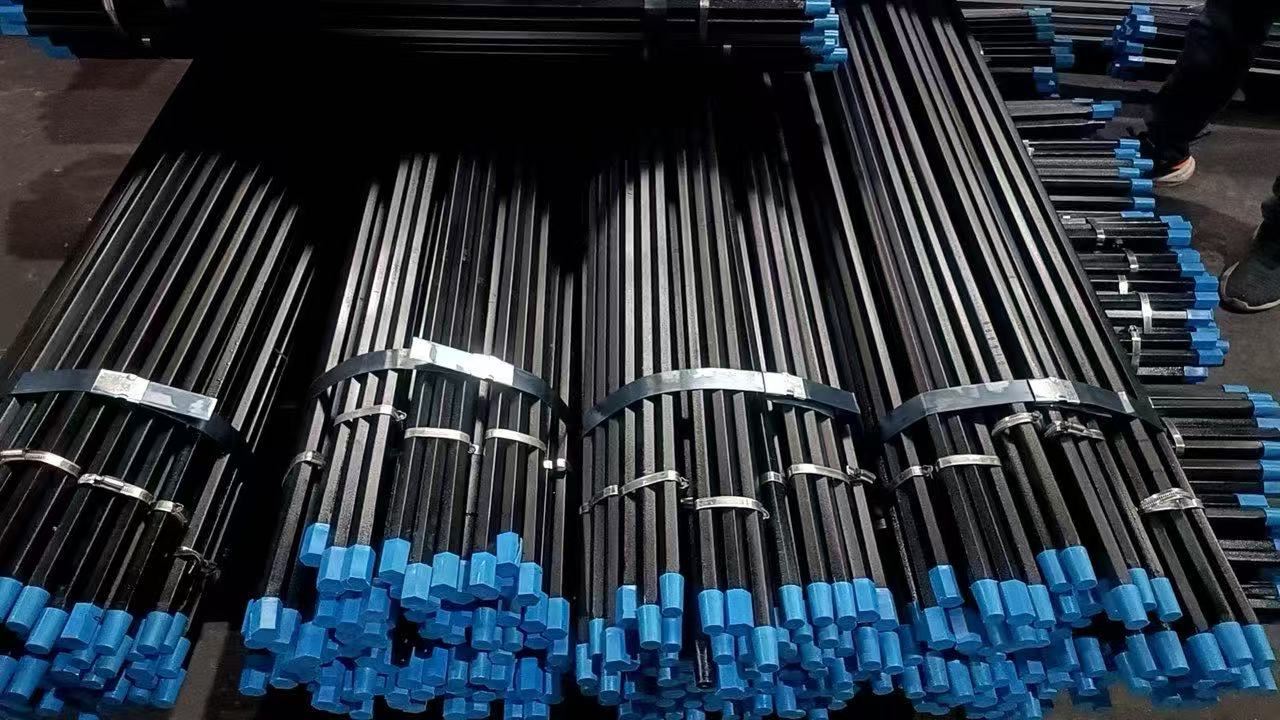
Sucker rod failures rarely start with a sudden break. They begin weeks earlier, at the surface of the metal, where tiny pits and microcracks open the door to corrosion fatigue. The right material choice closes that door before it ever gets a chance to swing wide. High-strength carbon steels with a carefully controlled inclusion content resist hydrogen embrittlement in sour wells, while chromium-molybdenum grades handle the repeated bending stress of deviated wellbores without losing toughness. Matching the alloy to the downhole environment means reading more than a spec sheet—it requires knowing how the rod actually flexes, rubs, and corrodes in service.
Heat treatment does the quieter work. A quench-and-temper cycle that leaves the surface slightly harder than the core creates a deliberate compressive stress layer, which acts like a built-in clamp against crack initiation. If the tempering temperature runs too low, the rod becomes brittle and notch-sensitive; too high, and it loses the yield strength needed to fight buckling loads. Many field failures traced back to a missed tempering window can be avoided by verifying hardness at multiple points along the rod body, not just at the ends. Controlled cooling after forging also prevents the formation of coarse grain boundaries that act as highways for corrosion.
The payoff shows up in run time, but also in the smaller details that get overlooked. Shot peening after heat treatment further deepens the protective compressive layer, while induction hardening on the pin shoulders reduces galling during make-up and break-out. A rod string that stays in the hole longer isn't just about picking a harder steel—it's about sequencing the thermal and mechanical steps so the final microstructure resists the exact failure mode the well is trying to impose. When those decisions are made deliberately, the rods don't just survive; they earn the right to stay downhole through another season of stress cycles.
Thread Design and Shoulder Contact Where Durability Is Won or Lost
Most fatigue failures that get blamed on material choice actually start at the last engaged thread or at the edge of a shoulder. Thread roots are machined notches, and the way a thread run-out is cut determines whether stress flows or piles up. A gradual run-out with a radiused root tends to spread the load across more teeth, while an abrupt termination invites a crack to start right where the cross-section changes.
Shoulder contact adds another variable that is easy to overlook until a joint loosens or frets. When the shoulder face seats unevenly against the mating surface, the fastener sees a bending moment in addition to tension. That off-axis load can make the first thread carry far more than its fair share, so surface flatness, perpendicularity, and even the chamfer angle become durability details rather than drawing niceties.
The combination usually fails in increments. A slightly undercut shoulder lets the part flex until the thread flanks begin to fret, then a shallow crack opens at a stress riser and grows under normal service loads. Checking the run-out, the contact patch, and the torque-to-yield window together gives a much better picture than chasing a higher tensile strength on paper.
How Tight Tolerances Prevent Early Failures in Hard Formations
In hard formations, small dimensional errors quickly turn into stress risers. A bearing that fits slightly loose or a seal groove machined a hair too deep can allow vibration to amplify until the cutting structure sees chatter it was never designed to absorb. Keeping bore diameters, shoulder faces, and retaining ring grooves within a few microns of nominal means the assembly stays rigid under load. That rigidity keeps the force path predictable, so impact energy travels through the tool body instead of rattling the connection points.
Tight tolerances also protect seals and threads from the abrasive fines that hard rock produces. When mating surfaces are held to close flatness and circularity, there is no gap for cuttings to wedge into and start fretting. Threads cut with controlled pitch diameter and lead error torque up evenly, reducing the chance of a partially engaged connection that backs off or cracks at the last engaged thread. The fewer the micro-movements between components, the slower the wear cycle advances.
Most early failures in these formations are not caused by a single overload event. They come from accumulated slack: a few thousandths here, a slight ovality there, until the bottom hole assembly begins to flex in a way the design never anticipated. Tight tolerances remove that slack before the tool enters the well. This shifts the failure mode away from fatigue and toward the intended wear limits, giving operators a clearer picture of when to pull and redress the tool.
Reading the Field Record for Signs of Rods Built to Last
Most people flip straight to the summary sheet and look for a low failure count. That misses the more useful story. The field record gets interesting when you track the quiet details: how long a string stayed in the hole before the first workover, whether the replacement parts came from the same heat lot, and whether the crew noted anything unusual during handling. Rods built to last tend to leave a narrow, consistent trail. The run times stretch out, the failure intervals become predictable, and the notes show fewer emergency pulls and more routine inspections.
Look at where the breaks happen. A rod that fails repeatedly in the same section often points to well conditions rather than the steel itself, so the record should be read with that in mind. The more telling sign is a mixed service history: long stretches of operation interrupted by isolated corrosion pitting or a known tubing leak, not a sudden run of body breaks. Pay attention to the small remarks left by field crews as well. Comments about threads that still made up cleanly or couplings that showed no visible galling after years of service tell you more about build quality than any polished specification sheet.
Gaps in the paperwork matter too. If the history jumps from installation to failure with no mention of inspection, fluid changes, or rod guides, you are guessing, not reading. A well-kept record for a durable rod usually contains the boring details: regular checks, occasional adjustments, and a slow accumulation of small wear notes that never turn into a major failure. Those are the entries that separate a rod that merely passes a test from one that proves itself in the field season after season.
Support and Replacement Practices That Reveal a Manufacturer You Can Trust
A manufacturer worth trusting tends to make replacement parts available long after a product leaves the catalog. You notice it in the small things: gasket kits still stocked for a pump that was discontinued six years ago, a phone line answered by someone who can read a parts diagram aloud, and a return process that does not ask you to prove you owned the item before helping. That kind of support quietly signals the company expects its equipment to be repaired rather than replaced.
The replacement practices themselves also tell you a lot. Honest manufacturers ship parts with clear markings and torque specs instead of forcing you to buy an entire assembly for one worn bushing. Their support staff tend to ask about operating conditions before suggesting a fix, because the goal is to solve the actual failure, not to push a newer model. When something goes wrong, the return is handled without making the customer fill out a novel-length form.
Over time, these habits become a better guarantee than any badge in a brochure. A company that keeps service manuals accessible, sells repair kits at reasonable prices, and answers questions after the sale has already decided to earn trust through behavior. It is the difference between a warranty that looks good on paper and a support practice that gets a machine running again on a Monday morning.
FAQ
Consistent output usually comes down to tight process control rather than luck. Shops that document their heat treatment cycles, inspect incoming steel, and check dimensions at multiple points tend to produce far fewer surprises. If a manufacturer can show you the tolerance data for the last several batches, that is a stronger sign than a polished brochure.
They tend to be picky about the mill and grade instead of buying whatever is cheapest that month. Many specify a narrow chemistry range and reject heats that fall outside it, even if the steel technically meets a broad standard. That extra screening reduces the risk of rods that are fine on paper but brittle or soft in the field.
Ask for failure records, return rates, and examples of rods used in similar ground conditions. A dependable manufacturer will usually talk openly about what went wrong in past failures rather than claiming zero defects. Field feedback from drillers who run the rods hard often reveals more than lab test sheets.
Heat treatment and straightening matter more than most buyers realize. A rod with inconsistent hardness can look perfect yet snap early, and poor straightness accelerates wear on threads and couplings. The best manufacturers pair controlled heating and quenching with straightened bars checked after each step, not just at the end.
In most drilling work, the rod cost is small compared to downtime, hole problems, and crew frustration. Paying more makes sense when the manufacturer backs the product with clear specs and takes responsibility for defects. If the price difference is large and the support is vague, the premium may just be branding.
Often the failure starts with how the rod is handled, broken in, or matched to the rig and ground. Even well-made rods suffer when joints are over-torqued, drillers force them through broken rock, or thread protectors are skipped. A good manufacturer will help you identify whether the cause is material, make-up, or misuse.
Look at how raw steel is stored and labeled, whether heat treatment furnaces are calibrated, and how rejects are separated from finished goods. Watch for small things like clean thread gauges and a quarantine area for nonconforming lots. Those details show whether quality control is daily practice or just a checklist for visitors.
Threads are usually the first place fatigue starts, so geometry and finish matter a lot. A smooth, properly radiused thread profile reduces stress risers, while rough machining or sharp corners invites cracking. Top manufacturers invest in thread grinding or precision turning and protect finished threads during storage and shipping.
Conclusion
A drill rod maker earns repeat business long before a purchase order is signed. The difference usually starts underground where heat treatment, steel cleanliness, and thread geometry interact under load. Suppliers that consistently deliver durable rods tend to use clean alloy steel and control quenching and tempering closely enough to avoid brittle shoulders or soft mid-bodies. The connection is often the first place to fail, so shoulder contact and thread profile matter more than catalog claims. A well-designed joint keeps the mating faces seated under torque instead of letting the thread flanks carry the entire load. In hard formations, small deviations in pitch or runout quickly become cracks. Buyers who track rod performance over hundreds of meters learn to read those signs: stable breakout torque, minimal galling, and no repeated washouts near the box usually point to a manufacturer that understands the whole system, not just the pipe.
Tight tolerances do not exist on a spec sheet alone; they show up as fewer premature failures when a crew pushes through fractured rock or abrasive sand. Manufacturers that hold straightness, concentricity, and thread form within narrow limits reduce vibration and fatigue that shorten service life. The field record matters equally. A rod built to last leaves a pattern of predictable wear rather than sudden shoulder cracking or rapid loss of make-up. Trust also forms around support. The better suppliers respond to a failure by asking for the broken joint and the drilling parameters, then offer a clear replacement path without hiding behind fine print. They know batch traceability and honest post-failure analysis are part of delivering durability. Over time, that approach lowers cost per meter and keeps drillers returning to the same brand because the product behaves the same way on the next hole as it did on the last.
Contact Us
Contact Person: Elma
Email: [email protected]
Tel/WhatsApp: +86 13738628777
Website: https://www.pulankagroup.com/