

Top 10 Bidirectional Power Modules Transforming Modern Energy Solutions
2026-05-16
Bidirectional power modules are reshaping how energy flows in modern systems—from EV chargers to grid storage. But with so many options, which ones truly drive innovation? In this roundup, we spotlight ten modules that blend efficiency, compact design, and smart control, including advanced solutions from TPS that are setting new industry benchmarks. Get ready to discover the building blocks behind tomorrow’s resilient energy infrastructure.
Redefining Grid Stability Through Seamless Bidirectional Flow
For decades, the electricity grid operated on a simple premise: power flows one way, from large plants to passive consumers. This model is unraveling as rooftop solar, batteries, and electric vehicles blur the line between producer and user. Managing this new reality demands more than just hardware upgrades—it requires reimagining how energy moves at every level of the network. Bidirectional flow isn’t a trend; it’s the foundation of a resilient, future-proof system.
When energy can travel in both directions, the grid stops being a delivery mechanism and becomes a dynamic marketplace. Neighborhoods with solar panels can support nearby businesses during a heatwave, while parked EVs stabilize frequency fluctuations. This constant negotiation between loads and sources happens automatically, driven by software that sees the entire system in real time. The result is not just stability, but a kind of distributed intelligence that makes blackouts increasingly rare.
Seamless bidirectional flow also unlocks new economic and environmental value. Homeowners earn credits for exporting surplus power, utilities defer costly infrastructure builds, and clean energy integrates without strain. Crucially, this approach doesn’t require ripping out existing infrastructure; it builds on what’s already in place, layering communication and control over traditional assets. The path to a truly stable grid lies not in reinforcing the old one-way structure, but in embracing the fluid, two-way exchange that modern technology enables.
EV Charging Infrastructure Gets a Two-Way Power Boost
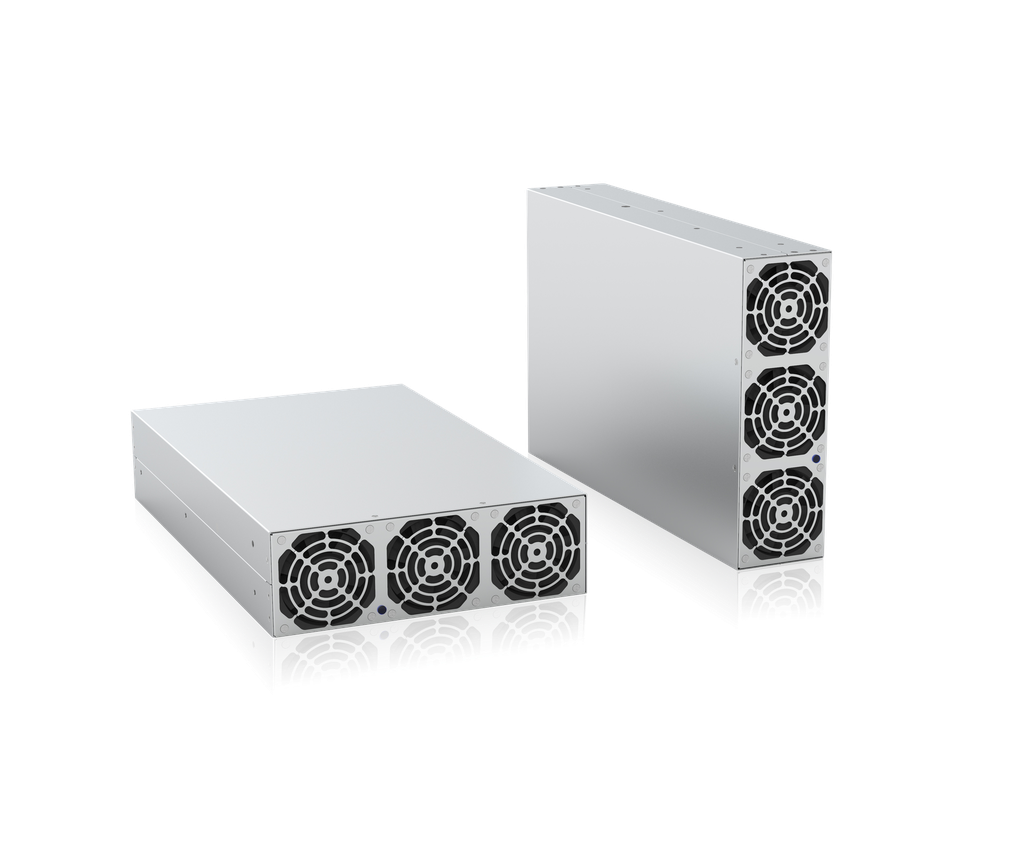
The concept of bidirectional charging is turning electric vehicles into mobile energy hubs. Instead of simply drawing power from the grid, EVs equipped with this technology can send electricity back when needed. This transforms parking lots and home garages into dynamic energy resources, helping to balance demand and supply in real time.
Grid operators are paying close attention to vehicle-to-grid (V2G) systems because they offer a flexible buffer against the intermittency of renewables. A fleet of connected cars can absorb excess solar during the day and discharge it during evening peaks, flattening the notorious duck curve. Early adopters are already earning credits by selling stored energy back to utilities, effectively turning their cars into income-generating assets.
The hardware is only half the story. Smart software and robust communication protocols are what make this two-way flow seamless and safe. Energy management platforms now aggregate thousands of individual batteries into virtual power plants, dispatching energy with millisecond precision. As standards mature and more automakers embrace bidirectional capability, the line between transportation and energy infrastructure will continue to blur.
How Bidirectional Modules Bridge Renewables and Storage
Bidirectional power modules are the unsung enablers in modern energy systems, seamlessly connecting intermittent renewables with stationary storage. By intelligently managing the flow of electricity in both directions—from solar arrays or wind turbines into batteries, and from batteries back to the grid or local loads—they solve the fundamental mismatch between generation and consumption. Unlike traditional unidirectional chargers, these modules can switch roles dynamically, acting as inverter, rectifier, or DC-DC converter as needed, all while maintaining high efficiency. This flexibility allows a single piece of hardware to handle multiple functions that once required separate, bulky equipment, making renewable-plus-storage installations far more compact and cost-effective.
At the heart of their value is the ability to buffer surplus renewable energy that would otherwise be curtailed. When the sun is blazing or winds are strong, the bidirectional module channels excess power into battery storage with minimal losses, thanks to advanced silicon carbide (SiC) or gallium nitride (GaN) semiconductors and smart thermal design. Later, when clouds roll in or demand peaks, the same module reverses course, drawing from the battery and conditioning the output to match grid requirements precisely—whether that’s pure sinusoidal AC for home appliances or regulated DC for fast-charging electric vehicles. This dual-mode operation not only maximizes the utilization of clean generation assets but also stabilizes local microgrids against the variability that has long plagued renewables.
But perhaps most importantly, bidirectional modules are democratizing energy resilience. In a residential solar-plus-storage setup, a single compact unit can now manage PV input, battery charging, and backup power without complex external changeover switches. During grid outages, it disconnects from the utility in microseconds and forms a local island grid, keeping critical loads alive. Commercial and industrial users likewise benefit from peak shaving and demand charge reduction, all orchestrated by the module’s embedded controller. As renewables penetration deepens worldwide, these bidirectional bridges will only become more central—quietly turning every building into a miniature power plant that not only consumes but actively supports the larger grid ecosystem.
Industrial Energy Recovery: The Bidirectional Advantage
Energy recovery in industrial settings often gets framed as a one-way street—simply capturing heat that would otherwise be lost. But the real story is more dynamic. True bidirectional advantage emerges when a plant not only reclaims waste energy but also feeds it back into processes in ways that reshape consumption patterns. For example, recovered heat from exhaust gases can preheat incoming materials, reducing the upfront energy demand. At the same time, that recovery loop can supply power to adjacent systems, creating a self-reinforcing cycle where efficiency gains compound rather than just adding up.
What makes this bidirectional flow so compelling is the shift from passive savings to active value generation. A facility that redirects excess thermal energy to secondary operations—like district heating networks or on-site chilling—turns a cost center into a resource hub. This isn’t just waste reduction; it’s a rearchitecture of energy flow. Engineers design these systems to prioritize flexible coupling, so when one process ramps down, another can absorb the excess, flattening demand peaks without throttling production. The result is less reliance on external grids and a smoother operating profile that buffers against price volatility.
The advantage extends beyond kilowatt-hours saved. Bidirectional energy recovery fosters operational resilience by blurring the lines between consumption and production. Maintenance teams see fewer strain-related failures because equipment operates within tighter thermal bands, and entire production lines benefit from the steadier power supply. This intertwined approach often yields insights into process optimization that would otherwise stay hidden, making the plant not just more efficient, but smarter over time.
Microgrids Empowered by Reversible Power Conversion
The rise of distributed energy resources has shifted the role of power converters from simple energy routers to dynamic, bidirectional interfaces. In modern microgrids, reversible power conversion enables seamless energy flow between generation, storage, and loads, allowing the system to adapt instantaneously to surplus or deficit conditions. This fluidity underpins a more resilient architecture where every kilowatt can be redirected, stored, or fed back to the grid without the constraints of fixed-direction hardware.
At the heart of this capability lies advanced power electronics that switch roles on the fly—rectifying AC to DC when charging batteries, then inverting DC to AC during peak demand. Such converters don’t just handle power; they reshape the microgrid’s operational logic. By maintaining voltage and frequency within tight bands regardless of direction reversal, they eliminate the need for dedicated charge controllers or separate grid-tie inverters, collapsing formerly distinct subsystems into one responsive unit. This consolidation reduces footprint, cost, and points of failure, while the converter’s digital brain orchestrates energy exchanges with split-cycle precision.
The real empowerment, however, goes beyond hardware. Reversible converters enable microgrids to participate fluently in transactive energy markets, switching from islanded to grid-connected mode without a glitch. They allow a factory to store overnight wind energy, then sell excess back during the afternoon ramp, all through the same converter that powers its production line. As grid codes evolve to recognize bidirectional assets, these microgrids become not just consumers or producers, but flexible prosumers that strengthen the larger electrical ecosystem while capturing economic value from every electron’s two‑way journey.
From Backup to Active Asset: Reshaping UPS Systems
For decades, uninterruptible power supplies sat in corners, silent and ignored until the lights flickered. They were insurance policies—necessary but dull. Today, that passive role is fading. Modern UPS units are stepping into the spotlight as dynamic contributors to energy management, not just emergency responders. They actively shape power quality, interact with the grid, and even monetize stored energy. This shift turns a legacy cost center into a strategic asset that directly supports operational resilience and sustainability goals.
The transformation hinges on intelligent controls and bi‑directional connectivity. Instead of simply bridging gaps, smart UPS systems now harmonize with generators, renewables, and building management platforms. They can shave peak loads by discharging at precisely the right moment, smooth out frequency fluctuations from solar arrays, or participate in demand‑response programs that generate revenue. This level of integration means the UPS is no longer a standalone box; it becomes a node in a larger energy ecosystem, continuously optimizing both uptime and cost.
Adopting these advanced systems doesn’t require a forklift upgrade. Many existing installations gain new capabilities through firmware updates or modular add‑ons. Facility managers are discovering that their backup batteries can serve double duty—storing cheap nighttime power and releasing it during expensive peak hours. With lithium‑ion chemistries extending usable life and reducing footprint, the economics stack up faster. By rethinking the role of UPS, organizations replace a passive insurance model with an active partner that keeps the lights on while trimming the bottom line.
FAQ
Bidirectional power modules are compact electronic devices capable of converting electrical power in both directions—either stepping voltage up or down while allowing current to flow either way. Their growing popularity stems from the need for efficient energy management in systems that both consume and supply power, such as battery storage setups and vehicle-to-grid applications, where seamless two-way energy transfer is critical.
Unlike unidirectional modules that only move power from source to load, bidirectional units can reverse the flow without additional hardware. This eliminates the need for separate charging and discharging circuits, saving space, reducing costs, and simplifying design. They also typically offer higher efficiency in round-trip energy conversion, making them ideal for regenerative and storage systems.
They're heavily used in electric vehicle on-board chargers that support vehicle-to-grid feedback, residential and grid-scale battery storage systems, uninterruptible power supplies, and renewable energy microgrids. Industrial motor drives with regenerative braking and portable power stations also benefit from their compact bidirectional capability.
At the core is a topology—often a dual-active bridge or a buck-boost derived design—that uses synchronized switching of transistors to control power flow. By adjusting the phase shift or duty cycle of control signals, the same circuit can act as a rectifier in one direction and an inverter in the opposite, all while maintaining voltage regulation and galvanic isolation when required.
Engineers weigh voltage and current ratings, efficiency curves across load ranges, thermal management requirements, and the module's control interface. Isolation voltage, EMI performance, and physical footprint are just as crucial, especially in space-constrained designs. Long-term reliability data and protection features like overcurrent and overtemperature shutdown also influence the choice.
They enable more flexible grid integration by allowing energy to flow between solar arrays, batteries, and the grid on demand. This helps smooth out intermittency, supports peak shaving, and opens up new revenue streams through energy arbitrage. As renewables penetration grows, these modules become essential building blocks for resilient, decentralized power networks.
Conclusion
The shift toward bidirectional power modules is quietly reshaping how energy flows across modern systems. Rather than simply delivering electricity in one direction, these devices enable a dynamic exchange that stabilizes grids, strengthens renewable integration, and allows infrastructure to adapt in real time. For instance, grid operators now use bidirectional flow to smooth out fluctuations caused by intermittent solar and wind generation, turning potential instability into a responsive, self-balancing asset. At the same time, electric vehicle charging is no longer a one-way street—cars equipped with two-way power capability can feed energy back into buildings or the grid during peak demand, effectively turning every EV into a mobile storage unit. This dual functionality blurs the line between energy consumer and provider, helping utilities manage loads without expensive infrastructure overhauls.
Beyond the grid, these modules are driving efficiency in unexpected places. Industrial facilities capture and reuse energy that would otherwise be wasted during braking or thermal processes, cutting costs and carbon footprints. In microgrids, reversible converters allow communities to island themselves during outages while still trading power with the main grid when it makes economic sense. Even the humble uninterruptible power supply is evolving from a passive backup box into an active participant in energy management, continuously balancing charge and discharge to support daily operations. What makes these top ten modules distinct is not just their technical specs but their versatility—the same core technology can bridge renewables and storage, empower electric mobility, and transform standby systems into revenue-generating assets. Collectively, they prove that bidirectional power is less a single innovation than a foundational shift in how we design and interact with energy infrastructure.
Contact Us
Contact Person: Lily
Email: [email protected]
Tel/WhatsApp: +49 (0) 2161 49526-0
Website: https://tps-elektronik.com/en/