

Three Phase Vibration Motor Exporter: Key Factors for Global Industrial Buyers
2026-11-02
When sourcing three-phase vibration motors across borders, industrial buyers often assume all exporters deliver the same specs—until a critical mismatch halts a production line. Voltage tolerances, certification depth, and after-sales response are rarely visible on a datasheet, yet they decide whether a purchase becomes a long-term asset or a costly bottleneck. As a specialized exporter, Guangling has seen which factors actually separate reliable partners from one-off suppliers. This guide breaks down what global procurement teams should scrutinize before committing to a vibration motor source.
What 'Export-Ready' Actually Means for Your Motor Order
When a supplier says your motor order is export-ready, it’s not just about slapping on a different label or throwing in a multilingual manual. It means the unit has been engineered and documented to clear customs, pass local compliance checks, and survive the journey without performance drift. Think of it as the difference between a motor that merely works in your home market and one that’s been stress-tested for a different voltage band, humidity profile, and approval framework before it even leaves the dock.
In practice, that usually covers three layers. First, electrical and mechanical conformity: the motor should carry certifications like CE, UL, or CSA, and its nameplate data must align with the destination country’s frequency, phase, and efficiency standards. Second, documentation readiness: full technical datasheets, test reports, and a proper declaration of conformity — not a generic PDF that gets bounced back by the importer. Third, packaging and preservation: anti-corrosion treatment, sealed bearings if required, and crating that can handle container humidity or rough handling. Skip any of these and ‘export-ready’ becomes a costly afterthought once the shipment is already en route.
Buyers often overlook the small but decisive details, like whether the terminal box is wired for a different rotation direction or whether the paint thickness can survive salt spray. A truly export-ready motor order includes those choices up front, not as retrofits. So before you approve the proforma invoice, ask your supplier to show you the destination-specific compliance matrix and a sample of the exact shipping documentation. That’s the only way ‘export-ready’ means something other than a marketing phrase.
Voltage, Frequency, and Mounting: Getting the Specs Right Before You Commit
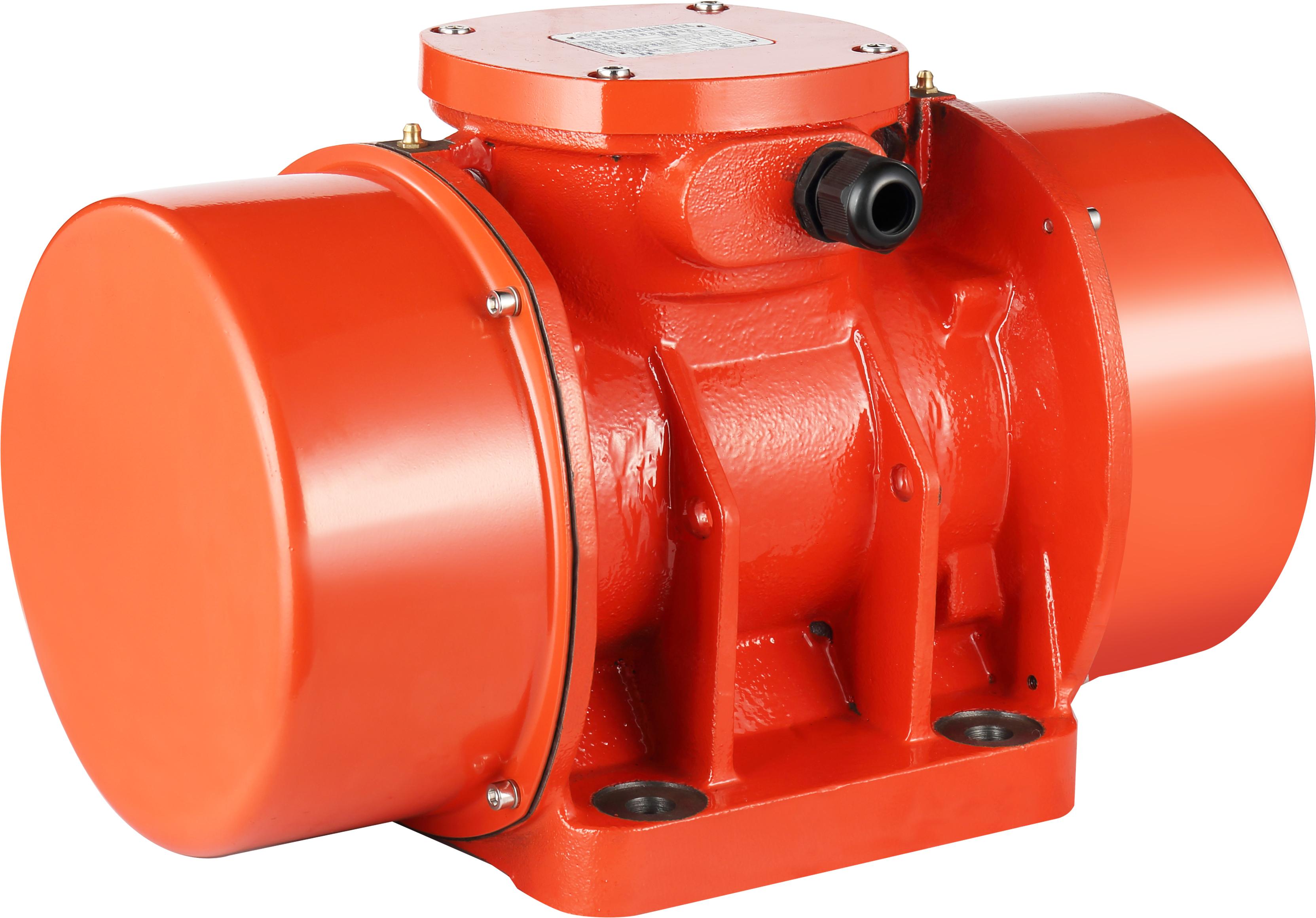
A motor's voltage rating isn't just a number on a nameplate—it's the difference between smooth operation and sudden failure. Many buyers assume a 230V motor will run fine on a 208V supply, but the drop means higher current draw, extra heat, and a shorter lifespan. Always check your facility's actual line voltage under load, not just at the panel. If you're dealing with fluctuating power, consider a motor with a wider voltage tolerance or a buck-boost transformer to keep things stable.
Frequency gets overlooked more often than you'd think. A 60Hz motor running on a 50Hz grid will spin slower, lose torque, and possibly overheat because the cooling fan also slows down. Conversely, a 50Hz motor on 60Hz will run faster but may draw more current than the windings can handle. If your equipment crosses borders or runs off a generator, pick a motor rated for both frequencies or use a variable frequency drive to match the load correctly.
Mounting style is rarely a deal-breaker until it's already too late. A foot-mounted motor won't fit a flange-mount pump without an adapter, and a C-face motor bolted to a rigid base can vibrate itself loose. Check the frame size, shaft height, and bolt pattern before ordering. For tight spaces, look at compact or round-body designs. For washdown areas, a stainless steel housing with a sealed mounting face saves you from rust and bearing failures down the line.
Certifications That Carry Weight Beyond the CE Stamp
The CE stamp opens the door to the European market, but it is a self-declaration in many product categories and not a performance guarantee. When engineers and procurement teams dig into a spec sheet, they often look for marks from independent labs that test for specific risks: UL or ETL for electrical safety in North America, TÜV SÜD for mechanical and functional safety in Germany, and CSA for Canadian installations. Each one signals that someone outside the company has actually pushed the product toward failure and documented the result.
Beyond safety, environmental and material certifications now do much of the quiet vetting work. RoHS and REACH confirm restricted substances are below legal thresholds, while NSF/ANSI 61 matters for anything touching drinking water and FCC Part 15 applies to unintentional radiators. These are not marketing badges; they are frequently line items in a distributor agreement or a facility audit checklist. Missing one can stall a shipment even when the CE mark is present.
In heavy industry and marine environments, the CE mark alone is rarely enough. ATEX or IECEx certification proves the equipment can operate in explosive atmospheres, while type approval from DNV, ABS, or Lloyd’s Register is required before anything gets bolted onto a vessel. Such certificates usually demand recurring factory inspections, so they reflect a company’s ongoing quality system rather than a single passing test. That is why they carry weight with buyers who cannot afford to discover a weak point after installation.
Custom Orders Without the Custom Headaches: What to Ask Upfront
Before you hand over a deposit, get the maker to walk you through their standard process for a custom piece. Ask what happens if the dimensions are slightly off, whether they work from your measurements or their own templates, and how many revision rounds are included before extra fees kick in. A surprising number of headaches come from assuming custom means unlimited tweaks—it rarely does.
Materials can make or break the final result, so don’t settle for a vague premium wood or quality fabric. Request exact species, grade, finish samples, or a swatch you can keep. Also pin down lead times in writing: when does production actually start, and what delays are common with their suppliers? If they hesitate to commit to a date, that’s your signal to keep looking.
Finally, clarify how they handle mistakes or defects that show up after delivery. A clear repair or return window, who pays return shipping, and whether they photograph the piece before sending can save you weeks of back-and-forth. The goal isn’t to interrogate them—it’s to confirm they’ve thought through the messy parts so you don’t have to.
From Factory Floor to Your Plant: How Logistics Decisions Affect Motor Reliability
A motor leaves the factory after rigorous testing, but its journey to your plant is rarely a straight line. Every forklift nudge, every mile of vibration on a flatbed, every week in a dusty warehouse adds hidden wear. The way a motor is palletized, the route it takes, and the handling practices of intermediate depots can introduce subtle shaft misalignment, bearing brinelling, or insulation micro-cracks that don't show up until weeks after installation.
Consider the difference between a motor shipped in an enclosed, air-ride trailer versus one bouncing on a leaf-spring flatbed for 800 miles. The latter experiences continuous low-frequency shock that can loosen windings or compromise grease distribution. Even seemingly minor choices—like whether the motor is stored upright or on its side—affect bearing lubrication. A motor laid horizontally for months may develop lubricant settling, leaving the top bearing dry on first start-up.
Smart plants treat logistics as part of the reliability chain. They specify crating standards, limit transshipment points, and require vibration data loggers on critical shipments. When a motor arrives, they don't just sign the delivery receipt; they check for impact indicators, shaft rotation smoothness, and insulation resistance before it ever reaches the storeroom. Because in the end, a motor's reliability isn't just born on the factory floor—it's either preserved or eroded on the road to your door.
Spare Parts, Service, and the Real Cost of a Low-Price Motor
A low sticker price on an industrial motor rarely tells the whole story. The moment a critical component fails, you discover that cheap upfront savings often come with a frustrating trade-off: scarce spare parts. Many budget motors ship from overseas suppliers who maintain little local inventory. When a bearing or capacitor gives out, you might wait weeks for a replacement—if you can find one at all. That downtime can easily erase any initial purchase savings.
Service support is another hidden variable. Established motor brands typically back their products with trained technicians, diagnostic resources, and warranty processes that actually work. With a low-price motor, you may find yourself on your own. A minor electrical fault that a qualified service team could resolve in an afternoon instead becomes a trial-and-error project. The real cost isn't just the part; it's the lost production hours and the growing pile of emergency repair bills.
Smart buyers now calculate total cost of ownership, not just invoice price. A motor that costs 20% less upfront but fails twice as often—and sits idle waiting for parts—ends up far more expensive over five years. Before choosing a low-price option, ask about local parts availability, typical service response times, and whether the supplier has any track record in your region. If those answers are vague, the bargain may be anything but.
FAQ
Look for in-house vibration testing and the ability to supply test reports for each batch. A genuine exporter usually offers documented eccentric force curves, custom winding options, and can adjust the counterweight pre-set before shipping. If they hesitate to share a nameplate drawing or bearing specification, that's a red flag.
A 50Hz motor running on 60Hz service will spin faster and produce a different vibration force, which can throw off your process. Buyers in North America typically need 230/460V at 60Hz, while much of Europe, Asia, and Africa works on 400V at 50Hz. Always confirm the exporter can wind for the exact voltage tolerance you need, not just the nominal value.
Vibration motors run under constant mechanical stress and often sit in dusty, high-temperature areas. Class F insulation with Class B temperature rise gives you a practical safety margin. Built-in PTC thermistors or thermal switches can prevent winding burnout when the motor is mounted on a vibratory feeder that gets covered with material.
For most markets, CE marking is the minimum for machinery compliance. If the motor goes into a hazardous area, you may need ATEX or IECEx. For North America, UL or CSA recognition simplifies local inspection. Ask for the actual certificate numbers and check the scope, some exporters show a CE mark but only for a limited voltage range.
Request a test curve that plots force against frequency for your specific voltage. The stated force is usually at zero load, and real-world force drops once the motor is mounted. You can also ask for the eccentric moment in kg·mm and calculate force yourself using the formula. If the exporter cannot provide eccentric moment data, move on.
Many OEMs need to mount the motor directly to a vibrating screen or hopper with existing bolt patterns. Standard flanges often require re-drilling or adapter plates, which adds labor and weakens the assembly. A flexible exporter will machine the flange to your drawing, lengthen or shorten the shaft, and mark the center line before painting.
At minimum, you want a written warranty that covers bearing replacement and winding failure for a clear period, usually 12 to 18 months. The exporter should stock common spare parts like bearings, end shields, and terminal blocks, and ship them with the initial order or within a short window. Remote troubleshooting via video call is now expected for installation and phase rotation checks.
Vibration motors are heavy and often ship by sea, so dense wooden crates with bracing are worth the extra cost to prevent bearing damage. Lead time usually stretches when custom voltage or flange drilling is involved, plan for 30 to 45 days for production plus 20 to 35 days for freight. Ask whether the exporter includes fumigation certificates and lifting hooks on each crate; these small details reduce port delays.
Conclusion
Global buyers sourcing three phase vibration motors quickly learn that export-ready is not a badge but a checklist. It means the motor you receive matches the voltage and frequency of your plant, the mounting face fits your existing equipment, and the nameplate data hasn’t been altered to meet a generic catalog spec. Before committing to an order, ask for a full dimensional drawing and confirm whether the windings are rated for 50 Hz or 60 Hz, not just a vague dual frequency claim. The wrong mounting style or shaft tolerance can stall installation for weeks. Certifications matter, but a CE stamp alone means little if the exporter cannot provide test reports, material certificates, and a traceable factory audit. Push beyond the paperwork: request vibration test values under load, insulation class confirmation, and bearing brand details. Custom orders don’t have to be painful if you nail down lead times, MOQs, and engineering revision limits upfront—otherwise custom can become a euphemism for endless delays.
Logistics choices influence more than freight cost; they affect how well the motor survives the journey. Ocean shipping with poor crating, missing rotor locks, or inadequate moisture protection can leave you with rusted bearings and bent shafts before the motor ever reaches your plant. A serious exporter will offer vacuum packing, desiccant bags, and export-grade wooden cases as standard, not optional extras. Finally, compare the real cost of ownership, not the sticker price. A low-price motor may come with no spare parts inventory, slow warranty response, or no local service support. Ask for bearing replacement intervals, winding spare kits, and whether the exporter keeps a stock of components for at least five years. The cheapest quote often becomes the most expensive when a production line sits idle waiting for parts.
Contact Us
Contact Person: ZHUO
Email: [email protected]
Tel/WhatsApp: 86-576-86320988
Website: https://www.cnguangling.com