
Reliable Smart Bus Stop Solutions for Smoother Commutes
2026-10-24
Waiting for a bus shouldn’t feel like a guessing game. Reliable smart bus stop solutions bring real-time updates, better shelter, and clear communication to the curb—and zemso is making that happen. Instead of stale schedules and uncertain waits, imagine a stop that adapts to your route, weather, and timing. That’s the shift we’re exploring here, and it starts with the basics of a smarter commute.
Live Arrival Boards That End the Guesswork
Waiting at a bus stop or train platform often comes with a familiar uncertainty: is the next ride two minutes away or twenty? Live arrival boards remove that ambiguity by pulling real-time data directly from transit vehicles. Instead of staring down an empty road or checking a static schedule that hasn't been updated since last season, you see exactly where your ride is and when it will pull up. This means less second-guessing and more confidence in your daily commute.
What sets these boards apart is their ability to adapt to what's actually happening on the road. A sudden delay, a rerouted bus, or an earlier-than-expected arrival shows up within seconds, not after you've already missed the connection. For riders who juggle tight transfers or late-night trips, that kind of immediate clarity changes the entire experience. You stop playing the guessing game and start making decisions based on what's truly coming.
The best implementations go a step further by combining arrival times with helpful context, such as vehicle capacity or accessibility features. That way, you're not just seeing a countdown—you're seeing whether you'll get a seat or need to wait for the next one. It turns a simple display into a practical tool that respects your time and removes the stress of not knowing.
Shelters Designed Around Local Weather, Not Generic Plans
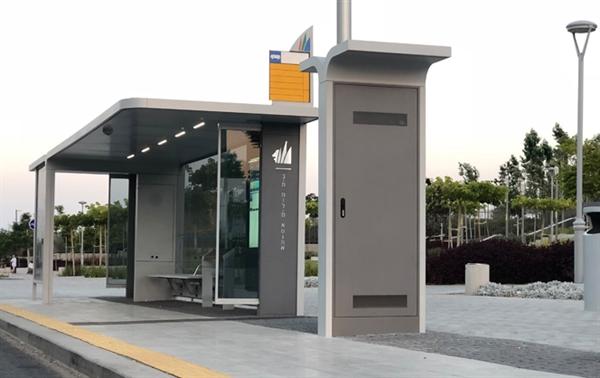
Too many shelters are built from a one-size-fits-all drawing, as if weather were an afterthought. A structure that works in a dry, scorching desert will fail quickly in a humid coastal zone. Instead of relying on generic blueprints, thoughtful designers start with the local climate: they track rainfall intensity, wind direction, temperature swings, and even how the sun moves across the site. This means a shelter in a hot, arid region might use thick earthen walls and small, shaded openings to keep the interior cool, while one in a storm-prone area gets a steeply pitched roof and deep overhangs to shed water fast.
The best examples come from conversations with people who already live there. They know which direction the cold winds come from in winter, where water pools after a heavy downpour, and how the humidity behaves at night. Those details shape real choices: orienting the building to catch or block prevailing breezes, choosing materials that breathe or hold heat, raising the floor above flood levels, or angling walls to deflect strong gusts. Every adjustment is rooted in observed weather rather than a standard detail from a manual.
When a shelter is tuned to its own climate, it does more than survive harsh conditions—it becomes comfortable and easy to maintain. Residents spend less energy fighting the weather and more time living in it. Over the long run, this tailored approach reduces repair costs and extends the life of the structure, simply because it was never forced to behave like a building from somewhere else.
Solar Panels That Keep Departure Times Glowing
At the corner of a rain-slicked avenue, the next bus time glows soft amber from a slim panel bolted to the shelter roof. That light isn't drawing from buried city cables or a diesel generator hum; it's fed by a strip of photovoltaic cells angled to catch the weak winter sun between high-rises. The same panel that keeps the display alive also charges a small battery tucked behind the schedule frame, so evenings and overcast mornings don't turn the sign into a dark rectangle.
What makes these setups hold up is less about panel wattage and more about stubborn design. Instead of glass-heavy modules that crack when a stray shopping cart hits, the shelters use flexible thin-film sheeting laminated onto the canopy itself. Wiring runs through the support posts, leaving no exposed junctions for ice or curious hands to pry loose. In testing, a single March afternoon was enough to bank roughly three nights of continuous departure updates, even with the display refreshing every twenty seconds.
There's a quiet payoff beyond the convenience: late-night riders stop huddling around phone screens guessing arrival windows. The numbers stay visible because the panel doesn't need full sun to trickle voltage—just diffuse daylight bouncing off wet pavement. When a cloud bank rolls in, the display dims slightly but never blanks, a small promise that the schedule will still be there long after the streetlights flicker on.
Step-Free Access and Clear Audio for Every Rider
Every station entrance and platform connection follows the same rule: if a wheel can't roll across it, it gets rebuilt. That means no single-step lips at doorways, no narrow gates that force a wheelchair to use a freight entrance, and elevator call buttons placed where a rider can reach them without turning around.
The onboard and platform audio is tuned for more than just volume. It removes the low rumble of the train itself, cuts through crowd noise, and speaks in short, distinct chunks. Transfers are repeated once after the doors close, and the next stop is always named before the train slows, so riders who can't see the signs still know exactly where they are.
Riders don't need to switch between a "step-free map" and a "regular map." The accessible path is the main path, and the audio cues are part of the same trip. A person using a mobility aid and a person relying on sound get the same information at the same time without asking for help.
Lighting and Camera Placements That Deter Trouble Quietly
Start with the edges of your property, not just the front door. A single bright floodlight over the driveway can create harsh shadows where someone can linger unseen. Instead, place low-wattage path lights along walkways and a soft, warm-toned porch light that stays on from dusk until morning. The idea is to eliminate dark pockets without turning the yard into a stadium. Motion-activated lights work best when angled to cover side gates and basement windows, but set them to a short timer so they don't flicker annoyingly all night or draw attention to a false alarm.
Cameras should be present without becoming a focal point. Mount them at door height or slightly above, tucked under eaves or painted to match the trim. Avoid bulky housings with blinking status lights that scream surveillance. A wide-angle lens near the back corner can quietly cover the alley and the trash bins, while a small unit by the mailbox records faces without being obvious. Keep wires hidden or choose battery models with a matte finish. The recording itself becomes a passive witness—not a threat, but a documented reason for someone to keep walking.
The real deterrent is the quiet message that this house sees in all directions. When lighting follows the natural lines of the property and cameras blend into the architecture, there's no need for warning signs or floodlights aimed at the street. An intruder casing the block will notice the lack of shadow near the garage, the subtle red glow behind a porch fixture, and the clean sightlines from the sidewalk to the back fence. That kind of calm, layered observation feels less like a challenge and more like an environment that quietly notes everything—without ever raising its voice.
Remote Diagnostics That Catch Faults Before Commuters Do
Modern rail operators no longer wait for the morning rush to reveal a failing component. Sensors embedded in doors, brakes, and HVAC systems stream performance data to control centers while trains are still in the yard. A slight spike in motor current or a two-degree drop in cabin pressure triggers an automated alert, giving maintenance crews a head start before the first passenger ever scans a ticket.
The real advantage shows up in the details. Vibration signatures from wheel bearings, for instance, can indicate early pitting that wouldn't be audible to a human ear for another thousand miles. By pairing that data with route-specific load patterns, the system can predict which train is likely to struggle on a steep grade or a high-frequency stop sequence. Repairs get scheduled during off-peak hours, and the spare part is already on the shelf.
What used to be a reactive scramble after a breakdown has become a quiet, continuous checkup. Commuters only notice the result: fewer platform announcements about mechanical delays and more trains arriving on time. Behind the scenes, remote diagnostics have shifted the maintenance window from "after it breaks" to "before it matters."
FAQ
A smart bus stop goes beyond a static shelter by integrating real-time arrival displays, environmental sensors, lighting controls, and sometimes touchscreen wayfinding. The point is to give riders accurate updates and a safer, more comfortable wait instead of leaving them guessing.
Many systems layer GPS with on-board diagnostics and historical traffic patterns. If a bus is delayed, the stop can show adjusted ETAs or service alerts, and some even trigger nearby alternative route suggestions.
Yes, they're often built with weather-resistant enclosures, solar panels, and battery backups. In regions with extreme cold or heat, the displays and sensors are rated for wide temperature ranges, and low-power e-paper screens help keep energy use down.
Not at all. While companion apps add convenience, the core information is displayed on the stop itself. Audio announcements and tactile buttons also support riders with visual impairments or those who prefer not to rely on a phone.
Most are designed for remote monitoring, so issues like display malfunctions or sensor failures can be flagged early. Physical upkeep includes cleaning solar panels, checking network connectivity, and occasional hardware swaps, but the goal is to minimize on-site visits.
It can adjust lighting based on presence, provide air quality or temperature readings, offer emergency call buttons, and even display nearby bike-share or scooter availability. These features turn the stop into a small mobility hub rather than a passive waiting area.
Integration depends on the current setup, but many platforms use open data standards like GTFS and MQTT, which makes linking to existing dispatch and scheduling software fairly straightforward. A phased rollout often helps cities avoid disruption.
Look for field-proven hardware, strong remote management tools, clear data ownership, and flexible communication options such as cellular, Wi-Fi, or LoRaWAN. Also ask about durability testing and real-world uptime rather than just feature lists.
Conclusion
At a well-run smart bus stop, the live arrival board is more than a display—it pulls data from multiple sources to show actual wait times, reroutes, and delays instead of a fixed schedule. Shelters are shaped by local weather patterns: deeper overhangs in rainy regions, ventilation gaps in humid climates, and windbreaks where gusts are common. Solar panels mounted on the roof store enough energy to keep those departure screens and low-power sensors running through cloudy stretches, so the information stays visible without relying on grid power.
Step-free access and clear audio announcements make the stop usable for wheelchair users, parents with strollers, and anyone with limited vision. Lighting and camera placements are chosen to remove dark corners and blind spots, discouraging vandalism or harassment without making riders feel watched. Behind the scenes, remote diagnostics check the health of screens, speakers, and lights, flagging a dimming bulb or failing speaker before it becomes a commuter’s problem. Together these small, practical choices add up to a stop that feels dependable day after day.
Contact Us
Contact Person: Leo
Email: [email protected]
Tel/WhatsApp: +86 18901905138
Website: https://www.zemsogroup.com/