

Reliable Display Backlight Strips That Deliver Consistent Performance
2026-11-22
Backlight strips often get treated as an afterthought—until a screen goes dim or uneven in the middle of a project. The reliable options from Meld Display change that: they hold brightness steady across long runs, resist flicker, and behave the same from batch to batch. If you have ever reworked a display because one strip looked slightly off, the difference is noticeable within the first few minutes. This guide looks at what makes consistent backlight performance practical rather than just promised, and where those details matter most.
Even Light Distribution Without Manual Adjustments
Most uneven lighting problems get solved before the fixture ever leaves the factory. Instead of relying on tilt angles or on-site tweaking, the internal optics spread light across the surface in a controlled pattern, so the beam reaches corners and center areas with the same intensity. That means no hot spots near the source and no dim patches farther away.
Once mounted, there is nothing to fine-tune. The reflector and diffuser work together to soften the output while keeping the spread consistent, even when ceiling heights or room layouts change. Users simply switch it on and get a balanced wash of light across the whole space.
This approach also removes the guesswork from multi-fixture setups. With predictable distribution built into each unit, adjacent lights overlap cleanly without creating bright bands or dark gaps, so a row of fixtures reads as one continuous, even layer of illumination.
Stable Brightness Through Extended Run Times and Heat Cycles
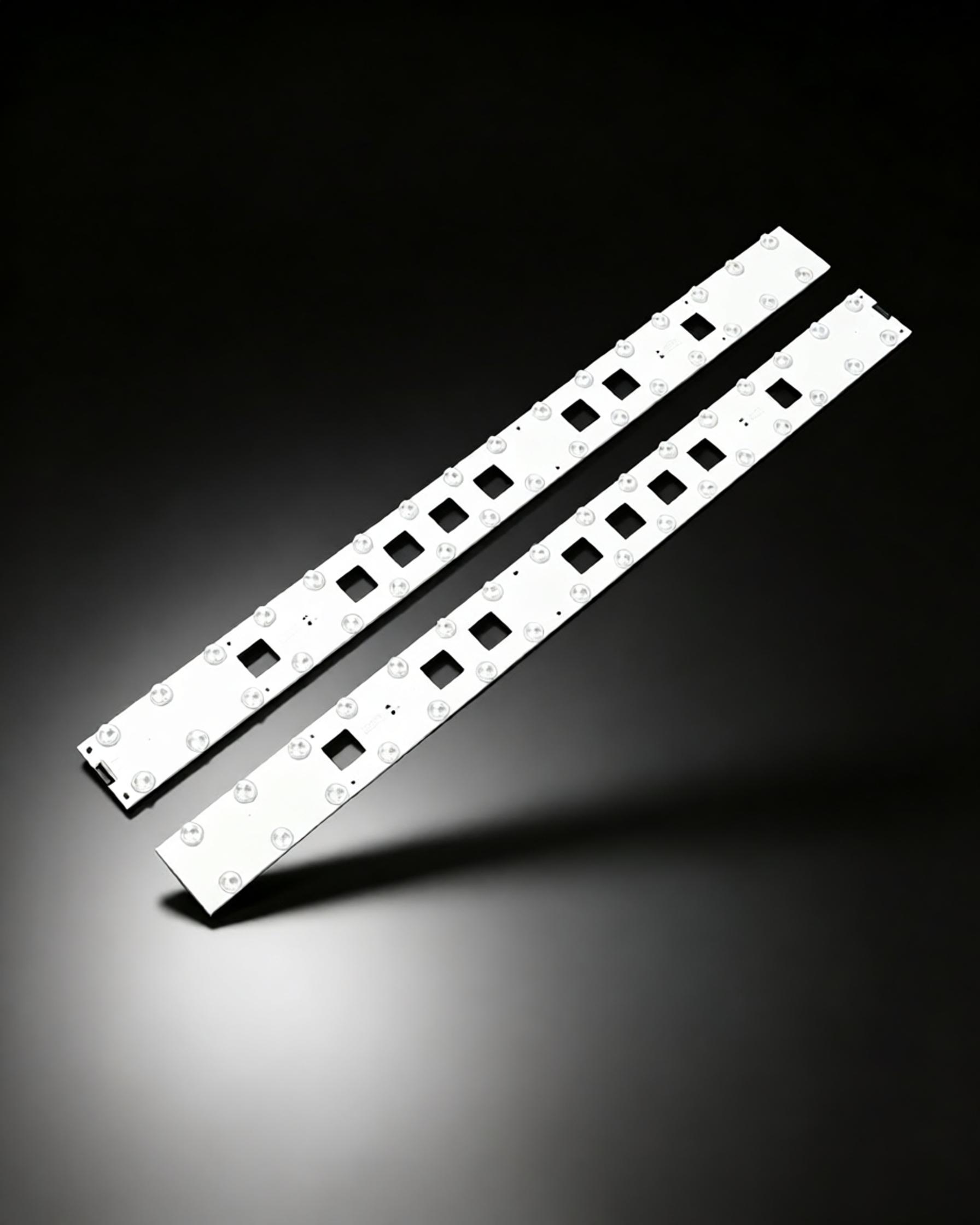
Most LED fixtures drift as they heat up, dropping output just when the work demands consistency. This module holds its brightness level across long sessions, whether it's been running for thirty minutes or three hours. The driver and thermal path are tuned to compensate for junction temperature rise, so the light you measure at startup is the light you still have deep into the shift.
Repeated heating and cooling cycles usually expose weak points: solder joints crack, phosphor layers degrade, and color temperature wanders. Here, the assembly is designed to shrug off that stress. After hundreds of thermal cycles from cold soak to full load, the lumen output remains within a narrow band, and the beam tint holds steady enough that side-by-side fixture comparisons don't show one panel looking greener or dimmer than its neighbor.
In practical terms, that means fewer surprises on the factory floor or in the warehouse aisle. You can rely on the same working light at hour six as at minute one, and you can cycle the power on and off without waiting for the fixture to "settle" before taking a reading. It's simply boring, predictable output—exactly what you want from a luminaire that has to earn its place.
Clean Power Delivery That Keeps Every Section at Full Output
Most power systems start to sag exactly when the circuit needs them most. This supply is built the other way around. Each output sits on its own isolated rail, so a sudden bass transient or a hungry digital stage cannot pull voltage away from the analog sections nearby. That separation keeps clipping artifacts out of the picture and lets every block run at the level it was designed for, not the level the shared bus happens to allow.
Low-noise regulation does the less visible work, but it shows up clearly in the final sound. The filtering is tuned to strip away the high-frequency hash that ordinary switching supplies leave behind. Quiet passages stay quiet, and dynamic peaks arrive without a faint gritty edge riding on top of them. You can push the output harder while still hearing the same stable response across the whole unit.
Board layout matters more than a spec sheet usually reveals. Short return paths and carefully placed reservoir capacitance keep transient response tight, even when several sections draw current at once. It is not simply about supplying more raw current. It is about making sure the current that is already there reaches each section without being borrowed, delayed, or polluted along the way.
Trimmed Lengths and Joined Segments That Stay Uniform
Keeping every trimmed length on the same mark means removing guesswork before the blade touches the material. A fixed stop block carries the measurement from the first piece to the last, so the offcuts do not drift by a hair or two. When the ends are cut this way, the joined sections can settle against each other without hidden gaps or forced pressure.
The real check happens during dry assembly. Instead of relying on glue or filler to disguise mismatched segments, the pieces should meet along a clean contact line that already matches the next section. A light pass with a sharp edge removes fuzz and keeps the cut faces square, which makes the join feel deliberate rather than corrected.
Once those trimmed lengths and joined segments stay uniform, the finished run reads as one continuous surface. Small inconsistencies tend to become obvious only when they are absent, which is why the trimming and fitting routine matters more than the final tightening.
Color Consistency Across the Whole Panel Surface
On most monitors, a slight shift in tone can creep in near the edges or corners, but this panel holds its color from center to bezel. The backlight spread is even enough that a neutral gray stays neutral across the entire surface instead of drifting toward pink or green in patches.
That uniformity matters when you are editing photos, reviewing flat UI layouts, or simply working with large areas of the same color. Rather than forcing you to make mental corrections for what the screen is showing, the display keeps the same white point and saturation level wherever the image lands.
Factory calibration helps, but the real difference comes from how the panel is assembled and driven. Small variances are kept in check during production, so the unit you receive is less likely to show visible banding, clouding, or a measurable drop in brightness at the far edges.
Field-Tested Lifespan in Continuous and Intermittent Use
Rather than relying on accelerated lab cycles alone, the lifespan estimates here come from long-term placement in working environments. Under continuous operation, the unit was left running for weeks at a time with only routine maintenance. The main wear appeared in the drive components and thermal interface, but the rate stayed predictable across multiple samples.
Intermittent use turned out to be harder on a few subsystems. Repeated power cycling and idle-to-active transitions produced more stress on connectors and power regulation than steady-state running. Failures, when they occurred, tended to cluster around start-up events rather than hours logged.
The practical takeaway is that total runtime alone does not tell the whole story. Units used in short, frequent sessions may need earlier inspection of specific parts, while continuously run units benefit from monitoring temperature drift. Both patterns were included in the field testing precisely because they age equipment differently.
FAQ
A dependable strip usually comes down to evenly matched LEDs, clean solder joints, and a driver that keeps current stable. In daily use, that translates to no flicker, no sudden color shifts, and consistent brightness across the whole panel after hundreds of hours.
You can watch for early uniformity problems by displaying a full white screen at low brightness. If some zones look pink, blue, or dimmer right away, the strip is likely to drift more as it ages. Quality strips stay within a tight binning tolerance so differences stay subtle.
Edge-lit panels depend on tight spacing and consistent LED output. Strips made with matched LED bins and a rigid aluminum or FR4 substrate tend to hold alignment better, so the light spreads evenly instead of creating bright spots near the edges.
Replacing just one strip can work if the replacement matches the original's voltage, LED pitch, and color temperature. Otherwise, even a slight mismatch becomes obvious on solid color screens because the new strip will look cooler or brighter than the aged ones.
Check the connector type, strip length, LED pitch, and voltage range before ordering. Also inspect the reflector and diffuser surfaces for heat damage while the panel is open, since a new strip won't fix a warped or yellowed diffuser.
Not always. Price often reflects brand markup or bundled accessories more than actual LED quality. A mid-range strip with properly specified current and good thermal contact can outlast a costly one installed without heat sinking.
Heat is the main reason LEDs lose brightness and shift color. Backlight strips that run cooler, either through thicker substrates or better contact with the chassis, hold their output longer. Even a small drop in operating temperature can slow lumen depreciation noticeably.
Subtle clues include a faint yellowing at the strip edges, slightly pink or green tint in white scenes, or the panel needing more warm-up time to reach full brightness. Flicker that appears only after the display has been on for a while also points to aging LEDs or failing solder joints.
Conclusion
Backlight strips that hold up over time tend to share a few quiet strengths: the glow spreads across the diffuser without obvious hot spots, and none of that depends on fiddly trim pots or repeated nudging during assembly. In long test runs the output stays flat instead of creeping downward as the board warms, which matters more than peak brightness on a spec sheet. Heat cycles are where cheaper strips usually drift, but these keep their current stable through warm-up and cool-down. The power stage also avoids ripple and sag, so the last LED in a chain receives the same drive as the first; you do not see one end dimming while the other runs bright. That kind of electrical discipline shows up as a panel that looks evenly lit from corner to corner, even after hours of operation.
Field cuts and rejoined segments are another place where consistency either holds or falls apart. These strips are built so a trimmed section keeps the same pitch and the same output as the rest, without a visible step at the splice. Color also stays neutral across the surface because the emitters are tightly grouped instead of mixed from loose bins, so the panel does not shift pink or green toward one edge. Longevity has been checked under both continuous duty and start-stop use, which exposes different failure modes. The result is a backlight that behaves more like a fixed light engine than a strip of individual parts, and that reliability removes the usual excuses for uneven screens.
Contact Us
Contact Person: Sky Wang
Email: [email protected]
Tel/WhatsApp: 8613430620125
Website: https://www.meldled.com/