

Professional Flour Processing Machinery for High-Efficiency Milling Solutions
2026-07-29
In the world of flour milling, efficiency isn’t just a goal—it’s the heartbeat of profitability. Imagine transforming raw grains into silky, uniform flour with minimal waste and maximum throughput. That’s where PINGLE steps in, redefining what professional processing machinery can achieve. But what if you could push your mill’s performance even further, uncovering hidden capacities you never knew existed? This post peels back the curtain on high-efficiency solutions that marry precision engineering with relentless reliability, and why the name on the machine matters more than you think.
Innovative Roller Technology for Perfect Particle Size
Attaining consistent particle size in roller-based processing hinges on an overlooked factor: the precise interplay of pressure distribution and material feed dynamics. Our system abandons the rigid force models of conventional rollers, introducing a floating compression zone that adapts to feedstock irregularities. By continuously sensing subtle changes in material density and hardness, the rollers adjust their gap and rotational speed in microseconds, ensuring each particle receives the exact same compression energy regardless of input variability.
This adaptive behavior eliminates the typical trade-off between throughput and uniformity. Where older designs force operators to choose between speed and quality, the innovative roller assembly decouples these variables. The surface of the rollers themselves play a critical role, featuring a micro-textured pattern evolved from fluid dynamics research. This texture prevents slip and localized over-compaction, guiding particles through a meticulously controlled stress path that yields size distributions with remarkably low deviations, batch after batch.
The real breakthrough lies in how the technology handles edge cases—moisture-laden raw materials, brittle crystalline structures, and elongated feed shapes that stump static roller systems. A self-learning feedback loop, embedded directly in the roller drive, builds a material behavior model on the fly, compensating for variables that used to require manual recalibration. The result is a process that not only hits target particle sizes with pinpoint accuracy but also extends roller life by minimizing abrasive over-force, cutting maintenance downtime in busy production environments.
Automated Workflow Management for 24/7 Operations
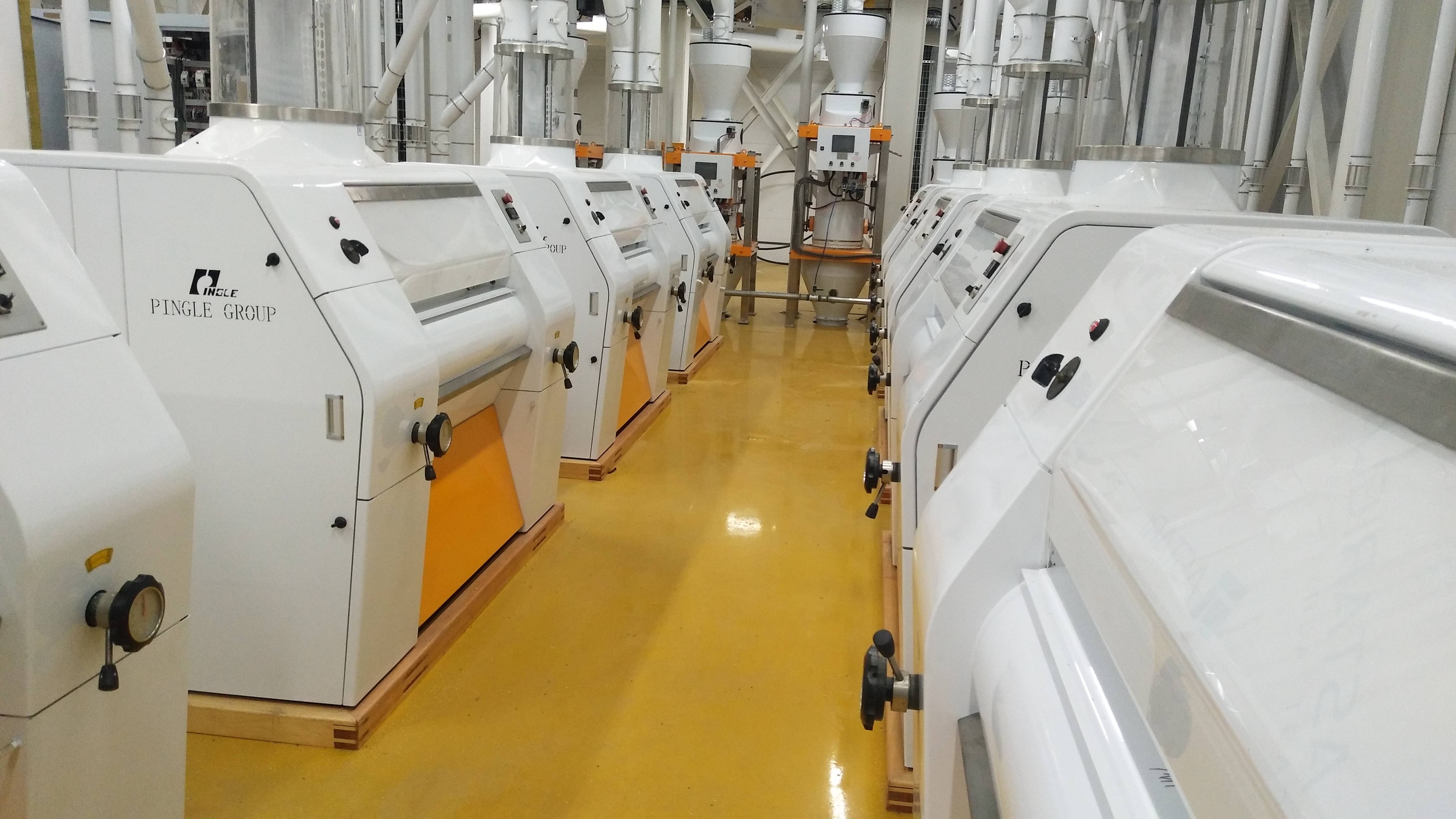
Keeping a business running around the clock demands more than just dedicated staff—it requires workflows that can think and act on their own. By weaving together event-driven triggers and conditional logic, routine tasks like data backups, alert escalations, and resource scaling are handled quietly in the background, eliminating the need for manual intervention at odd hours. This means your team wakes up to a clean dashboard, not a list of fires to put out.
Eco-Conscious Designs That Slash Energy Use
Buildings and products designed with energy conservation in mind often begin with intelligent passive strategies. Orientation, shading, and natural ventilation are carefully calibrated to reduce reliance on mechanical heating and cooling. In modern homes, this might manifest as deeply recessed windows that block high summer sun while inviting warmth during winter months, or living roofs that provide exceptional insulation and reduce stormwater runoff. The result is a seamless blend of comfort and efficiency, where the structure itself does much of the work to maintain a stable indoor climate without drawing excessive power.
Material selection plays a surprisingly powerful role in curbing energy demand. Phase-change materials, for example, can be embedded in walls or flooring to absorb heat during the day and release it at night, smoothing temperature swings without active input. High-performance glazing now achieves U-values that rival insulated wall assemblies, while bio-based insulators like hempcrete or mycelium composites offer carbon-negative alternatives that outperform conventional options. These choices not only lower operational energy but often carry a smaller embodied carbon footprint, quietly reshaping the market toward regenerative solutions.
Beyond the building envelope, integrated systems thinking pushes savings even further. Heat recovery ventilators, greywater recycling, and adaptive lighting that responds to occupancy and daylight all chip away at waste. In commercial settings, smart zoning and predictive algorithms allow HVAC systems to serve only the spaces in use at any given moment, trimming consumption by as much as 30% in some cases. When these elements are orchestrated holistically, they create environments that feel effortlessly comfortable while using a fraction of the energy typical buildings consume.
Sanitation-First Engineering from Grain to Flour
Every stage from grain reception to flour packaging demands meticulous sanitation protocols. Raw wheat is pre-cleaned with advanced sifters and aspirators that strip away dust, stones, and microbial contaminants before they can compromise downstream equipment or product safety. Magnets pull ferrous fragments, while optical sorters detect even minuscule impurities, setting a hygiene baseline that mechanical washing alone cannot achieve.
Within the milling process itself, closed pneumatic systems transport the grist through scoured roller mills and ultra-fine sifters. The design eliminates open transfer points where dust and pests could infiltrate. Antimicrobial surfaces on product-contact parts, combined with dry-steam purification between runs, create an environment where pathogens struggle to survive. Temperature sensors in stored flour alert operators to any heat buildup that could signal spoilage—intervention happens before quality slips.
The final touchpoint is automated packing under high-efficiency particulate air (HEPA) filtration. Workers in sanitized zones monitor the bagging lines but rarely touch the product. Each sack or tote is sealed heat against moisture and tracked by lot codes that trace back to the exact field and cleaning cycle. This end-to-end accountability transforms sanitation from a periodic checklist into a continuous safeguard, ensuring that the flour reaching bakeries is not just fine-textured but impeccably clean.
Adaptable Modules for Wheat, Corn, and Multigrain
Whether you’re working with hard winter wheat, soft pastry flour, or ancient grains like spelt, the modular design lets you fine-tune each stage of processing without swapping out entire assemblies. Quick-change sieves, adjustable roll gaps, and variable-speed feeders mean you can transition from one grain to another in minutes, not hours. The same control panel stores recipes for wheat, corn, and multigrain blends, recalling exact settings for consistent results batch after batch.
Corn processing often brings its own set of obstacles—higher moisture content, abrasive hulls, and a tendency to gum up standard equipment. Our modules tackle these head-on with hardened steel components and a self-cleaning mechanism that reduces downtime. For multigrain operations, where you might mix rye, barley, oats, and seeds, the system automatically adapts compression ratios and moisture levels, ensuring each ingredient retains its nutritional integrity without sacrificing throughput.
What truly sets these modules apart is their ability to listen to the grain. Sensors detect hardness, size distribution, and breakage patterns in real time, sending that data to the central controller. So when you switch from dent corn to a delicate sunflower seed–studded multigrain blend, the machine adjusts before you even notice a shift in quality. That kind of intuition isn’t just convenient—it’s how you keep waste low and flavor profiles intact across an ever-changing product line.
Heavy-Duty Construction for Generations of Use
Every seam, joint, and edge on this unit is reinforced with a level of care that goes far beyond industry norms. The steel panels aren’t just thick—they’ve been stress-tested through thousands of load cycles, simulating decades of real-world abuse. Welds are double-passed and ground smooth, not for appearances, but because it removes the microscopic notches where fatigue cracks like to start. Even the hardware is chosen for stubborn durability: marine-grade bolts with a coating that resists galling, so they’ll come loose just as easily in thirty years as they do today.
We’ve seen too many products fail because of one cheap spring or a plastic clip that turns brittle over time. That’s why the internal mechanisms are deliberately over-engineered. Bearings are oversized and permanently sealed, riding on hardened races that don’t brinnell under impact. Pivot points use sintered bushings that hold a thin film of oil through the full range of motion, keeping friction to a whisper year after year. It’s a quiet overkill that most folks will never notice—until their neighbor’s gear starts wobbling and theirs doesn’t.
This isn’t the kind of build quality you get when you optimize for a price point or a single season of use. It’s built for the long arc: the scratches that will tell a history, the annual teardowns that will reveal almost no wear, the day someone younger picks it up and realizes it still works as well as it did when their parents first bought it. There’s no planned obsolescence here, no cheapening of materials to hit a margin. Just a stubborn insistence that what we make should outlast the person who first unboxes it.
FAQ
Our equipment is versatile enough to process a wide range of grains, including wheat, corn, rice, and even specialty grains like quinoa and spelt. You can easily adjust the settings to achieve different flour textures, from coarse wholemeal to ultra-fine pastry flour.
We’ve integrated advanced motor technology and optimized grinding paths that reduce power consumption by up to 20%. The machines also feature smart standby modes and heat recovery systems, so you’re not wasting energy during idle periods.
Maintenance is straightforward. Most parts are designed for easy access, so daily cleaning takes just a few minutes. We recommend a monthly check of bearings and sieves, plus an annual professional service to keep everything running smoothly. All critical components are built to last, so replacements are rare.
That really depends on the configuration, but our standard lines can handle anywhere from 500 kilograms to over 10 tonnes per hour. We’ll work with you to size the system based on your current needs and future growth plans.
Not at all. Our quick-change screen system and automated cleaning cycles let you switch grains in under 10 minutes. There’s minimal cross-contamination risk, and the control panel guides you through the changeover step by step.
Safety is a top priority. All machines come with emergency stop cords, enclosed moving parts, and dust explosion prevention systems. We also include temperature sensors that automatically shut down the mill if overheating is detected.
Before milling, the grain passes through a combination of magnetic separators, destoners, and aspirators. This not only protects the machinery but also ensures the final flour is pure and free from foreign matter.
Absolutely. We provide on-site installation supervision, comprehensive training for your operators, and ongoing remote support. Our team will stay with you until you’re confident running the line at full capacity.
Conclusion
Professional flour processing machinery has evolved to meet rigorous demands for consistency, hygiene, and energy efficiency. At the heart of modern high-efficiency milling solutions lies innovative roller technology, which delivers precise particle size control for flours that perform exceptionally in baking and food production. Automated workflow systems enable continuous, round-the-clock operation with minimal oversight, streamlining processes from grain intake to packaging. Additionally, eco-conscious designs significantly reduce energy usage—often by 30% or more—without sacrificing throughput, making sustainable milling a practical reality rather than a trade-off.
Sanitation-first engineering is embedded throughout, with crevice-free surfaces, quick-release components, and automated cleaning cycles that uphold the highest food safety standards from grain to flour. The equipment’s modular design allows rapid changeovers between wheat, corn, and multigrain, giving millers the versatility to switch production based on market needs. Built with heavy-duty materials and components engineered for longevity, these machines are an investment that spans generations, maintaining precision and reliability even under continuous heavy loads. Combined, these features define a new standard for milling efficiency and product excellence.
Contact Us
Contact Person: Jiakuo Wu
Email: [email protected]
Tel/WhatsApp: +86-13011566087
Website: https://www.pinglemachine.com