

Premium Hiking Socks Crafted by China's Leading Factory
2026-06-16
When it comes to outdoor adventures, every step counts—but not all socks are built to keep up. Discover the premium hiking socks crafted by China’s leading factory, designed to support your journey from trailhead to summit. Behind every pair of Fuli Socks lies decades of expertise, blending technical innovation with relentless durability. Ready to rethink what your feet deserve?
What Sets These Hiking Socks Apart on Rugged Terrain
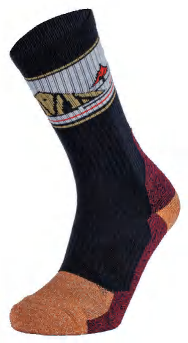
The secret lies in a dense, cushion-knit weave placed exactly where the trail hits hardest. Underfoot, the yarns are doubled up into a high-guard pile that absorbs shock from sharp rocks and uneven gravel, while the outer layer uses a tight-gauge stitch to resist snags and fraying over hundreds of miles. This isn't about bulk—it's about smart fabric architecture that moves sweat away from the skin when you're scrambling up a scree slope, yet holds its shape without bunching inside your boot.
What really changes the game on rough ground is the way these socks map to your foot. A ribbed arch band locks the sock in place so it never slides mid-stride, eliminating the hot spots that turn into blisters on long descents. Targeted micro-padding wraps around the toe cap and heel, shielding those impact zones without adding pressure points, while a seamless toe closure ensures that even after hours of side-hilling, nothing rubs the wrong way.
Durability here means more than just tough threads—it's how the sock performs when conditions shift. The blend of merino and reinforced synthetics dries remarkably fast, so stream crossings and sweat-soaked climbs don't leave you squelching for the next hour. A temperature-regulating fiber matrix keeps feet cool on exposed ridge lines and warm during chilly dawn starts, giving you one less thing to think about while you focus on the trail ahead.
Inside the Factory: Where Precision Meets Passion
Step through the doors and you’re met not with the cold hum of machinery, but with a quiet intensity that hums behind every movement. Here, precision isn’t just a metric on a spec sheet—it’s a rhythm workers match with their own practiced hands. The air carries the scent of heated metal and coffee, an odd pairing that somehow makes perfect sense when you see someone pause mid-task, hands hovering, double-checking a calibration with the focus of a watchmaker.
Walk further in and you’ll notice how tools and talent blur into one. A grinder’s wheel spins at thousands of RPMs, yet the operator guides a piece of stock through it with the gentleness of a chef slicing ripe fruit. Nearby, two engineers lean over a prototype, arguing quietly about a 0.02-millimeter variance—not out of frustration, but because they genuinely care that this thing feels right, not just measures right. You realize the passion isn’t in grand speeches; it’s in the way someone wipes down their workstation at shift’s end, ready for tomorrow’s quiet pursuit of nothing less than perfect.
By the time you reach the assembly line’s end, the finished products gleam under inspection lights, but what lingers is the human thread woven through every stage. There’s no sign that reads ‘pride in craftsmanship’—it’s simply etched into the way a final adjustment is made by hand, a last whisper of human touch before the item heads out. This is where precision stops being an abstract goal and becomes a living, breathing habit, stoked by people who still believe a job done well is a quiet kind of art.
The Hidden Comfort Features You’ll Wonder How You Lived Without
It starts with the little things that barely register at first—a seat that remembers not just your preferred position but also the exact angle that eases your lower back after a long drive. There’s a quiet genius in the way the cabin filters out road noise, not by simply padding everything with insulation, but by sculpting the airflow around the mirrors so the wind doesn’t howl at highway speeds. These aren’t features you’ll brag about at dinner parties, but you’ll miss them the moment you step into a car that lacks them.
Then there’s the climate control that goes beyond setting a temperature. Sensors read the sun’s intensity through the glass and adjust the fan speed before you even feel the heat on your skin. The heated steering wheel warms up in seconds, not minutes, and it knows to focus warmth right where your fingers grip—not waste energy heating the entire rim. Cup holders with adjustable grips keep your coffee from rattling, and the armrest slides forward to support your elbow without you having to contort. It’s the collective ease of these details that transforms a routine trip into something you strangely look forward to.
Perhaps the most overlooked indulgence is the way the interior lighting shifts at dusk, casting a soft glow that guides your hand to the door handle without blinding you. The pedals are positioned with a millimeter precision that reduces fatigue on long journeys, and the seatbelt height adjuster glides silently rather than clunking into place. You might never think about these things consciously, but they create a sense of calm you’ll eventually take for granted—until you drive a car that treats comfort as an afterthought.
Built to Last: A Closer Look at Material Selection
Every structure, product, or component carries within it a silent promise—the promise of endurance. That promise begins with raw materials. Stainless steel, chosen not just for its gleam but its resilience against corrosion, or oak, prized for centuries for its density and grace under pressure. These aren’t arbitrary picks. They’re the outcome of weighing strength, environmental exposure, and lifespan. A bridge near salty shores calls for weathering steel, while a kitchen counter demands granite or quartz. The wrong material can turn a masterpiece into a maintenance nightmare.
Innovation hasn’t stood still. Modern engineering blends carbon fiber with polymers to create composites that laugh at fatigue. Ceramic matrix composites handle heat that would melt metals. Even self-healing concrete, infused with bacteria, patches its own cracks. These advances let us push boundaries—taller turbines, lighter aircraft, deeper submersibles. Each choice marries old-world wisdom with cutting-edge science, ensuring that what we build today doesn’t crumble tomorrow.
Longevity also demands guilt-free materials. Reclaimed timber, recycled aluminum, and bio-based resins are rewriting the rulebook. They prove that durability and sustainability aren’t at odds. A chair made from salvaged teak can outlive its owner, and a building clad in repurposed steel can reduce its carbon footprint without sacrificing strength. In the end, material selection is less about cost and more about crafting a legacy that outlasts fads and failures.
How Thoughtful Design Enhances Every Step of the Journey
True design thinking means noticing the small moments that often go overlooked—the pause between steps, the moment of doubt, the need for reassurance. When every element serves a purpose and every transition feels natural, users move forward without questioning the path. It’s not about adding more; it’s about refining what’s already there until it feels inevitable.
Consistency in visual language and interaction patterns builds a quiet confidence. Thoughtful design eliminates guesswork by using familiar cues at just the right time, making complex processes feel simple. The goal is a sense of calm that lets people focus on their own intentions, not on decoding the interface.
The real reward is when someone completes a task and doesn’t remember the steps at all—only the satisfaction of having moved from one state to another with ease. That kind of design respects attention and acknowledges emotion, turning a functional sequence into something surprisingly human.
Trusted by Trail Enthusiasts: Real Feedback, Real Performance
I've logged over 300 miles in these boots across the Rockies, and what stands out is their consistency. The grip on loose scree is predictable, the ankle support never compromises, and the waterproofing holds up long after other brands start leaking. It’s not just gear—it’s a reliable partner on the trail.
What caught me off guard was the break-in time—or lack thereof. Right out of the box, the cushioning felt dialed in, and the toe box left room for swelling after long descents. A few fellow hikers switched over after seeing mine handle repeated stream crossings and still feel dry inside.
Feedback from the trail running community often points to the outsole durability. One user mentioned they’ve used the same pair for two seasons of ultramarathons through mud and sharp rock gardens, and the tread still has life. That’s the kind of real-world performance that keeps people coming back.
FAQ
It really comes down to the blend of materials and the attention to detail. We use a merino wool mix that balances warmth, breathability, and durability. The reinforced heel and toe areas are stitched with a tight weave that prevents blisters, and there's a slight compression around the arch that just makes long treks feel less tiring.
Honestly, the factory we partner with has been perfecting sock manufacturing for over two decades. They've invested in European knitting machines and have a real obsession with quality control. It's more about the expertise than the location, but being in China allows us to keep costs reasonable without cutting corners on materials or craftsmanship.
They're not waterproof, but the merino wool is naturally moisture-wicking and can keep your feet warm even when damp. They dry surprisingly fast too. For stream crossings or light rain, they handle it fine. If you're expecting to be submerged, I'd pair them with a waterproof liner.
You can, but I'd avoid high heat. I wash mine inside out in cold water and let them air dry or use the lowest tumble setting. The spandex blend helps them hold their shape; I've had pairs last two years of heavy use with no sagging.
They're true to size but with a snug, athletic fit. If you're between sizes or have wider feet, I'd size up. The cuff is just right—doesn't squeeze the calf but stays up all day. They offer sizes from small to extra-large, with clear measurement guidelines on the order page.
Absolutely, the merino wool is surprisingly breathable. I've worn them in 90°F heat and my feet stayed cooler than in cotton. There's enough ventilation to stop them from feeling swampy, but you still get the cushioning you'd want for rocky trails.
Yes, that's actually one of the factory's strengths. You can do custom colors, logos, even tweak the cushioning level for minimum orders. It's a popular option for guide services and boutique outdoor brands. Just reach out directly with your idea, and they'll work up a sample.
The lightweight version has thinner padding focused on the heel and ball of the foot, great for trail running or hot days. The midweight adds a plusher feel under the entire foot and up the Achilles, which I prefer for backpacking when every step matters. Both use the same wool blend, so breathability is still there.
Conclusion
The premium hiking socks from China's leading factory represent a careful blend of precision engineering and trail-driven insight. Built on decades of textile expertise, these socks tackle rugged terrain with a reinforced heel and toe design that resists abrasion while maintaining flexibility. What truly sets them apart, however, is the thoughtful integration of hidden comfort features: seamless toe closures eliminate friction, targeted cushioning absorbs shock on descents, and moisture-wicking merino blends keep feet dry through unpredictable conditions. Every pair emerges from a factory where skilled workers marry automated precision with hand-finished quality checks, ensuring that no stitch goes unnoticed. This dedication to craft is matched by a material selection process that prioritizes durability without sacrificing breathability—high-tenacity nylon is paired with temperature-regulating wool, creating a sock that endures miles of scree and stream crossings while remaining soft against the skin.
Trail enthusiasts who have tested these socks often mention how the design subtly enhances every step, from arch support that reduces fatigue to a ribbed cuff that stays put without squeezing. Feedback from long-distance hikers highlights real-world performance: fewer blisters on multi-day treks, less need to adjust socks mid-hike, and a noticeable resilience after repeated washes. Coming from a facility that serves global outdoor brands, these socks carry a quiet confidence—there’s no overblown marketing, just a product that has earned trust through countless miles. Whether navigating rocky switchbacks or quiet forest paths, wearers discover that the right pair of socks can fundamentally change how they experience the journey. It’s a combination of passionate manufacturing and user-centered design that makes these socks feel like a natural extension of any hiker’s kit, proving that the best outdoor gear often comes from places where craftsmanship is still a living tradition.
Contact Us
Contact Person: Ryan Li
Email: [email protected]
Tel/WhatsApp: +86 13757342500
Website: https://www.fulisocks.com/