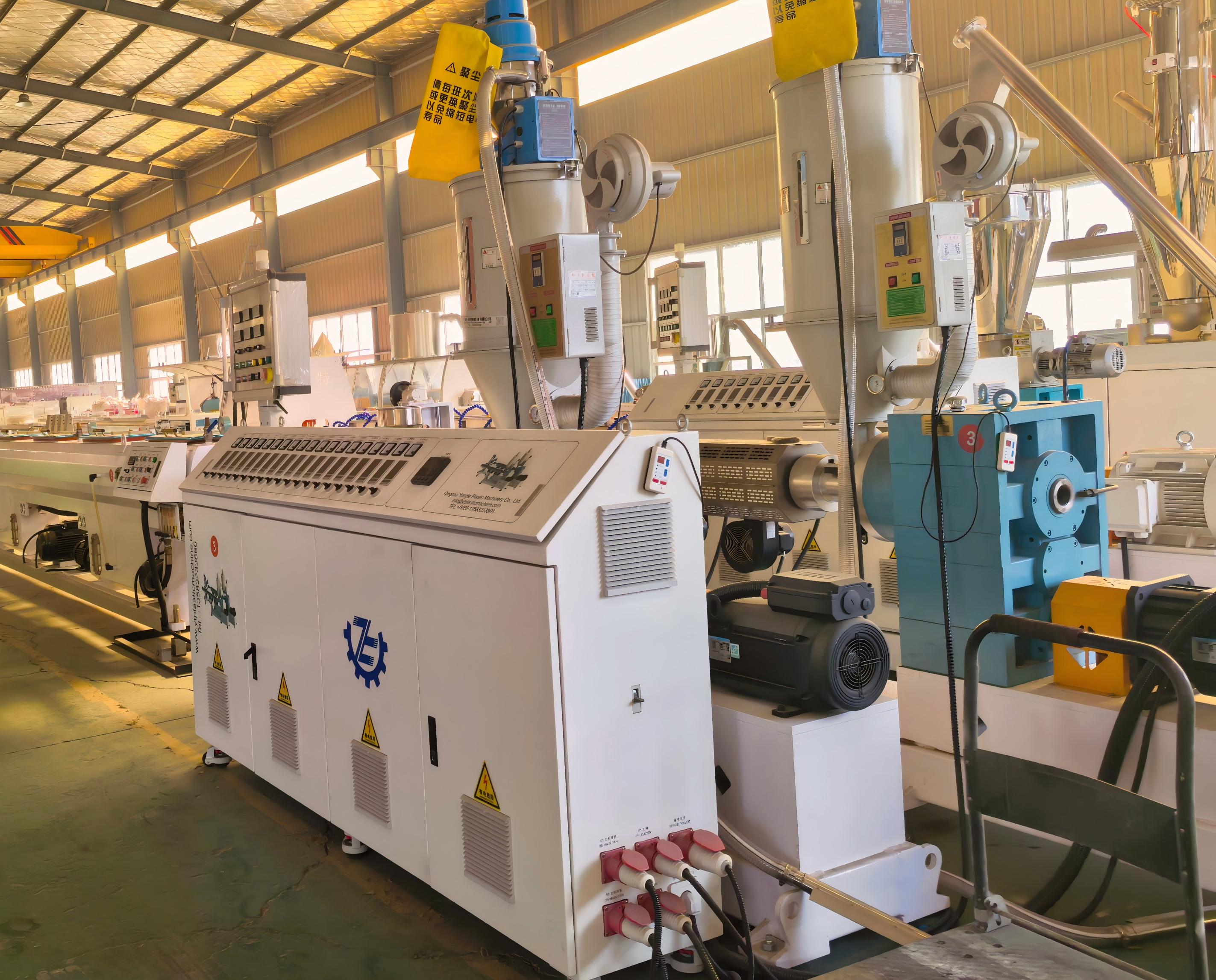

Plastic Lumber Machine Manufacturer Insights for Choosing a Reliable Extrusion Line
2026-11-23
Every extrusion line looks solid in a brochure, but once production starts, the difference between a dependable plastic lumber machine and a costly bottleneck becomes painfully clear. Hidden issues like inconsistent melt pressure, undersized cooling, or flimsy downstream equipment often surface only after installation. That’s why choosing the right manufacturer matters as much as the machine itself. In this guide, we cut through the marketing noise and focus on practical insights for evaluating a reliable plastic lumber extrusion line. Whether you’re expanding capacity or launching a new recycling operation, understanding these factors can save you months of downtime. At the heart of many high-performing setups is Yongte, a name that keeps appearing among operators who value long-term stability over short-term discounts. Read on to learn what truly separates a workhorse from a showpiece.
What Separates a Workhorse Extruder from a Showroom Demo
A machine that looks flawless at a trade show can fall apart after three weeks of running glass-filled nylon at 70 percent capacity. The difference rarely shows up in the spec sheet. It lives in the details that only reveal themselves under sustained thermal load: barrel liner adhesion, screw tip clearance after thermal expansion, and how the control loop behaves when the melt pressure spikes at 2 a.m. Nobody claps for a thrust bearing that survives 20,000 hours, but that's exactly where workhorse extruders earn their keep.
Showroom demos tend to run neat resins at moderate throughput, with fresh screens and a clean feed throat. That's not dishonesty; it's just a narrow slice of reality. A true production extruder gets judged by what happens when regrind fluctuates, when the hopper loader stutters, or when an operator accidentally leaves the barrel heat on over a weekend shutdown. Those are the moments that separate a machine designed for uptime from one that only needs to survive a fifteen-minute video loop.
The practical differences accumulate in places most buyers never inspect before signing the PO. Does the gearbox have enough service factor to handle a cold start after a power outage? Are the temperature zones tuned to avoid polymer degradation during a line stoppage? Is the screw geometry forgiving enough to process a supplier's slightly-off-spec lot without a teardown? Demo machines don't need to answer any of that. Workhorses are built as if someone will depend on them every single shift, because someone will.
Reading Past the Spec Sheet to Evaluate Melt Consistency
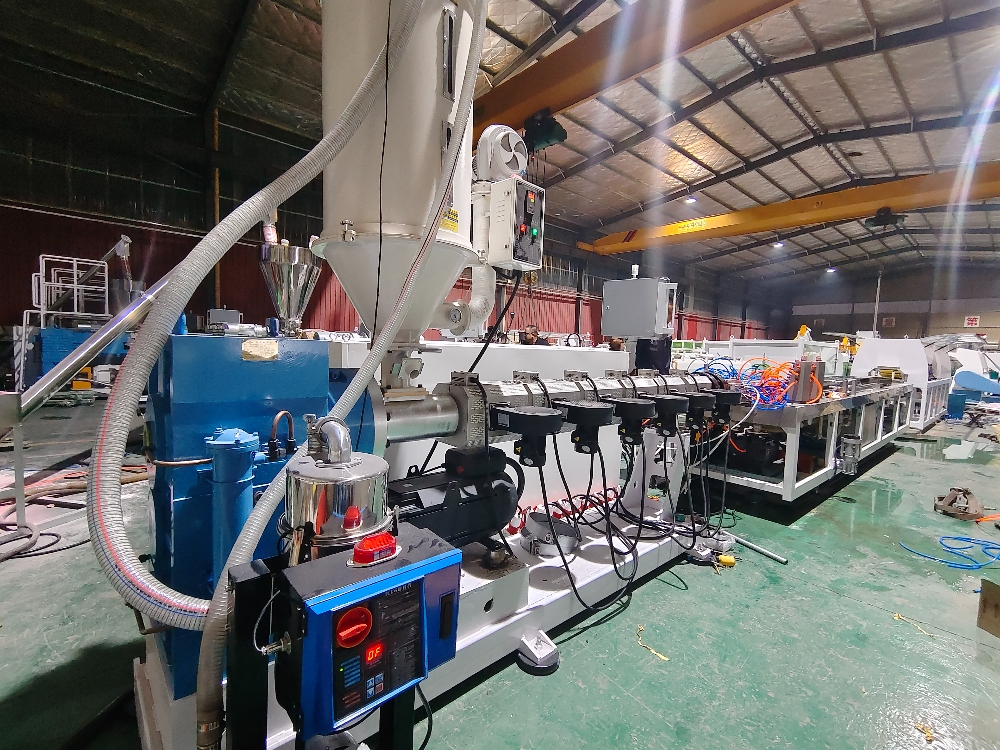
A melt flow number on a data sheet tells you how a material behaved in one narrow set of conditions, but it rarely captures what happens across a real temperature window or after regrind has been folded back into the feed. Watching how the melt rides the screw, whether it strings at the die, or how quickly a purge transitions from old color to new often reveals more than a single lab value.
Small lot-to-lot shifts can hide inside an acceptable viscosity range while still changing how the material fills thin ribs or holds a weld line. Running a short purge study at the edges of your processing window, such as slightly lower barrel temperatures or a modest increase in back pressure, tends to expose inconsistency that a certificate of analysis would never flag. The goal is not to replace the spec sheet but to pressure-test it where your tooling and cycle actually live.
Operators often notice the first signs: a change in screw recovery time, a different surface gloss, or more drool at the nozzle. Those observations are cheap, continuous, and closer to the process than a quarterly lab report. Logging them alongside machine settings builds a baseline for melt consistency that is specific to your equipment rather than borrowed from generic datasheet conditions.
The Real Cost of a Line That Almost Fits Your Output Targets
When a line hovers just below its output target, the miss looks small enough to ignore. A handful of units short, a few minutes lost, a batch pressed into the next shift. But those small gaps rarely stay small for long. Operators improvise to protect the number, quality checks get rushed, and maintenance slips because there is no spare capacity to absorb a pause. Each workaround seems harmless until it becomes the standard way of running the line.
The deeper cost settles into planning and expectations. Teams start treating 97 or 98 percent as the real ceiling, suppliers adjust delivery patterns, and extra inventory quietly appears to buffer against the recurring shortfall. Forecasts absorb the almost-hit as a fixed assumption rather than a temporary slip, which makes the official target less believable over time. Customers may not see a dramatic failure, but they feel it in longer lead times, inconsistent availability, and small pricing adjustments that never get explained.
Perhaps the heaviest expense is the loss of urgency. A line that almost fits its targets rarely gets the same attention as one that stops completely, so root causes stay buried inside data that looks tolerable. Improvement projects wait for a bigger problem, and the line keeps running below its true capability. The real cost is not only the missing output; it is the slow acceptance of less as normal.
Questions to Ask Before You Walk a Factory Floor
Stepping onto a factory floor without a clear set of questions often leads to surface-level observations. Start with what the layout tells you about material flow. Are raw materials moving closer to the point of use, or do they sit in staging areas for hours? Look for signs of overprocessing, unnecessary handling, and waiting. These patterns reveal whether the operation is designed around the work or around old habits. Ask how a part travels from receiving to shipping and where it pauses longest.
Then shift attention to the people and the signals they rely on. Ask what happens when something goes wrong. Can a line worker stop the process, and does anyone respond without blame? Watch whether problems are made visible on boards, lights, or simple markings. If the answer is that everything runs smoothly every day, that itself is a warning. Good floors usually have a clear, calm way to surface small issues before they become large ones.
Finally, ask about change. When a process improved recently, who came up with the idea and how long did it take to test? The answer tells you whether improvement is part of daily work or just a quarterly project. You might also ask what metrics are discussed at shift start, because those reveal what the team actually manages rather than what a corporate deck claims. The goal is not to collect answers but to see whether people can explain their work in plain terms.
Why After-Sales Support Shapes Long-Term Uptime More Than Specs
Uptime rarely hinges on what a machine can do on day one. Once equipment is installed, the real variable becomes how quickly a manufacturer answers when something drifts out of tolerance. A modest spec sheet with a responsive support team often keeps production moving longer than a flagship model that waits days for a technician.
Spare parts availability, remote diagnostics, and local service networks quietly determine whether a small fault turns into a week of downtime. Teams that can talk to an engineer without filing three tickets replace components before they fail, adjust settings with confidence, and build maintenance routines around real failure patterns rather than generic intervals.
Over a five-year lifecycle, that difference compounds. Specs are fixed at purchase; support quality is experienced every month. Buyers who weight service response, parts logistics, and documentation as heavily as motor power or precision often end up with the better uptime record.
Designing Around Your Feedstock Instead of Fighting It
Feedstock rarely arrives in a condition that matches the assumptions baked into a process flow diagram. Yet the instinct to over-engineer pre-treatment, drying, or classification steps usually adds capital cost without solving the underlying mismatch. A more practical approach starts by accepting the material’s native characteristics—moisture level, particle size spread, ash content, trace impurities—and letting those parameters guide equipment selection and operating windows. This flips the usual logic: instead of forcing a square peg into a round hole, you reshape the hole around the peg.
Consider how a facility handles high-moisture biomass. Rather than investing in an energy-intensive dryer to hit an arbitrary moisture target, a designer might choose a gasifier or combustor that tolerates wet fuel and uses the steam in-situ. Similarly, abrasive mineral ores call for liners, slower conveyor speeds, and chute angles matched to the material’s angle of repose, not generic catalog recommendations. Small adjustments in pipe diameter, hopper slope, or reactor residence time often deliver more reliability than bolting on additional unit operations.
The payoff shows up in lower maintenance downtime, reduced energy consumption, and fewer unscheduled shutdowns. Feedstock variability becomes a design input rather than a daily operational crisis. Teams that document the full range of incoming material properties and run pilot trials with worst-case blends tend to build plants that keep running when supply shifts. In the end, designing around the feedstock is less about compromise and more about respecting the physical reality of the material you actually have.
FAQ
It usually comes down to how well the screw and barrel pairing is engineered for mixed polymer feedstocks. Reliable lines maintain steady melt pressure and temperature across long runs, while cheaper setups drift once the material blend shifts. Look for direct-drive motors, heavy reduction gearboxes, and temperature zones that recover quickly after a screen change.
Ask for run data with the exact melt flow range and contamination level you expect. A trustworthy manufacturer will be specific about moisture limits, bulk density, and filler percentages rather than saying any plastic works. Request a trial with your own regrind or flake, and watch how the venting and degassing sections handle volatiles.
More than most buyers expect. The die must distribute melt evenly across wide sections without creating internal stress, and the calibrator needs enough cooling length to freeze the outer skin before the part sags or twists. Adjustable lip gaps and uniform water channels help maintain thickness when you switch from a solid board to a hollow profile.
It can be the difference between a product that meets tolerance and one that drifts. The haul-off must pull smoothly without crushing the hot profile, and the cut-off saw should track the line speed accurately. If the spray tank, embosser, or stacker is flimsy, the entire line speed gets limited by the weakest section.
Pay attention to screw extraction access, screen changer location, and whether barrel heaters can be replaced without disassembling nearby sections. Lines with well-documented wear parts and locally available spares reduce downtime. Also check if the control system logs faults in plain language or forces you to rely on a technician for basic troubleshooting.
Value often comes from the integration, not just the component list. A well-assembled line with mid-range components and a responsive local service team can outperform a line built from premium imported parts but no local support. Ask about response time, spare part stock, and whether the supplier has experience with your specific feedstock and product shape.
Listen for how they talk about shrinkage, warpage, and moisture. An experienced supplier will discuss cooling gradients, filler impact on wear, and the need for vented barrels when running damp regrind. If they skip over material handling and jump straight to output rate, that is a warning sign.
Request output by weight per hour for a specific profile and material, not just maximum screw speed or up-to figures. Confirm whether the claimed rate includes downtime for screen changes and start-up scrap. Realistic projections should account for regrind variability and the lower bulk density of flake compared with pellets.
Conclusion
A reliable plastic lumber extrusion line earns its place through months of steady output, not through a polished demonstration. The machines that hold up in daily production tend to have heavier barrels, straightforward temperature control zones, and drive systems sized for continuous load rather than brief peak performance. When evaluating melt consistency, surface temperature readings and screw RPM charts on a data sheet rarely capture what happens with contaminated or variable recycled feedstock. It pays to run material from your own stream and watch whether head pressure drifts or the melt temperature stays within a narrow band. A line that falls just short of your output targets often becomes the most expensive option because small bottlenecks in feeding, degassing, or cutting multiply downtime and labor costs over a full year.
Before visiting a factory floor, ask about changeover procedures, wear parts inventory, and how the control system handles pressure fluctuations. The answers reveal more than glossy brochures. After-sales support deserves as much scrutiny as screw design; a manufacturer with local spare parts, responsive troubleshooting, and operators who understand your specific feedstock can prevent minor issues from turning into week-long shutdowns. The most dependable lines are usually designed around the feedstock rather than forced to accept whatever enters the hopper. Adjustable venting, purpose-built feeding for bulky or fluffy regrind, and tolerant barrel metallurgy all make a difference when the raw material shifts from batch to batch. That flexibility, combined with honest engineering and accessible service, tends to keep a line running longer than any single specification on paper.
Contact Us
Contact Person: Ms Qin
Email: [email protected]
Tel/WhatsApp: 8613583233866
Website: https://www.yongteplast.com