

Pizza Box Manufacturer Tips for Choosing the Right Custom Pizza Boxes
2026-11-16
Most pizzerias treat the box as an afterthought—until a soggy crust or a smudged logo walks out the door. Choosing the right custom pizza boxes is less about cardboard and more about what your brand promises between the oven and the customer's hands. These tips will help you make choices that protect heat, reinforce your name, and turn a simple box into a quiet salesperson. Zemeijia has seen what works in real pizza kitchens, and the details matter more than you might think.
Corrugated Direction Determines Crust Quality
The orientation of the corrugated structure sets the rule for how the outer crust forms and holds up. When the ridges run in the same direction as the main force, the surface layer stretches evenly and locks into a tighter pattern. That alignment reduces the weak zones where shallow cracks, soft spots, or dull patches tend to appear after processing.
Turn the sheet against its natural ridge line and the outer layer behaves quite differently. Some areas flex more than they should, while others sit under less tension, so the finished surface comes out uneven. Keeping the corrugated direction consistent from the first pass to the final set gives the crust a firmer edge and a more uniform texture without changing the base material.
Right Height Means Less Topping Damage in Transit
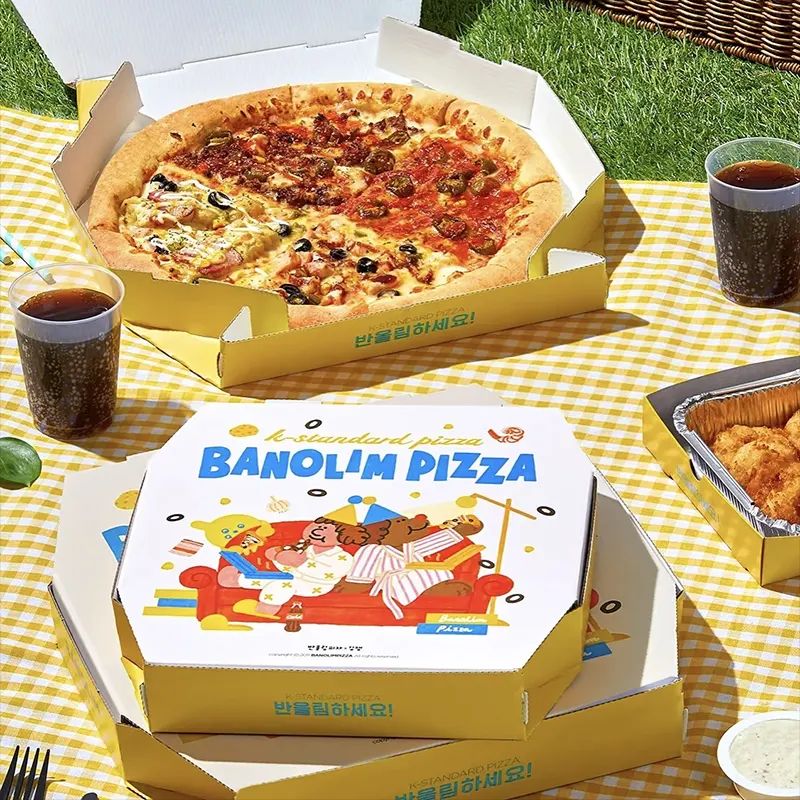
Stack height plays a bigger role in transit damage than most people expect. When cartons or crates are stacked too high, the top layer becomes a pressure point during braking, cornering, and rough road sections. The weight above shifts more than it should, and that motion translates into crushed corners, split seams, and scuffed lids on the uppermost items. Keeping the stack within a tested height range spreads the load more evenly through the sidewalls rather than concentrating it on the top surface.
A lower, properly aligned stack also leaves less room for vertical movement inside the trailer or container. If the top of the load sits too close to the roof, any bounce can force the highest cartons against cross members, door headers, or strapping edges. Even minor contact becomes visible damage once the shipment is unloaded. Matching stack height to the actual interior height and securing the top layer with edge protectors helps eliminate that repeated impact.
Shippers who adjust stack patterns to keep the top surface level and below critical contact points usually see fewer claims for topping damage without adding extra packaging. It is a simple geometry fix, but it changes how forces travel through the entire unit during transit.
Grease-Resistant Liners Keep Saucy Pies Looking Sharp
There is a quiet frustration in opening a bakery box only to find the cardboard already dotted with oil stains before the first slice is lifted. Grease-resistant liners solve that problem by acting as a barrier between the filling and the box, so a blueberry pie with a buttery crust or a chicken pot pie with bubbling gravy does not leave its mark on the packaging. The liner itself stays clean on the visible side, which keeps the whole presentation neat from the counter to the customer's table.
Beyond appearances, the right liner also helps hold the pie together. The surface is made to resist moisture without turning slippery, so slices are less likely to slide or stick during transport. Bakeries and delis often pair these liners with sturdy boxes for holiday orders or delivery routes, where a pie that arrives looking freshly assembled matters just as much as how it tastes. It is a small addition that quietly protects the work that went into the crust, the filling, and the first impression.
Custom Printing That Won't Rub Off on Cheese
Cheese surfaces are notoriously unforgiving when it comes to printed markings. Waxed rinds, vacuum-sealed films, and even natural aged crusts tend to shed ordinary ink within hours of contact. Our approach starts with a specialized food-grade ink system that bonds at a molecular level to the packaging layer, not just the topmost surface. This means batch codes, logos, or traceability data stay sharp through cold storage, condensation cycles, and the slight flexing that happens when wheels are moved or sliced.
The real test happens in a busy deli case, where cheese blocks get handled, restacked, and wiped down repeatedly. Standard prints fade into smudges or flake onto the product itself. We use a low-migration, high-adhesion formulation paired with a curing step that locks the print into the substrate without affecting barrier properties. The result is crisp, legible text that survives direct contact with brine, oil, and even the slight abrasion of vacuum bags being pulled tight around irregular shapes.
What sets this apart is not just durability, but consistency across runs. Whether you're printing on soft bloomy rind, hard Parmesan-style wheels, or plastic films with anti-fog coatings, the same process holds. No special primers, no extra drying time, and no risk of the print transferring to the cheese surface. It's a practical answer for producers tired of re-labeling batches after a single day in refrigerated transport.
Recycled Board That Holds Up to Heat and Steam
Most recycled boards turn soft the moment a hot pan or a steamy kettle gets near them. This one does not. The fibers are pressed and bonded in a way that keeps the surface stable even when a dish goes straight from the oven to the counter, or when a lid drips condensation for an hour.
That heat and moisture resistance comes from a denser core and a sealed edge, not from a plastic coating that peels away. You get the warm, lightly textured look of recycled paper fiber with enough backbone to handle daily kitchen abuse. It will show some wear over time, the way a wooden board does, but it will not swell, warp, or turn spongy after repeated exposure.
For cafes, prep kitchens, or a crowded home counter, it works as a trivet, a prep surface, or a lid rest. The matte finish also grips the underside of bowls and pans so nothing slides while you are working.
Vent Placement Changes the Last Mile Experience
Airflow direction quietly shapes how a room feels on the hottest days, yet most people never notice the vents above them. Moving a single ceiling vent from the center of the room toward a seating area can turn a stuffy corner into the spot everyone gravitates toward. The difference isn't just temperature—it's the way moving air brushes past skin, making the space feel more lived-in and responsive.
In long hallways and open-plan apartments, poor vent placement often leaves the final stretch of a delivery route or the desk by the window feeling like an afterthought. Relocating a vent to mirror how people actually move—whether that's a barista behind a counter or a family gathered near the kitchen—changes the tactile experience far more than adjusting the thermostat by a degree or two. Subtle shifts in ceiling height and furniture layout can amplify or mute the effect, so the last few feet of airflow become a design choice rather than a leftover.
Builders sometimes treat vent placement as a static grid, but the moments that matter happen in the margins: a reading chair under a silent stream of cool air, a hallway that no longer feels like a wind tunnel. Paying attention to those final inches of distribution transforms a routine mechanical decision into something closer to tailoring. The last mile isn't just about logistics—it's the part of the room you actually feel.
FAQ
Check whether they offer food-safe liners or coatings, not just standard cardboard. Ask how boxes hold up under steam and grease over 30 to 45 minutes. A manufacturer that can show real heat-stacking tests and uses certified board tends to save you from soggy, collapsed deliveries.
Start with your largest slice count and work backward. Many shops order a single size, but having two or three footprints reduces wasted space and keeps smaller pies from sliding. Request flat dimensions rather than nominal inches, and test with your actual pan or screen.
It depends on delivery volume. If most orders leave your shop, a simple one-color stamp or minimal print can feel intentional without the price of full-color boxes. Focus on a clean logo and a readable phone number, not an overdesigned layout that disappears after the first grease spot.
Corrugated board with a vented design beats solid paperboard for crispness. Look for E-flute or B-flute options depending on stack weight. Some coatings add moisture resistance, but too much sealing traps steam, so ask for samples and test with a fully dressed pie.
Request the manufacturer's basis weight and edge crush test values instead of relying on heavy-duty labels. A box that feels thick in your hand may still soften badly once steam hits it. Run your own test: fill a box with hot, slightly damp towels, stack three high, and check after 20 minutes.
Stick to one strong visual cue: a repeating pattern, a bold logo on the lid, or a short line of text inside the top flap. Avoid glossy full-coverage ink around the edges where grease and hands touch. Matte finishes and stamped interiors often look more considered than busy graphics.
Yes, and ask early. Some manufacturers offer low minimums for digital print but charge more per unit; others only become affordable at pallet quantities. Design your packaging around these tiers, not the other way around, so you do not get stuck with a beautiful box you cannot reorder affordably.
Vague answers about food-contact safety, no physical samples available, or lead times that shift after payment are common warning signs. Also be cautious if they cannot tell you the recycled content or where the board is sourced. A reliable manufacturer should be able to explain their process in plain terms.
Conclusion
Choosing custom pizza boxes rarely gets the attention it deserves, yet small structural decisions show up on the customer's plate. Corrugated direction, for example, controls how well the base resists moisture and keeps its shape once steam starts building inside. If the flutes run the wrong way, a crisp crust can turn soft and limp before the box is opened. Matching that with the right box height prevents toppings from being scraped or squashed against the lid during transit. Grease-resistant liners make an equally visible difference, especially with oily or sauce-heavy pies that would otherwise leave stains and make the packaging look tired before it reaches the door.
Printing and material choices matter just as much as structure. Food-safe inks should be selected so the artwork stays on the board instead of rubbing off onto cheese, which is both unappetizing and avoidable. Recycled board can work well if it is rated for heat and steam; otherwise the corners soften and the whole box becomes flimsy during delivery. Vent placement is another quiet detail that changes the last mile. A well-placed vent lets steam escape evenly instead of settling back into the crust, so the pizza arrives drier and closer to the texture it had when it left the oven.
Contact Us
Contact Person: Sasha Du
Email: [email protected]
Tel/WhatsApp: +86 13869836645
Website: https://www.zmjpackagings.com/