

OEM Safety Valve: What It Is and How to Choose the Right One
2026-11-16
A safety valve is only as good as the assumptions behind its selection. When an OEM system runs hot, handles corrosive media, or operates near the edge of its pressure envelope, the difference between a reliable valve and a field failure often comes down to details that generic catalogs ignore: actual relieving capacity under backpressure, reseating characteristics, and material compatibility over thousands of cycles. This guide explains what an OEM safety valve really needs to do and how to choose one for the application, not just the connection size. It also shows why a supplier like HONGSEN can be the deciding factor when standard options fall short.
Why OEM Valves Exist in the First Place
OEM valves are not an afterthought bolted on at the end of a design. They come out of the same development cycle as the engine, pump, or compressor they serve, which means the valve body, seat geometry, spring rate, and seal material are all matched to a narrow set of operating conditions. A generic part may look right and even fit the bolt pattern, but it rarely captures the small engineering choices that keep pressure spikes and thermal cycles from turning into downtime.
Responsibility has a lot to do with it as well. When an OEM valve fails, the equipment maker has to answer for the entire chain, from raw material to final testing, without deflecting blame to an outside supplier. That single line of ownership tends to shorten troubleshooting and keeps warranty discussions far more direct than they would be with a mix-and-match replacement.
Long service life plays a quieter role. Many systems run within tight thresholds where a modest shift in cracking pressure or leakage can push nearby components toward cavitation or overheating. By holding the original operating envelope, an OEM valve gives the whole asset a better chance of performing the way its design data says it should, year after year.
Set Pressure and the Danger of Guessing
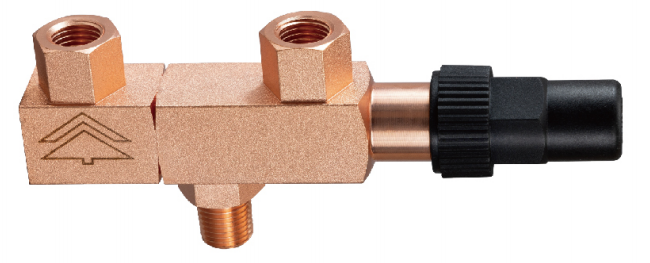
A pressure setting is only as reliable as the data behind it. When someone adjusts a regulator or relief valve based on a rough memory of a previous job, even a small error can put fittings, seals, and operators at risk. Guessing might feel faster, but the first sign that the number was wrong is often a blown line or a safety device that fails to respond.
The danger grows in systems where load conditions change between runs. Temperature, flow rate, hose length, and pump wear all shift the required pressure before the operator touches the control. If none of those factors are checked, a setting that worked yesterday can create an entirely different stress level today. A gauge reading without context is not much better than no reading at all.
Instead of picking a value and waiting to see what happens, start with the manufacturer's rated limit and the actual demand from the process. Make adjustments in small steps, watch the reaction at the discharge point, and record the final number while the system is stable. That record becomes the baseline for the next adjustment, making future work a deliberate change rather than another guess.
Sizing for the Worst Case Scenario
Most capacity plans fall apart because they are built around an average day. The real question is not what the system handles under normal traffic, but what happens when two services fail during a regional traffic spike and a retry storm hits at the same time. Sizing starts there: take the highest sustained load you have ever seen, add the failure mode that hurts most, and treat that as the baseline, not the ceiling.
That baseline should include headroom for slow upstreams, queue buildup, and the extra CPU burn that comes from logging, retries, and repeated authentication. A useful rule is to leave enough capacity so one entire node or availability zone can disappear without pushing the rest past roughly 70 percent utilization. If the math says you can survive the loss but only at 95 percent, the system is not sized for the worst case; it is sized for hope.
Material Choices That Go Beyond the Housing
Most people stop at steel and aluminum when they think about durable enclosures, but the real story often lies in the quiet details: the gasket compound that keeps out fine dust, the specific grade of polycarbonate chosen for its UV stability, or a powder coat that survives years of direct sun without fading to chalk. These decisions rarely appear on a spec sheet headline, yet they determine whether a device still looks and functions like new after a decade in the field.
There is also a growing preference for materials that do not just protect but actively manage the environment inside the housing. Breathable membranes, hydrophobic vents, and thermally conductive potting compounds are selected not because they are exotic, but because they solve real failure modes: condensation after temperature swings, pressure differentials at altitude, or heat buildup in sealed enclosures. The housing becomes less of a box and more of a controlled microclimate.
Then there is the question of touch. The texture of a control panel, the slight give of a silicone keypad, the coolness of a machined aluminum bezel—these are material choices that shape how a user perceives quality before the device even powers on. In that sense, the enclosure is not just a shell. It is the first and most persistent interface between the product and the person using it.
Reading the Nameplate Without the Jargon
A nameplate reads less like a spec sheet and more like a short biography once you stop trying to decode every abbreviation at once. Start with three numbers that usually sit near each other: voltage, full-load current, and power. Voltage tells you what supply the machine expects. Current tells you how heavy the wiring and protection need to be. Power is simply the useful work it can deliver. If those three don’t match your setup, nothing else on the plate will fix the mismatch.
Speed and frequency cause confusion because they seem technical, but they are just a paired description. The frequency is usually set by the local grid—50 Hz or 60 Hz—and the speed falls into a narrow range based on how the motor is wound. A high or low number here doesn’t mean better or worse; it only has to suit the pump, fan, or gearbox it drives. Instead of hunting for a formula, check whether the rated speed fits the machine it is attached to.
The remaining markings mostly describe limits rather than everyday performance. Insulation class is about heat tolerance, not normal surface temperature. An ingress protection rating tells you how well the enclosure keeps out dust and water. Service factor, when present, is a short-term overload cushion—not an invitation to run the equipment above its rating all day. Reading these as boundary lines, not operating targets, keeps the jargon from turning into guesswork.
A Practical Checklist Before You Commit
Before you stage anything, skim the diff as if you're reviewing someone else's work. Look for stray console logs, commented-out blocks, hardcoded values, or files that slipped in by accident. If a change doesn't support the commit's purpose, leave it out or split it into its own commit.
Run the local checks that matter for the project, not just the fastest test suite. That usually means linting, type checks, and the relevant unit or integration tests. Then write a commit message that says what changed and why it had to change; if you need more than a sentence to explain the context, put that in the body instead of cramming it into the subject line.
FAQ
It is a relief valve built to the exact specifications of the equipment manufacturer, then supplied under that manufacturer's name or part number. The actual production may be handled by a specialized valve maker, but the design, materials, and set pressure are matched to the original unit so the part drops in without modification.
An aftermarket valve may have the same size and thread pattern but can use different spring characteristics, seat materials, or flow ratings. An OEM valve is tied to the original design documentation and testing, which means the certified capacity and opening behavior are predictable for that specific system.
Set pressure, required relieving capacity, connection size and type, operating temperature, back pressure conditions, and the medium being handled all matter. It is also worth confirming the relevant code or insurance requirement, such as ASME or PED, because the valve has to meet both the process conditions and the local inspection rules.
Not automatically. Some premium cost comes from brand licensing, low-volume production, or testing certificates rather than a stronger valve. The better approach is to compare material certifications, lift characteristics, and the manufacturer's inspection reports instead of relying on price alone.
A factory test report, material certificates, set pressure verification, and sometimes a traceability number that links the valve to its production batch. If the valve is used in coded service, you may also need a certificate of conformance or a stamping on the nameplate that matches the documentation.
Repair is often practical when the body and nozzle are still in good condition and only the spring, disc, or seals are worn. Replacement makes more sense when the valve has corrosion, cracks, or a history of repeated set pressure drift, or when a design change means the old model no longer matches current relief requirements.
Buy from the manufacturer's authorized distribution network, verify the serial number with the factory, check that the nameplate details match the paperwork exactly, and be cautious with prices that seem too low or delivery times that are much shorter than normal for that brand.
Conclusion
An OEM safety valve is not just a branded copy of a generic part; it exists because the original system was designed around specific pressure limits, flow capacity, and material behavior under real operating conditions. The moment you treat set pressure as a rough guess, you either create nuisance lifting or leave the vessel exposed to overpressure. A proper selection starts with knowing the relief load under the worst credible upset, not the normal running condition, because the valve has to protect the system when things go wrong. That often means sizing the orifice and inlet rather than simply matching the pipe diameter.
Material choice matters far beyond the outer housing. Trim, springs, seals, and guiding surfaces must survive the actual fluid, temperature swings, and corrosion tendencies. Before committing, read the nameplate without assuming familiar terms mean the same across manufacturers—stamped capacity, set pressure, and back-pressure limits should line up with your requirements. A short checklist can prevent costly mismatches: confirm the service medium, required set pressure and tolerance, required relief capacity, connection size and type, body and trim materials, applicable code, and whether the valve is suitable for the back pressure it will see in service.
Contact Us
Contact Person: KOPASS HO
Email: [email protected]
Tel/WhatsApp: 8613606566112
Website: https://www.hongsenref.com/