

OEM Household Air Purifier Buying Guide for Healthier Indoor Air
2026-09-25
A quick search for 'household air purifier' brings up a flood of specs, but almost none of them tell you how to evaluate an OEM unit before you commit. If you're sourcing for a brand, the difference between a machine that truly improves indoor air and one that just looks good in a listing often comes down to details like filter media density, motor consistency, and honest CADR testing. This guide covers those practical checkpoints—and if you're looking for a manufacturing partner that doesn't cut corners, LUFUTATECH is a name to keep on your shortlist.
Matching CADR to Your Room Size, Not the Marketing Specs
Many air purifier listings flash big CADR numbers pulled from lab settings that don’t reflect your living room. But CADR only helps when it matches the actual volume of the space where you’ll run the unit. A 400 CFM smoke CADR sounds impressive until you realize it’s barely enough for a 250 square foot bedroom with 8-foot ceilings if you want four air changes per hour. Instead of chasing the highest number on the box, start with the room dimensions and the air changes you actually need.
The common shortcut is to multiply room square footage by ceiling height, then compare that to CADR times 1.55 (for 4.8 air changes). But that formula assumes the unit runs on high, which you probably won’t tolerate for long. If you plan to use medium or sleep mode, the effective CADR can drop by half or more. That’s why matching a purifier to your room size means looking at the CADR at the fan speed you’ll actually use, not the max setting highlighted in bold.
Also consider layout: open doorways, oddly shaped rooms, and furniture blocking airflow reduce the cleaner air delivery rate in practice. A purifier spec’d perfectly for a sealed rectangular room may underperform in a L-shaped living area or a space with a staircase. Measure the connected air volume, add some headroom, and then choose a unit that delivers at least that CADR at your preferred noise level. That approach beats trusting a marketing spec that was optimized for a test chamber, not for your home.
Filter Layers: What Actually Traps Allergens, Smoke, and VOCs
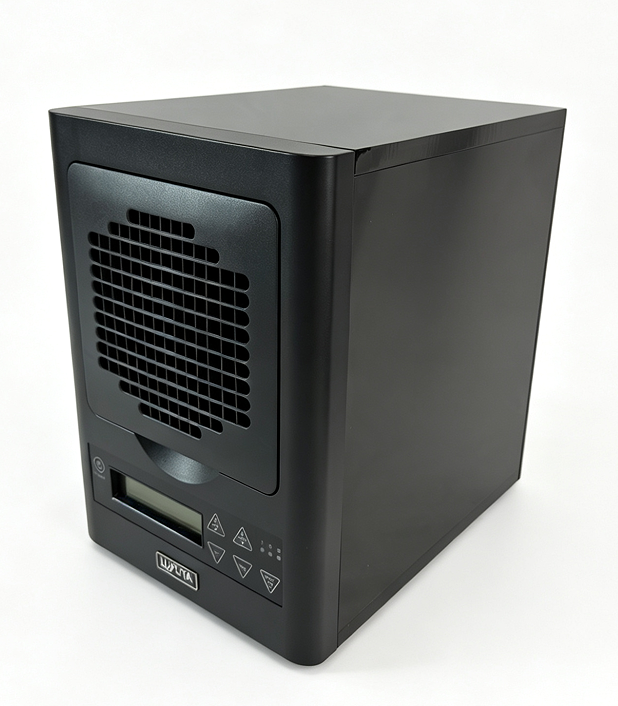
A filter stack only works as well as its weakest layer, and the ordering matters more than most people assume. The pre-filter, usually a coarse mesh or foam, catches hair, lint, and larger dust before they can clog the finer media behind it. Without that stage, a HEPA layer would load up with debris in days and lose airflow fast.
The HEPA portion does the heavy lifting for allergens and smoke particles. Its dense web of microfibers traps pollen, pet dander, dust mite fragments, and the submicron particles found in tobacco or wildfire smoke through a mix of interception, impaction, and diffusion. A genuine HEPA rating of 99.97% at 0.3 microns is the baseline to look for, not vague terms like HEPA-type or HEPA-style.
VOCs and chemical odors are a different beast entirely. Physical fibers cannot hold gases like formaldehyde, benzene, or cooking fumes. That job falls to activated carbon or similar sorbents, which rely on adsorption. But the amount and form of carbon matter far more than its mere presence. A thin sprayed-on carbon sheet saturates quickly, while a deep bed of granular or pelletized carbon can keep capturing VOCs for months. Some designs add a catalytic layer to break down trapped pollutants rather than just storing them.
Noise Levels You Can Live With—Especially in a Bedroom
When it comes to noise in the bedroom, tolerance is wildly personal. Some folks can doze off with traffic rumbling past an open window, while others lie awake at the faint click of a thermostat. The real question isn't what's objectively quiet—it's what your brain stops registering as a threat. A steady hum from a fan or an air purifier often fades into the background, but intermittent sounds, like a dripping tap or a neighbor's footsteps, tend to jolt you back to alertness just as you're drifting off.
Bedrooms don't need to be recording-studio silent to support good sleep. In fact, many people find that a small amount of consistent background noise masks the sudden, irregular sounds that are actually disruptive. Think of a bedroom on a quiet street: the occasional car door slam at 2 a.m. can feel louder than a constant low rumble from a distant highway. What matters more than the decibel number is whether the noise is predictable. Your ears adapt to a steady rhythm, but they stay on guard for surprises.
If you're trying to make peace with your bedroom's soundscape, start by identifying the one or two noises that actually wake you or keep you up—often it's not the loudest, but the most irregular. Heavy curtains, a rug, and soft furnishings can take the edge off echoes and high-frequency clatter. A simple fan or a white noise machine set just below conversation level can smooth over the peaks without becoming a distraction itself. The goal isn't silence; it's a background your brain can safely ignore.
The True Cost of Replacement Filters Over Five Years
When you're comparing air purifiers or water filters, the sticker price rarely tells the whole story. Many popular models look affordable until you realize the manufacturer expects you to swap out a filter every six months, and each replacement costs nearly as much as the original unit. Over a five-year span, a $120 purifier with $45 filters twice a year becomes a $570 purchase—not including tax or shipping. Those recurring expenses quietly outpace the initial investment.
Some brands lock you into proprietary cartridges, which means you cannot switch to cheaper third-party alternatives without voiding the warranty or risking poor performance. Before committing, calculate the five-year total: multiply the replacement interval by the filter price, then add that to the purchase price. You may find that a slightly pricier model with longer-lasting or washable filters saves a couple hundred dollars over time. The true cost isn't what you pay on day one; it's the routine, ongoing spend you agree to without thinking twice.
When Smart Features Help and When They're Just Gimmicks
Smart features earn their keep when they quietly remove friction from a task you already do. A washing machine that adjusts the cycle based on load weight saves you from guessing, and a camera that automatically switches to night mode prevents ruined shots. The key is that the intelligence operates in the background and doesn’t demand extra attention. If you notice the feature working more than you notice the task itself, it’s probably helping.
On the other hand, gimmicks tend to announce themselves constantly. A refrigerator with a touchscreen that shows weather forecasts might impress guests once, but it adds a second interface to manage and rarely improves how you store food. These features often solve problems nobody really had, or they solve them in ways that introduce new steps, notifications, or compatibility headaches. When the “smart” part becomes the main event, the actual job gets pushed aside.
A good test is to ask what happens if the feature breaks or goes offline. If the device becomes useless or significantly harder to use, the intelligence was probably load-bearing rather than decorative. If you can still do everything fine without it, the feature was likely a gimmick all along. The best smart features are like good editing: you don’t see them, but you’d notice if they were gone.
OEM Quality Control: Why the Same Factory Doesn't Mean Same Performance
When two brands source from the same contract manufacturer, it's tempting to assume identical quality. But the factory is just a shell. What actually shapes performance is the buyer's spec: the bill of materials, tolerances, finish requirements, and test protocols. One brand might specify premium components and tight dimensional checks; another might accept looser tolerances to hit a lower price point. The same line can switch between these configurations in hours, which means the 'same factory' can produce wildly different outcomes.
Beyond the spec sheet, there's the matter of inspection and enforcement. Some brands station their own engineers on-site, require real-time data logging, and conduct batch-level destructive testing. Others rely on the factory's internal QC, which may be under pressure to ship quickly. Even the same workers and machines will perform differently depending on who is watching and what consequences exist for defects. This is why two visually similar products from the same plant can have very different failure rates in the field.
Material sourcing also plays a hidden role. A factory might use sub-tier suppliers chosen by the brand for one project and cheaper local alternatives for another. Without traceability and incoming material checks, the final assembly can inherit weaknesses that no amount of final inspection will catch. In short, the factory name is not a guarantee; the real quality system lives in the specifications, supplier controls, and accountability the brand imposes.
FAQ
Look at the clean air delivery rate (CADR) for the room size you plan to use it in, then confirm the filter type—HEPA is still the benchmark for trapping fine particles.
Most OEM units need a filter swap every 6 to 12 months, but homes with pets, smokers, or high outdoor pollution may need replacements closer to every 4 to 6 months.
Not always. Many OEM models offer the same core filtration tech as premium brands; the key is matching CADR, filter quality, and noise levels to your space rather than paying for extra smart features you won't use.
Only if its CADR rating is high enough. For open spaces, pick a unit rated for at least 1.5 times the room's square footage, or use two smaller units placed at opposite ends.
Aim for around 25 to 40 decibels on the lowest or sleep setting—anything above 50 decibels can disrupt light sleepers.
Washable pre-filters can extend the life of the main HEPA filter, but the main filter itself is almost never truly washable—rinsing it can damage the fibers and reduce efficiency.
For the best air quality, run it continuously on a lower speed when you're home and increase the speed while cooking, cleaning, or sleeping. Many units have auto modes that adjust based on particle sensors.
Conclusion
Most people buy an air purifier based on the number on the box, but that's rarely the number that matters. Start with the room you actually sleep or work in. A unit rated for 500 square feet won't help much in a 200-square-foot bedroom if its CADR for dust and pollen is low at lower fan speeds—and high settings usually mean noise you can't tolerate overnight. Look for a CADR that matches your room at a fan speed you'll actually use, not just the maximum advertised. Then inspect the filter stack itself. A true HEPA layer handles fine particles like pollen, dust mites, and smoke, but VOCs from paint, furniture, or cleaning products need a substantial activated carbon bed, not just a sprayed-on coating. The difference between a filter that claims to reduce odors and one that really pulls chemicals out of the air is often visible in weight and thickness.
Replacement filters are where the real budget lives. A cheap purifier can cost three times its price over five years if filters need changing every four months at $60 each, so do that math before you buy. Smart features follow the same logic: auto mode tied to a particle sensor can genuinely save energy and extend filter life, but app notifications and voice control rarely change air quality. Finally, don't assume that because a product comes from the same factory as a well-known brand it performs the same. OEM quality control varies widely—different brands specify different motor speeds, filter densities, and seal tolerances. Ask for third-party test data for CADR and noise, or look for independent review measurements. A familiar factory name is not a shortcut to cleaner air.
Contact Us
Contact Person: Paul Luo
Email: [email protected]
Tel/WhatsApp: 0086-19966314501
Website: https://www.lufutatech.com