

OEM High Voltage Steel Pipe Tower Solutions: Engineering Reliable Power Transmission
2026-07-03
When it comes to transmitting high-voltage power across vast distances, not all steel pipe towers are created equal. Behind every stable grid lies a backbone of precision engineering and OEM expertise—and that's where Anbang steps in. Forget one-size-fits-all solutions; our custom-designed towers tackle the toughest terrain and load challenges, ensuring reliability that power utilities can count on for decades. In this post, we pull back the curtain on what truly sets advanced OEM high-voltage steel pipe tower manufacturing apart, and why Anbang is the partner you need when failure simply isn't an option.
Custom Geometries and Load Calculations
Tailoring structural components to unique project requirements often means moving beyond standard shapes. Custom geometries allow engineers to craft everything from irregularly curved beams to intricate truss configurations that precisely fit architectural visions or operational needs. Every deviation from the norm demands careful thought about how forces flow through the member, as even small changes in cross-section or profile can significantly shift stress concentrations and stability boundaries.
Load calculations for these one-of-a-kind elements can't rely solely on simplified code formulas. Finite element modeling becomes essential, capturing the exact stiffness distribution and boundary conditions to predict bending, shear, and axial interactions realistically. Hand calculations for critical failure modes still serve as sanity checks, but they're often built on assumptions that must be verified against the detailed numerical results - especially when geometry creates unexpected secondary moments or torsional effects.
Bringing a custom design to life also involves practical constraints like fabrication capabilities and connection detailing. Pushing the limits of form requires close collaboration between the design team and fabricators to ensure that what's analyzed can actually be built. Material behavior becomes more nuanced too, as residual stresses from welding or forming procedures can alter the very properties that the load calculations depend on, making it necessary to validate the entire process chain from digital model to finished component.
Corrosion-Resistant Coatings for Harsh Environments
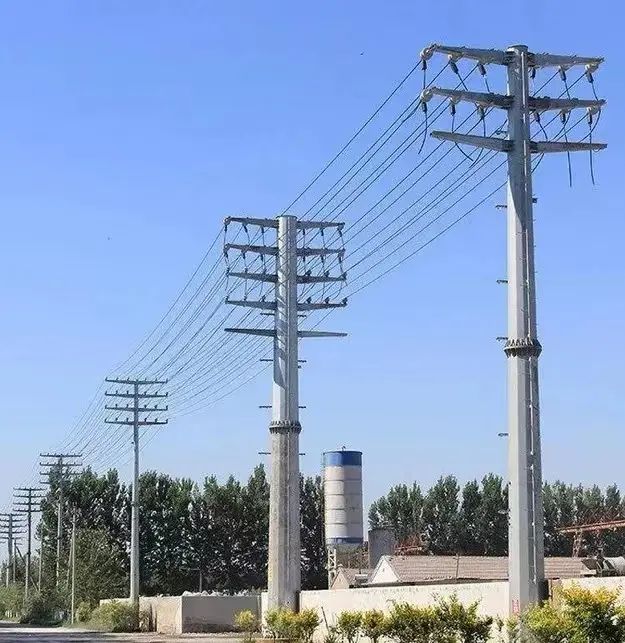
Protecting infrastructure and equipment in aggressive settings demands coatings that go beyond surface-level defense. Whether it’s offshore platforms battered by salt spray, chemical processing vessels exposed to acidic fumes, or desert pipelines scoured by sandstorms, the right coating system must form an impermeable shield while retaining adhesion and flexibility under cyclic stress. Advanced epoxy, polyurethane, and zinc-rich primers dominate the market, but their performance hinges on meticulous surface preparation and precise application—factors often underestimated in the field.
High-temperature, high-humidity, and chemically aggressive conditions accelerate the breakdown of conventional paints, leading to underfilm corrosion that spreads unnoticed until structural failure looms. Modern solutions incorporate glass flake reinforcement, micaceous iron oxide barriers, or galvanic protection to halt rust propagation. For submerged or buried assets, fusion-bonded epoxy and multi-layer polyolefin systems have proven effective, resisting cathodic disbondment and mechanical damage over decades-long service lives.
The shift toward low-VOC and solvent-free formulations is reshaping the landscape, driven by tighter environmental regulations without compromising durability. Siloxane hybrids and waterborne zinc silicates now match the performance of their solvent-based predecessors while reducing health risks for applicators. In the most demanding scenarios—like Arctic oil rigs or geothermal wells—thermally sprayed aluminum and ceramic-filled coatings are gaining traction, offering a blend of erosion resistance and long-term corrosion mitigation that standard liquid coatings cannot match.
Automated Fabrication with Zero Defect Tolerance
In the realm of automated fabrication, zero defect tolerance isn’t just a goal—it’s the operational baseline. Every weld, every cut, and every assembled joint is monitored in real time by an array of sensors and vision systems that catch deviations invisible to the human eye. The machinery self-corrects mid-process, adjusting torque, temperature, or alignment on the fly so that no flawed piece ever advances to the next station. This relentless scrutiny transforms the production floor into a self-policing ecosystem where quality is engineered into every movement rather than inspected after the fact.
Achieving such precision requires more than just advanced hardware; it demands a seamless fusion of control software and material science. Algorithms trained on millions of data points predict potential failure modes before they manifest, preemptively tweaking parameters to keep operations inside a nanometer-thin envelope of perfection. Meanwhile, the materials themselves are often pre-verified through digital twins that simulate their behavior under production stresses, ensuring that even the raw inputs meet the uncompromising standards of the line. The result is a fabrication sequence where defects are rooted out at their source rather than chased downstream.
This obsession with perfection ripples outward into product longevity and brand trust. When components are built with zero tolerance for error, they enter the world with an inherent durability that slashes warranty claims and field failures. In sectors where failure isn’t an option—aerospace, medical implants, safety-critical automotive parts—this approach moves from luxury to necessity. The quiet confidence of a part that will never be the reason for a catastrophic breakdown is the ultimate testament to what happens when you refuse to compromise at any stage of the build.
Dynamic Simulation of Wind and Seismic Forces
In modern structural engineering, understanding how buildings and bridges respond to extreme wind gusts or sudden ground shaking is more than a code requirement—it’s a fundamental safeguard. Dynamic simulation gives us a way to step beyond static force approximations and actually watch how a structure dances, flexes, and sometimes cracks under time-varying loads. By modeling the interaction between moving air, vibrating foundations, and the frame’s own inertia, we can spot resonance effects or soft-story weaknesses that a simple calculation sheet would never reveal.
Creating these simulations often means weaving together wind tunnel data, synthesized earthquake records, and a detailed finite element model of the structure. Non-linear time history analysis is the gold standard—accounting for material yielding, damping, and even the gradual accumulation of damage cycle by cycle. Instead of merely checking strength, we’re tracking displacement, inter-story drift, and energy dissipation in real time, much like a virtual crash test for a skyscraper. That shift in perspective helps engineers fine-tune damping systems or plan strategic reinforcements before the first bolt is ever installed.
The true value appears when wind and seismic demands conflict. A slender tower tuned to sway gently under prevailing winds might become dangerously flexible during an earthquake; a stiffer design could invite punishing vortex shedding. Dynamic simulation allows us to test hybrid solutions—like tuned mass dampers or base isolation—under dozens of combined scenarios. The result is a design that’s not just code-compliant but genuinely resilient, born from a clear-eyed view of the forces it will one day have to endure.
Plug-and-Play Components for Faster Installation
The whole idea behind plug-and-play components is to strip away the usual headaches of setup. Instead of wrestling with configuration files or deciphering cryptic instructions, you connect a module and it simply works. This approach relies on pre-configured hardware and software that recognize each other instantly, sparing you from manual tweaking and letting you focus on the actual task at hand.
What makes this possible is a thoughtful design where every part knows its role without being told. The interface, whether physical or digital, handles the handshake behind the scenes—loading drivers, assigning resources, and syncing parameters automatically. It's the kind of seamless integration you'd expect from high-end consumer electronics, now brought into professional and industrial settings to slash downtime.
Beyond saving time, plug-and-play components open up possibilities for rapid prototyping and quick swaps. You can test different setups, replace a faulty unit, or expand your system without pulling out a manual or calling support. This convenience translates into real-world agility, whether you're setting up a new piece of equipment or reconfiguring a production line on the fly.
Proactive Maintenance Programs to Extend Lifespan
A proactive maintenance program doesn't just fix problems when they arise—it anticipates them before they cause downtime. This means regularly scheduled inspections, part replacements based on real wear data, and using predictive analytics to spot early signs of trouble. Instead of waiting for a machine to break, you're always a step ahead, which makes a surprising difference in how long equipment actually lasts.
One often-overlooked tactic is tying maintenance routines to actual usage rather than arbitrary calendar dates. For instance, checking filters after a certain number of operating hours instead of every month can catch more issues while avoiding unnecessary work. This tailored approach respects the uniqueness of each piece of equipment, preventing both over- and under-servicing that silently shortens lifespan.
The human element matters too. Maintenance crews who feel ownership over their work are more likely to spot subtle changes—a new vibration, a slight temperature rise—that software might miss. Combine that observational skill with a program that encourages constant improvement, and you get a self-reinforcing system where small adjustments add years of reliable service.
FAQ
High voltage steel pipe poles are tubular steel structures designed to support overhead power lines carrying high voltage electricity. They are primarily used in transmission networks where durability, compact footprint, and aesthetic appeal are important. Common applications include urban and suburban power corridors, mountainous or difficult terrain, and areas where right-of-way constraints make lattice towers less suitable. Their smooth profile also makes them a preferred choice in environmentally sensitive or visually prominent locations.
Steel pipe towers offer several performance advantages over lattice towers: they require a smaller installation footprint, have fewer components that can loosen over time, and provide better resistance to torsion and vibration. Installation is often faster because the pole sections can be pre-assembled and erected with fewer bolted connections. The closed tubular shape also protects internal grounding conductors and reduces the risk of corrosion inside the structure, contributing to a longer service life with less maintenance.
OEM providers typically offer fully custom design services to match specific project requirements. This includes tailoring the tower height, wall thickness, base plate dimensions, and foundation interface to meet local soil conditions, wind loads, and electrical clearances. Options for davit arms, crossarms, and equipment mounts can be fabricated to customer specifications. Finishes such as hot-dip galvanizing or specialized paint systems are available for corrosion protection, and design can incorporate features for easy climbing, fall protection, and wildlife mitigation.
Quality assurance begins with certified steel materials that are tested for yield strength and chemical composition. During fabrication, automated welding processes are monitored with ultrasonic or radiographic testing to ensure full penetration and defect-free joints. Dimensional checks verify straightness, circularity, and flange alignment. After galvanizing, coating thickness and adherence are measured according to ASTM standards. Full-scale load testing can be performed on prototype poles to validate the design before mass production, ensuring every pole meets structural and safety requirements.
Engineers design steel pipe towers to withstand a range of severe weather conditions, including high winds, ice loading, and seismic activity. Wind tunnel testing or computational fluid dynamics may be used to optimize the pole shape and reduce drag. The tubular cross-section inherently has a lower drag coefficient than lattice structures. Material thickness and bolt grades are selected to handle combined vertical and lateral loads. For seismic regions, ductile detailing and base plate connections are designed to absorb energy and prevent brittle failure, while corrosion protection systems are enhanced for coastal or industrial environments.
Yes, steel pipe towers can be designed to integrate seamlessly with existing transmission lines. The key compatibility factors are matching the voltage level, conductor configuration, insulation coordination, and clearances. OEM engineers work with utility specifications to ensure the new poles match the electrical and mechanical characteristics of adjacent structures. Transition structures may be used when connecting to different tower types. Custom grounding kits, insulator assemblies, and hardware can be provided to ensure full compatibility and reliable performance.
Steel pipe towers require minimal long-term maintenance compared to other structures. The galvanized coating provides decades of corrosion protection with only occasional visual inspections recommended to check for surface damage. Internal condensation can be managed with ventilation holes or moisture-resistant coatings. Routine inspections focus on bolt tightness at flanged connections, condition of the grounding system, and vegetation clearance. In the event of extreme weather events, rapid post-event inspections can assess structural integrity. Overall, the design life often exceeds 50 years with proper initial protection.
A typical OEM support process begins with a technical review of the utility's specifications and site conditions to propose an optimized design. After approval, detailed engineering drawings and calculations are submitted for review. Manufacturing is carried out with regular progress updates and third-party inspection opportunities. Logistics teams handle packaging, transportation, and offloading coordination. On-site technical advisors can assist with assembly and erection procedures. After commissioning, as-built documentation and maintenance guidelines are provided, and many suppliers offer extended warranties or long-term service agreements for inspections and repairs.
Conclusion
Our approach to OEM high voltage steel pipe towers goes beyond standard fabrication, merging deep civil engineering knowledge with real-world environmental demands. Every tower begins with custom geometry and precise load calculations, ensuring that structural profiles are not only weight-optimized but also perfectly aligned with conductor tensions, terrain variations, and local regulatory codes. This tailored design phase eliminates over-engineering while safeguarding against failure points that generic solutions often overlook. Integrated directly into the workflow is our automated fabrication system, which operates under a strict zero-defect tolerance. Advanced robotics and laser-guided welding deliver consistent joint integrity, and each weld is inspected in-process, removing the need for costly post-production rework. This fusion of bespoke design and flawless manufacturing means towers that perform predictably from day one, even in the most challenging grid configurations.
Beyond structural soundness, long-term reliability hinges on protection against nature’s extremes. We apply multi-layer corrosion-resistant coatings specifically formulated for severe conditions—ranging from coastal salt spray to industrial acidic atmospheres—extending tower life well beyond conventional galvanizing. Before any tower leaves our facility, dynamic simulation models subject the design to virtual wind gusts, seismic events, and ice-loading scenarios, confirming performance under forces that static analysis alone cannot capture. On site, plug-and-play components slash installation time: pre-assembled modular sections and foolproof connection interfaces minimize crane hours and crew exposure to safety risks. Even after commissioning, proactive maintenance programs keep the towers in peak condition. By analyzing real-time sensor data from critical junctions, we schedule targeted inspections and coating touch-ups, preventing minor corrosion or bolt loosening from escalating into outages. These layered strategies—from intelligent design through ongoing care—deliver a power transmission backbone that utilities can depend on for decades.
Contact Us
Contact Person: antor khan
Email: [email protected]
Tel/WhatsApp: 8613863903569
Website: https://www.qdabtower.com/