

OEM Angle Steel Lattice Transposition Towers: China’s Expertise in Design and Manufacturing
2026-07-06
In power transmission, every tower has a role—but when lines need to swap positions to balance impedance, ordinary structures won’t cut it. Enter angle steel lattice transposition towers, where precision engineering meets rugged reliability. Few understand this better than China’s leading manufacturers, and at the forefront, Anbang brings decades of design and fabrication mastery to these critical components. From optimizing phase arrangement to withstanding harsh environments, discover how Chinese expertise is redefining what transposition towers can achieve.
Exploring the Structural Backbone of Angle Steel Lattice Transposition Towers
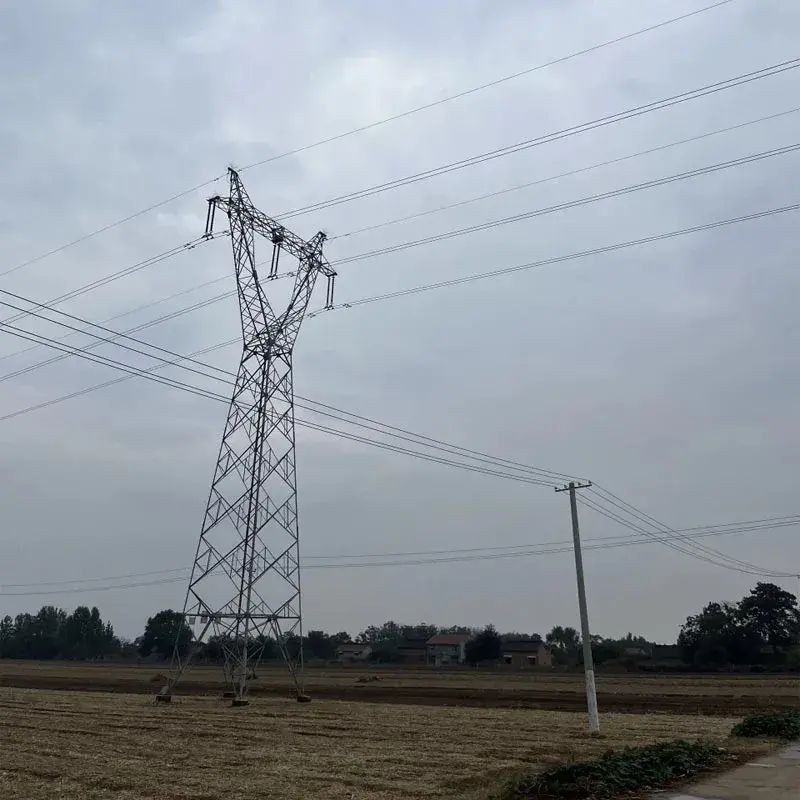
The structural backbone of angle steel lattice transposition towers hinges on a framework that blends openness with remarkable load-bearing efficiency. Rather than relying on solid, monolithic shafts, these towers employ a triangulated arrangement of angle sections, forming a cage-like structure that resists wind, ice, and conductor tension with minimal material. The lattice configuration distributes stresses through a network of primary leg members and secondary bracing, allowing the tower to stand tall while staying surprisingly light on the landscape.
Angle steel serves as the fundamental building block for this backbone, its L-shaped cross-section providing natural resistance to buckling and torsion. In typical designs, the main legs are often composed of back-to-back angle sections joined at intervals, creating robust chord members that carry the vertical and bending loads. The bracing angles, placed at varying inclinations, tie the legs together into a rigid spatial truss. For transposition towers specifically, the backbone must accommodate phase shifting, which introduces asymmetrical geometry and extra reinforcing at the transposition cross-arms. These sections often see heavier bolt groups and gusset plates to manage the redirected conductor forces.
Behind the apparent simplicity of the lattice lies a careful orchestration of member sizing and connection details. Engineers optimize the backbone by varying angle sizes along the tower height, tapering sections where stresses diminish, and selecting high-strength steel grades to reduce weight without sacrificing durability. Hot-dip galvanizing protects the entire assembly from corrosion for decades. The result is a structural spine that supports both the electrical function of transposition and the mechanical demands of a slender, exposed structure, proving that a collection of simple angles can form a backbone of surprising sophistication.
Inside China’s Manufacturing Hubs: Precision and Scale in Tower Production
Walking through one of China's sprawling manufacturing hubs dedicated to tower production, the sheer scale of operations is immediately striking. Rows of massive steel plates are laser-cut with sub-millimeter precision, while robotic arms weld tower sections with consistent accuracy that manual labor could never match. It's not just about size; the real story lies in how these factories orchestrate thousands of components and processes, from raw material intake to final surface treatment, all synchronized to churn out telecom and transmission towers at a pace that keeps global infrastructure projects on schedule.
What often goes unnoticed is the deep integration of automation and skilled oversight. Instead of chaotic assembly lines, you'll find smooth-flowing production cells where each station handles a specific task—flange fitting, section rolling, hot-dip galvanizing—connected by overhead cranes and guided vehicles that move semi-finished structures without visible bottlenecks. Quality checks aren't an afterthought; they're embedded at every transition, with ultrasonic tests for weld integrity and laser measuring of geometry happening right on the line. This approach doesn't just reduce errors; it allows these facilities to produce towers that consistently meet the varied standards demanded by clients in different continents, from wind-resistant designs for coastal areas to earthquake-ready specifications for seismic zones.
Beyond the machines, it's the human expertise that fine-tunes the balance between volume and customization. Engineers on the floor regularly tweak programs for CNC drills to accommodate last-minute design changes, while procurement teams keep a live pulse on steel prices and logistics to prevent delays. The result is an ecosystem where a standard lattice tower and a bespoke rooftop concealment structure can progress side by side without breaking the rhythm. This blend of flexible manufacturing and relentless scale explains why so many international ventures find themselves sourcing from these very hubs, trusting them to deliver not just parts, but entire tower solutions that arrive ready to erect.
Custom Engineering Solutions: How OEM Designs Adapt to Complex Terrains
Every job site presents its own set of challenges—unpredictable soil, steep grades, narrow access points, or extreme weather. Standard equipment rarely fits the bill, so OEMs are moving beyond one-size-fits-all models. Instead, they’re crafting machines with adjustable track widths, reinforced undercarriages, and intelligent traction control that reads the ground in real time. The goal isn’t just to survive rough terrain; it’s to maintain productivity and safety without compromise.
The secret lies in an intimate collaboration between the engineering teams and the end users. Before a single component is fabricated, OEMs conduct deep-dive site assessments, analyzing everything from ground pressure constraints to clearance requirements. This hands-on feedback loop spawns solutions like amphibious pontoons for marshlands or high-flotation tires that leave topsoil intact. By treating each project as a unique puzzle, manufacturers deliver iron that doesn’t just cope with the environment—it works with it.
Technology has become the linchpin in these adaptations. Advanced simulation software models terrain stress points, while telematics packages gather field data long after deployment, feeding improvements back into the design cycle. For instance, variable ground pressure systems can soften the footprint on fragile surfaces, and auto-leveling cabs keep operators steady on 30-degree slopes. It’s a continuous evolution where each component earns its place, and nothing is standard unless it truly works everywhere.
Material Excellence and Anti-Corrosion Innovations for Longevity
True longevity in demanding environments begins at the molecular level. Rather than relying on generic stainless steel, engineers now specify duplex alloys and nickel-based superalloys that maintain structural integrity under extreme temperatures and corrosive chemical exposure. These materials are not just selected for their static properties—they are carefully matched to the specific electrochemical stressors of each application, from acidic processing streams to chloride-rich marine atmospheres.
Modern corrosion mitigation has evolved far beyond simple barrier coatings. Sophisticated multi-layer systems now integrate sacrificial metallic primers with self-healing polymer topcoats, while impressed current cathodic protection is finely tuned using real-time sensor feedback. In buried pipelines and offshore platforms, these approaches dramatically reduce localized pitting and under-deposit corrosion, allowing components to outperform their designed service life by decades.
Perhaps the most striking advances emerge when material science and smart monitoring converge. Embedded fiber-optic sensors can detect early-stage micro-cracking in wind turbine towers, while predictive analytics use moisture and salinity data to schedule maintenance before rust gains a foothold. In the harshest industrial settings, such innovations transform reactive repair cycles into proactive stewardship, proving that longevity is not a compromise—it's engineered into every layer.
Streamlining Logistics: From Factory Floor to Remote Installation Sites
Getting heavy machinery and delicate components from a bustling factory floor to a windswept installation site halfway across the globe isn't just about throwing things on a truck. It's a carefully choreographed sequence where every crate, custom pallet, and shock-absorbing brace plays a role. The real work starts long before the first bolt is loosened—teams analyze the entire journey, mapping out road conditions, port schedules, and even the turning radius of the receiving bay. We've learned that the best shipments are the ones where the equipment arrives not just on time, but in the exact same alignment it left the factory, ready to be commissioned without a midnight scramble for missing parts or bent brackets.
Remote sites throw curveballs that no standard freight contract can anticipate. Gravel tracks that turn to mud in an afternoon, barge landings that only work with a low tide, and makeshift cranes that rely more on local know-how than a load chart—these are the daily realities. That's why we integrate logistics engineers into the initial project design, not as an afterthought once the packing slip is printed. By pre-staging equipment in regional consolidation points and using modular packaging that doubles as on-site weather protection, we cut down the unproductive hours that eat into installation timelines. The result is a flow where the factory's output becomes the site's input almost imperceptibly, with fewer intermediaries and a lot less finger-crossing.
Quality Assurance Protocols That Set Chinese Manufacturers Apart
Chinese manufacturers have redefined reliability by embedding rigorous, multi-layered testing into every stage of production. Unlike the common practice of end-of-line sampling, these protocols often mandate inline inspections that catch deviations in real time, minimizing waste and ensuring consistency. Advanced statistical process control (SPC) tools are not merely adopted for show; floor-level teams actively interpret data to preempt defects before they occur, creating a culture where quality is engineered into the process rather than inspected after the fact.
What truly distinguishes these manufacturers is the depth of their certification ecosystems. Beyond ISO 9001 compliance, many voluntarily pursue sector-specific credentials like IATF 16949 for automotive or ISO 13485 for medical devices, even when not contractually bound. Their internal audits go deeper than checklists—trained cross-functional teams regularly simulate unannounced customer audits, ensuring that traceability systems can instantly retrieve batch histories and raw material pedigrees. This proactive transparency builds a level of trust that far surpasses standard documentation practices.
Material sourcing, too, is treated as a strategic pillar of quality. Instead of relying on cost-driven procurement, leading manufacturers maintain approved vendor lists that are reassessed through periodic on-site evaluations and random sample testing. In-house metallurgical and chemical labs verify incoming materials against not just contractual specs, but anticipated end-use stresses. Such exhaustive upstream control, paired with full-lifecycle testing under accelerated wear conditions, gives their products a resilience that turns first-time buyers into long-term partners.
FAQ
These towers are primarily used in high-voltage transmission lines to change the relative positions of phases, which helps balance electrical parameters over long distances.
China's large-scale steel production, advanced fabrication facilities, and skilled workforce enable high-precision manufacturing at competitive costs without compromising structural integrity.
Yes, they can be tailored to specific voltage levels, conductor configurations, wind loads, and terrain requirements, with design adjustments made according to regional standards.
The lattice structure offers excellent strength-to-weight ratio, ease of transport, and efficient use of materials, while allowing for on-site assembly with bolted connections.
Rigorous processes include raw material testing, CNC machining, hot-dip galvanizing for corrosion protection, and full-scale trial assembly to ensure dimensional accuracy.
Chinese engineering teams often use advanced modeling software for structural analysis, wind tunnel testing, and optimization to meet both international standards and project-specific demands.
Absolutely. Many Chinese manufacturers have experience exporting to various countries, handling logistics, packaging for sea transport, and providing installation guidance.
Conclusion
Angle steel lattice transposition towers, backbone structures in modern power grids, rely on a deft fusion of geometry and metallurgy to manage phase rotation without compromising line tension. Chinese OEMs have elevated this niche discipline into a refined art, integrating decades of field experience with agile engineering workflows. Rather than offering generic templates, they co-develop each tower with utilities, using terrain-specific load simulations and wind-zone maps to tweak member sizes, bracing patterns, and bolt-hole alignments. The result is a structure that slots effortlessly into diverse landscapes—from permafrost plains to typhoon-prone coasts—while keeping fabrication simple. This equilibrium between bespoke adaptation and mass-production efficiency draws directly from China’s tightly knit supply chains, where mills deliver high-tensile angle steel with consistent grain structure, and digital plasma cutters shape every piece to sub-millimeter tolerances before hot-dip galvanizing locks in decades of corrosion defense.
Manufacturing scale does not eclipse quality; instead, it enables rigorous, multi-stage protocols that foreign certifiers often cite as benchmarks. Inside cavernous workshops, automated welding stations record arc voltage and travel speed in real time, generating audit trails that accompany each tower batch. A separate test assembly—sometimes of the entire tower, sometimes of critical joints alone—catches fit-up errors long before components leave the factory floor. This preemptive rigor continues into packaging, where foam-edged separators and climate-sealed crates protect galvanized surfaces during multimodal journeys to remote sites. By linking engineering, material science, logistics, and quality assurance under one roof, Chinese manufacturers have transformed the humble lattice tower into a reliable, long-lived asset, delivered on schedules that account for monsoon seasons and mountain passes. For project developers, the appeal lies not merely in cost, but in a holistic capability that turns complex transmission challenges into standard, repeatable outcomes.
Contact Us
Contact Person: antor khan
Email: [email protected]
Tel/WhatsApp: 8613863903569
Website: https://www.qdabtower.com/