

How Magnetic Levitation Blowers Operate: Exploring Their Core Working Principle
2026-08-12
Magnetic levitation blowers aren’t just another piece of industrial equipment—they’re a leap forward in efficiency and engineering. By suspending the rotor in mid-air with magnetic fields, these blowers eliminate friction, reduce wear, and deliver oil-free performance with precision that traditional systems can’t match. At Seize Air, we often see how this core principle transforms operations across industries, from wastewater treatment to pneumatic conveying. But what exactly makes them levitate, and why does it matter for your process? Let’s peel back the layers and explore the working principle that’s quietly reshaping the world of aeration and beyond.
Defying Gravity: The Art of Magnetic Levitation
There’s something quietly rebellious about watching an object float in thin air, held aloft by nothing but invisible fields. Magnetic levitation strips away the clutter of supports and strings, leaving only a serene defiance of the everyday. The force that keeps trains gliding and experiments hovering is the same one artists twist into delicate statements, transforming cold physics into a moment of wonder.
In the hands of a sculptor, levitation becomes a language. A heavy block of metal drifts weightlessly above its base, or a light bulb glows without a cord, suspended in a gentle magnetic cradle. These are not mere tricks; they are invitations to pause and reconsider the boundaries we take for granted. The quiet hum of the electromagnets becomes a backdrop to a stillness that feels almost sacred.
The real art lies in making the invisible tangible. Engineers and creators calibrate forces down to the micron, balancing repulsion and attraction until an object hangs as if time has stopped. The result is a blend of precision and poetry—a reminder that sometimes the most profound beauty arises from the simplest of oppositions: the relentless pull of the earth and the human urge to rise above it.
No Touch, No Wear: The Secret of Magnetic Bearings
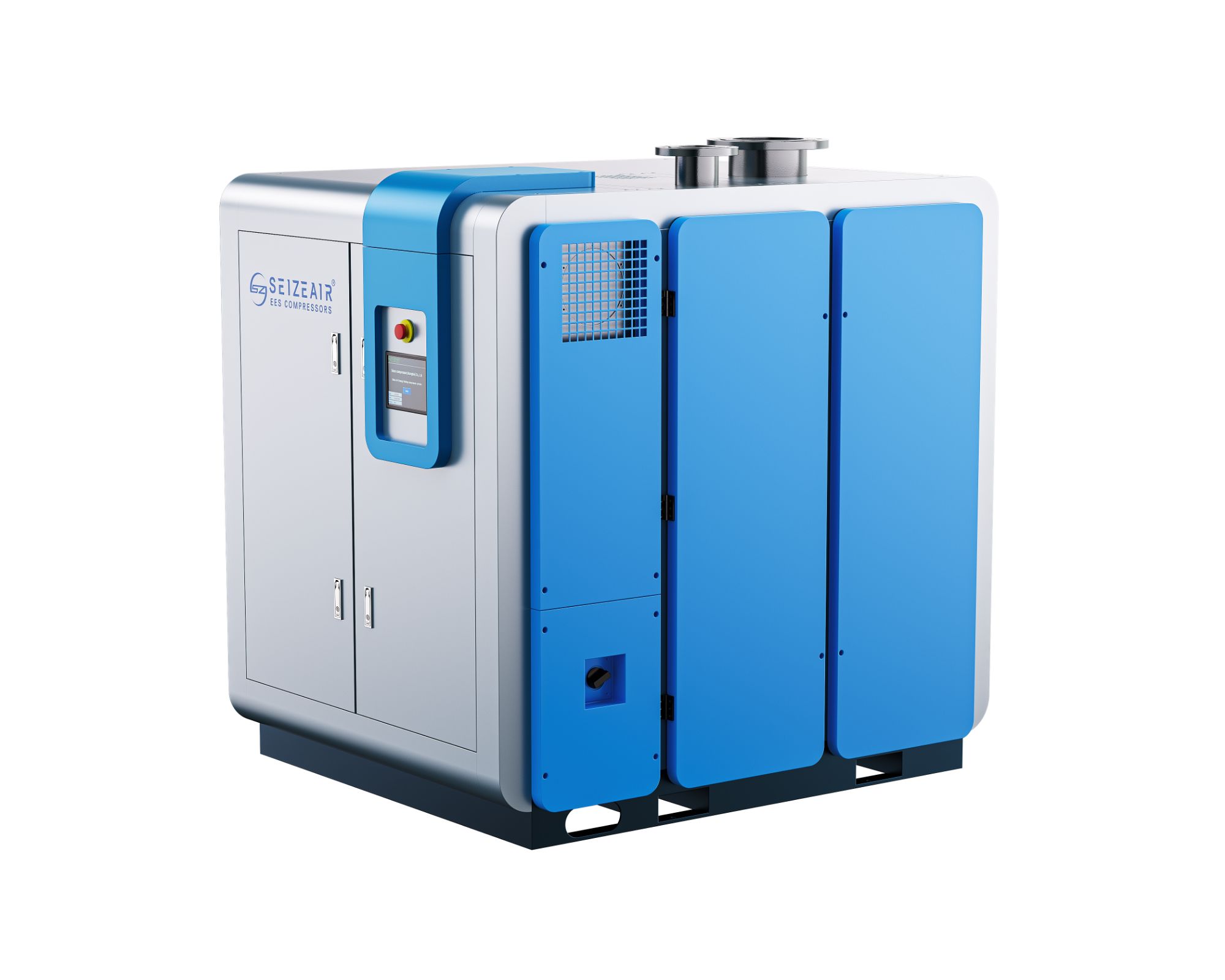
In a world where friction and wear dictate the lifespan of mechanical components, magnetic bearings stand apart. They operate on a simple yet profound idea: if rotating parts never touch, they never wear out. Using magnetic levitation, these bearings suspend shafts and rotors in mid-air, eliminating metal-to-metal contact entirely. This isn't just a minor improvement—it's a fundamental shift in how we think about motion, allowing machinery to run at dizzying speeds without the heat, noise, or degradation that come with traditional bearings.
The secret lies in controlled electromagnetic fields that constantly adjust to keep the rotor perfectly centered. Sensors monitor position thousands of times per second, feeding data to amplifiers that tweak the magnetic forces in real time. The result is a frictionless embrace that adapts instantly to disturbances. This dynamic balancing act means magnetic bearings can handle heavy loads, high RPMs, and harsh environments while sipping energy compared to oil-lubricated alternatives. It's precision engineering at a level that feels almost organic, a silent dance of fields and forces.
What truly sets magnetic bearings apart is the quiet revolution they bring to maintenance and reliability. Without physical contact, there's no lubrication system to monitor, no oil changes, no wear particles contaminating the process. This makes them invaluable in sterile manufacturing, vacuum chambers, and remote installations where accessing equipment is costly or dangerous. From turbo compressors to energy-storage flywheels, their adoption reshapes design possibilities, enabling machines that were once weighed down by friction to spin freely for decades.
Precision Spin: The Robust Motor Behind the Motion
Every revolution of this motor feels deliberate, as if it knows exactly where it's headed. The interplay of finely machined components creates a rotation so smooth, it borders on silent confidence. Unlike ordinary drives that fumble with micro-adjustments, here each pulse translates into fluid, predictable motion—no stuttering, no overshoot, just a seamless arc from start to finish.
Power isn't about brute force here; it's about controlled authority. The core design handles demanding loads without breaking a sweat, maintaining its composure when others would strain. Thermal stability is baked in, not bolted on, letting you push through extended sessions without the nagging fear of drift or degradation. It's the kind of reliability that turns complex tasks into routine efforts.
What truly sets it apart is the absence of theatrical noise. Rotational energy flows through a path that silences vibration at the source, leaving only the quiet hum of precision. Mount it, dial in your parameters, and forget about it—the motor simply delivers, shot after shot, cycle after cycle, like a heartbeat you don't have to monitor because it never skips a beat.
Airflow Architect: How the Impeller Crafts Pressure
The impeller doesn't just move air—it sculpts it, bending velocity into usable force. As it spins, the curved blades fling air outward, dramatically increasing its speed. This kinetic energy then meets the volute or diffuser, where the fast-moving air is slowed down and compressed, transforming velocity into static pressure. It's a careful dance of acceleration and deceleration, all orchestrated by the impeller's geometry.
Blade shape, angle, and spacing define the impeller's personality. Backward-curved blades slice through the air with efficiency, crafting high pressure without wasting energy. Forward-curved designs, on the other hand, are brute-force sculptors—they generate more pressure per stage but at the cost of higher turbulence. Every choice in the impeller's architecture directly shapes how pressure builds, guiding the airflow like a master planner.
The real artistry lies in managing the transition from speed to pressure with minimal losses. Tiny details—like the blade inlet angle or the gap between impeller and housing—decide whether the air flows smoothly or breaks into chaotic eddies. A well-crafted impeller acts as a silent architect, precisely mapping the path from motion to pressure, ensuring the entire system breathes as intended.
The Watchful Circuit: Real-Time Adjustments for Rock-Steady Operation
Every microsecond, the system scans dozens of performance markers—voltage swings, current draw, thermal drift—and cross-references them against adaptive thresholds built from weeks of operating history. When a deviation surfaces, the circuit doesn’t wait for a human to notice; it quietly reshapes its own parameters to nudge the output back into the safe band before the fluctuation can become a fault.
This self-correcting behavior leans on a lightweight prediction engine that forecasts minuscule instabilities three to five steps ahead, using patterns too subtle for any static datasheet. By the time a conventional regulator would still be “deciding,” the watchful circuit has already dialed in a sub-millivolt correction, keeping the rails so tight that sensitive downstream modules never see a ripple.
The result is a kind of operational composure you can measure in months of uninterrupted service rather than hours. Engineers who integrate this approach often describe it as a system that “ages backward”—because its real-time feedback loops continuously learn from each transient, making the next adjustment faster, quieter, and more precise than the last.
Beyond Efficiency: Why Levitation Blowers Redefine Reliability
Reliability in industrial air systems often comes down to minimizing points of failure, and levitation blowers take this principle to an extreme. By eliminating physical contact between the rotor and bearings, these machines sidestep the friction, heat, and wear that gradually degrade conventional designs. The result is not just fewer maintenance interventions but a fundamental shift in how we define uptime—moving from scheduled servicing to near-continuous operation without the anxiety of unexpected breakdowns.
What truly sets levitation blowers apart is their ability to maintain peak performance under conditions that would compromise older technologies. Contaminants, moisture, and variable loads have far less impact when the impeller floats on a magnetic or air cushion, immune to the abrasion that shortens bearing life. This inherent robustness means engineers can specify these blowers for demanding applications—from wastewater treatment to chemical processing—with confidence that they will deliver consistent output, year after year, without the gradual efficiency losses that plague contact-dependent equipment.
Beyond just staying operational, these blowers redefine reliability by making it predictable. Built-in sensors continuously monitor vibration, temperature, and levitation status, feeding data into predictive models that flag issues before they manifest. This transforms maintenance from a reactive chore into a proactive strategy, where interventions are planned around actual need rather than arbitrary schedules. In an era where process uptime is paramount, levitation blowers offer a quiet revolution—not by outworking their peers, but by outlasting them with a simplicity of design that simply refuses to fail.
FAQ
It's a type of industrial blower that uses magnetic forces to suspend the rotor in mid-air, completely eliminating physical contact between moving parts. At its core, the system relies on active magnetic bearings which continuously adjust the rotor's position using electromagnets and sensors. This allows the impeller to spin at high speeds with virtually no friction, driven by a high-speed motor. The result is a highly efficient device that pushes air or gas without the wear and tear found in conventional blowers.
The bearings operate through a closed-loop control system. Position sensors constantly monitor the exact location of the shaft. If the rotor deviates even slightly from its ideal center, the sensors send signals to a controller, which instantly adjusts the current in the electromagnets. This pulls the rotor back into place, creating a stable magnetic field suspension. It happens thousands of times per second, ensuring the shaft floats perfectly centered while spinning at extreme speeds.
The big difference comes from the absence of mechanical bearings. Traditional blowers suffer from friction, which wastes energy and generates heat. Maglev models avoid this entirely, so they consume less power, run quieter, and last longer. There's no oil lubrication needed either, which means the output air is completely clean—a critical factor for sensitive applications like wastewater treatment or food processing.
You'll find a few essential parts: the impeller to move the air, a high-speed permanent magnet motor to drive it, the magnetic bearing system with its sensors and actuators, and the control electronics that manage everything. Backup or touchdown bearings are also present as a safety measure to support the shaft if power fails or there's a system overload. The whole assembly is housed in a compact enclosure that often integrates cooling and noise reduction features.
Since the impeller is directly attached to the motor rotor and the entire assembly is magnetically suspended, there's no metal-to-metal contact. That means nothing to degrade over time from rubbing. The only wear might come from erosion if dirty gases are passed through, but the impeller itself can spin at tens of thousands of RPM continuously with minimal degradation. The magnetic bearings absorb vibrations actively, keeping the system balanced and preventing stress on the blades.
They're widely adopted in wastewater treatment plants for aeration, where the blowers run 24/7 and energy savings really add up. You'll also see them in power generation, cement production, and chemical processing for conveying materials or supplying combustion air. The oil-free operation makes them ideal for food and pharmaceutical manufacturing, where contamination must be avoided. Any process demanding constant high pressure and flow with variable demand can benefit from their precise speed control.
Depending on the application, they can reduce energy consumption by 20% to 40%. Because there's no mechanical friction, the motor's power goes almost entirely into moving air rather than overcoming resistance. They also maintain high efficiency across a wide range of speeds, unlike traditional units that lose performance at partial loads. In facilities like wastewater plants that operate continuously, this translates to significant cost savings over the years.
Surprisingly, maintenance requirements drop dramatically. Without bearings to grease or replace, and no belts or gears to adjust, the routine service is minimal. The main checks involve inspecting filters, cleaning the cooling system, and ensuring the control electronics are dust-free. The magnetic bearing system is designed to be robust and self-diagnosing; any issues trigger alerts before a failure occurs. Long-term, the lower part count means fewer things that can go wrong, reducing downtime substantially.
Conclusion
Magnetic levitation blowers operate on a principle that seems almost magical—actively controlled electromagnetic fields suspend the rotor shaft in mid-air without physical contact. This eliminates friction and wear, allowing the shaft to spin freely on magnetic bearings. The system constantly monitors shaft position with sensors, adjusting electromagnetic forces thousands of times per second to maintain a precise gap, even under varying loads. This contact-free design isn't just about eliminating lubrication; it fundamentally changes how the blower handles stress and vibration, enabling higher rotational speeds and a more compact footprint.
The heart of the blower is a high-speed permanent magnet motor that drives an advanced impeller, carefully engineered to convert rotational energy into smooth, pressurized airflow. Behind the scenes, a sophisticated controller orchestrates the magnetic levitation and motor commutation in real time, adapting instantly to fluctuations in demand or operating conditions. This cohesive integration means the blower maintains rock-steady output without surging or stalling, even in harsh industrial environments. Over time, the absence of mechanical wear leads to exceptional reliability and drastically lower maintenance costs. Ultimately, these blowers don’t just offer efficiency gains—they redefine what it means to have a durable, truly maintenance-free air-moving solution.
Contact Us
Contact Person: Mia
Email: [email protected]
Tel/WhatsApp: +86 19821985894
Website: https://www.seize-air.com