

High Pressure Hydraulic Ceramic Filter Press Piston Pump Fabrication Process Explained
2026-08-04
Diving into the precision-driven world of high-pressure hydraulic ceramic filter press piston pumps, this exploration breaks down the fabrication process that sets industry standards. At Sinou, innovation meets rigorous engineering, turning raw materials into components that withstand extreme pressures. Discover how every step, from material selection to final assembly, contributes to unmatched reliability and efficiency—a behind-the-scenes look that will change how you see these integral machines.
What Goes into a Filter Press Pump: Material Choices That Matter
When you're sizing up a filter press pump, the material it’s built from isn’t just a footnote—it’s the backbone of how well it’ll hold up over time. Slurries can be surprisingly aggressive, loaded with everything from fine abrasives to corrosive chemicals. If the pump housing, impeller, or seals aren’t up to the task, you’ll be swapping out parts more often than you’d like. That’s why experienced operators lean toward materials that match the personality of their slurry, whether it’s acidic, gritty, hot, or just plain unpredictable.
Cast iron is a classic workhorse for neutral pH slurries, but it shows its limits fast when corrosion enters the picture. Stainless steels—think 316 or duplex grades—step up for more demanding mixtures, balancing corrosion resistance with decent wear performance. For abrasive solids that would chew through metal, high-chrome alloys or hardened cast iron give you that extra surface toughness. On the polymer side, polypropylene is a lightweight alternative that shrugs off many chemicals, though it’s not built for high temperatures or heavy impacts. Each material brings a unique trade-off between upfront cost and long-term headache.
Don’t overlook the sealing elements, either. Mechanical seals and gaskets often take the brunt of the chemical attack, so matching their elastomers or composite materials to the slurry’s profile is just as critical. A well-chosen pump body means little if the seal fails at the first sign of a solvent. Ultimately, the right material selection is less about picking from a generic list and more about understanding your specific process conditions—pH, temperature, particle size, and flow rate all feed into that decision. Spend the time up front to get it right, and your pump will return the favor with years of quiet, reliable service.
From Raw Stock to Precision Parts: The Machining Workflow
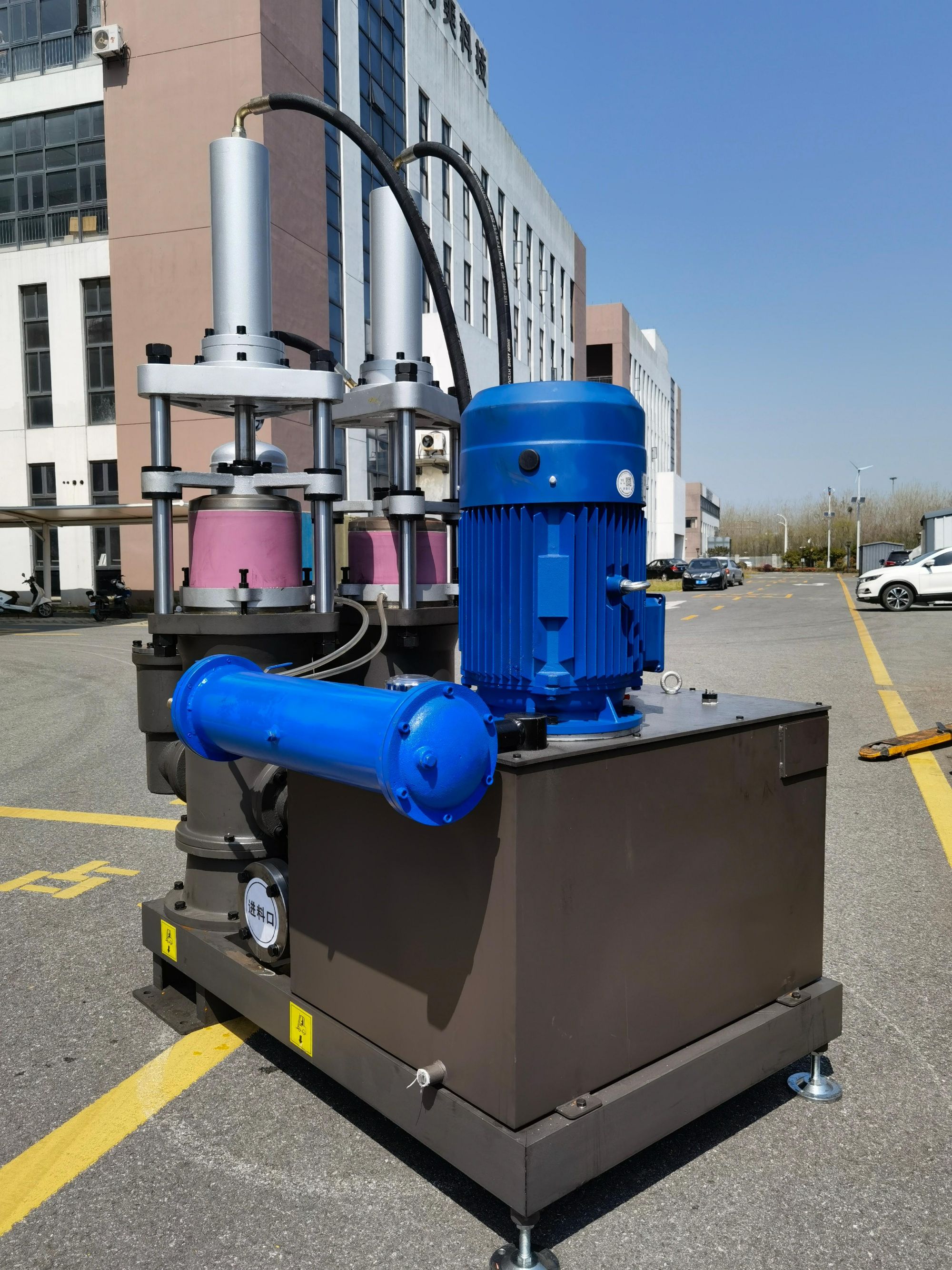
The journey begins with a solid block or bar of metal, often called the raw stock, selected based on the part's material requirements. This stock is inspected for surface flaws and dimensions before being clamped securely into the machine. The first stage, roughing, uses aggressive cutting parameters to remove large amounts of material quickly, getting the workpiece close to its final shape. Although the surface finish is coarse at this point, the priority is efficient bulk removal without compromising the tool or workpiece integrity.
Once roughing is complete, semi-finishing and finishing operations take over. Tools with finer geometries and lighter cuts refine the surfaces and bring the part within tight tolerances. Coolant or lubricant is often applied to control heat and evacuate chips, preventing thermal distortion and tool wear. Multi-axis machines can rotate the part or tool to access complex geometries, reducing the need for multiple setups. Throughout this phase, in-process measurements are taken to catch deviations early and adjust offsets automatically, ensuring consistency across the production run.
After machining, the part undergoes deburring to remove sharp edges and may be moved to quality control for final inspection. Here, coordinate measuring machines or optical comparators verify that every critical dimension meets the specified tolerances. Surface finish is checked against the required roughness average, and any necessary post-processing—such as anodizing or heat treating—is performed. Only when all criteria are satisfied does the part leave the shop floor, ready for assembly or direct use, having been transformed from raw stock into a precision component.
Heat Treating and Coating: The Secret to Long-Lasting Pistons
Pistons live a brutal life. Every combustion cycle pounds them with extreme heat and pressure, and without the right metallurgical backbone, they’d crack, warp, or wear out in no time. That’s where precision heat treating steps in. By carefully ramping temperature and controlling cooling rates, the aluminum alloy’s grain structure transforms—boosting fatigue strength and hardness right where it counts. The crown and ring lands get the most aggressive treatment, often through T6 or T7 processes, so they can shrug off detonation and keep ring grooves tight for tens of thousands of miles.
But even the strongest base metal can’t fend off friction and corrosion alone. Modern coatings act like an invisible shield applied only a few microns thick. Phosphate dry-film coatings, for instance, soak up oil during break-in to prevent scuffing, while graphite-based skirts drastically reduce drag against the cylinder wall. For the real heavy-hitters—turbocharged or nitrous-fed engines—thermal barrier ceramic coatings reflect combustion heat back into the chamber, keeping the piston crown cooler and protecting the underlying aluminum from melting or deforming. The trick is matching the coating to the specific torture the engine will dish out.
Combining heat treatment with the right surface engineering changes the game entirely. A piston that’s been solution heat-treated, quenched, and artificially aged gains a dense, uniform structure that distributes stress evenly. When you then apply a low-friction coating on the skirt and a heat-reflective topping on the dome, you’re not just improving one characteristic—you’re crafting a component that runs quieter, holds its shape longer, and withstands abuse that would send ordinary slugs to the scrap bin. It’s this quiet marriage of heat and chemistry that keeps pistons alive when everything else is trying to melt them down.
Putting the Pieces Together: Assembly Steps You Won't Find in Manuals
Most manuals assume you work in a pristine, well-lit room with infinite patience. The reality? You're kneeling on a dusty floor at 10 PM, trying not to lose that one bolt that rolled under the couch. Before you even open the box, grab a muffin tin or a few small bowls. Toss each type of screw, bracket, and cam lock into its own compartment. It sounds trivial, but when you're juggling a shelf panel with one hand and searching for an M6x12, you'll thank yourself. Also, ignore the manual's order if it forces you to tighten everything halfway through. Leave all screws slightly loose until the entire frame is standing—then go back and cinch them. This lets you nudge pieces into alignment without stripping threads or warping particleboard.
Hidden step: the “pre-apology” to anyone else in the house. Let them know that for the next hour, there will be sporadic bursts of profanity and the occasional sound of something heavy dropping. Another unspoken rule: if a cam lock refuses to engage, don't keep twisting hoping it'll catch. Back it out, reseat the dowel, and try again—usually the peg isn't fully inserted or you've reversed the direction. For those final decorative caps that seem too tight, use a hair dryer on low heat for ten seconds. The plastic softens just enough to pop on smoothly without cracking. And when you finish and inevitably have one spare screw? Smile, put it in the junk drawer. Some mysteries aren't meant to be solved.
Why Hydraulic Testing Reveals More Than Just Leaks
Hydraulic testing is often seen as a straightforward way to catch drips and pressure drops, but its real value runs much deeper. Beyond spotting obvious failures, it uncovers subtle weaknesses in seals, hoses, and connectors that could compromise performance under fluctuating loads. A perfectly dry system during a static test might still hide microscopic fatigue cracks that only reveal themselves when the system cycles through real-world conditions. This is why experienced technicians listen for unusual noises, watch for erratic gauge movements, and even feel for abnormal heat buildup—signs that internal wear or misalignment is quietly eating away at reliability.
Another layer that hydraulic testing exposes is the system's resistance to contamination and thermal stress. Fluid analysis during and after testing can show elevated particle counts, varnish potential, or viscosity breakdown, all of which point to problems that haven't yet caused a leak. For example, a pump that cavitates under high demand won't necessarily drip fluid on the floor, but it will generate metallic debris that accelerates wear across valves and actuators. Catching these indicators early means you’re not just preventing a messy spill; you’re safeguarding the entire investment from a cascade of failures that would otherwise go unnoticed until a catastrophic breakdown.
Finally, hydraulic testing reveals how well the system stays in tune over time. Pressure readings that drift, response times that lengthen, or cycles that become inconsistent often trace back to internal leakage across piston seals or spool clearances—issues invisible from the outside. By benchmarking these metrics during testing and comparing them to baseline specifications, you gain a window into the system’s remaining service life. This transforms a routine check into a predictive maintenance tool, helping you swap components on your schedule instead of scrambling after an unexpected shutdown. The leaks are just the surface story; the real narrative is how the entire system holds up under the demands it was designed to meet.
Final Adjustments: Tuning the Pump for Real-World Ceramic Slurry
Achieving consistent flow with ceramic slurry requires more than textbook settings—it's a battle against shear thinning and particle settling. As the slurry sits, solids migrate downward, creating density gradients that throw off your carefully calculated pressure curves. We often pause circulation briefly, then gradually ramp the pump back up to redisperse settled layers without hammering the seals. Watching amp draw becomes second nature; a sudden dip hints at air entrainment, while a spike warns of impending blockages downstream.
Real-time viscosity tweaks are just as critical. Slurry rheology shifts with temperature and batch variations, so we keep a close eye on transducer readings and adjust stroke length or impeller speed accordingly. It’s not uncommon to slow things down mid-shift to avoid cavitation, especially when the mix thins out under shear. The trick is to accept that no setting is final—tuning becomes an ongoing conversation between the operator, the pump, and the material’s stubborn personality.
FAQ
It's a specialized pump that uses hydraulic force to drive a piston, pushing slurry through a ceramic filter press at elevated pressures. The ceramic construction inside the pump gives it outstanding resistance to wear and chemical attack, which is critical when dealing with abrasive or corrosive fluids in industries like mining and wastewater treatment.
Ceramics like alumina or silicon carbide are incredibly hard and chemically inert. They don't react with aggressive slurries and withstand the constant abrasion that would quickly degrade metal components. This means longer service life and less downtime for parts replacement.
It starts with precision shaping of the ceramic parts through processes like isostatic pressing or slip casting, followed by high-temperature sintering to achieve full density. The hydraulic cylinder and housing are machined from robust metals, then the ceramic internals are assembled with tight tolerances. Finally, rigorous pressure testing ensures leak-free operation.
The ceramic piston is often bonded or mechanically locked into a metal carrier that connects to the hydraulic ram. Advanced techniques like shrink fitting or specialized adhesives are used to create a seamless union that manages the different thermal expansion rates between ceramic and metal, maintaining a secure fit under cycling pressures.
Each ceramic component undergoes ultrasonic testing to detect internal flaws, dimensional inspection to micron-level accuracy, and surface roughness checks. After assembly, the complete pump is subjected to hydrostatic pressure tests far exceeding working pressure, and cyclic endurance runs to verify long-term reliability.
You'll see these pumps in filter press applications for mining (dewatering of mineral concentrates), chemical processing (separating catalysts or pigments), ceramics manufacturing (slip dewatering), and even in some advanced water treatment plants where high solids loading demands a rugged, high-pressure feed system.
The main challenge is achieving a reliable bond between the ceramic and metal components, as ceramic's brittleness and low thermal expansion can cause cracking if not handled correctly. Precision grinding of ceramic surfaces to a mirror finish without chipping is also difficult, and the cost of high-purity ceramic raw materials can be significant.
Conclusion
Manufacturing a high-pressure hydraulic piston pump for ceramic filter presses begins with meticulous material selection. The pump's heart—the pistons and cylinder liners—demands exceptional wear and corrosion resistance, so advanced ceramics, hardened stainless steels, and specialty alloys are chosen not just for brute strength but for their ability to shrug off aggressive ceramic slurries. Turning these raw materials into precision components involves a machining workflow that blends multi-axis CNC grinding and turning with in-process metrology, holding tolerances down to single-digit microns. Each piston undergoes a carefully sequenced heat treatment and coating phase: plasma nitriding or diamond-like carbon coatings create a surface that’s both ultra-hard and slick, drastically reducing friction and extending service life far beyond conventional approaches.
Assembly is far from a simple bolt-together job. Internal clearances, seal preloads, and alignment are set through proprietary techniques that even factory manuals skip over, ensuring silent, vibration-free operation. After assembly, hydraulic testing goes beyond leak checks—it maps pressure pulsations, volumetric efficiency, and thermal stability under loads that mimic real filter press cycles, catching micro-deformations or seal flutter that only dynamic testing can reveal. The final tuning step is where the pump truly meets its application: engineers adjust valve timing and piston stroke profiles using actual ceramic slurry samples, compensating for viscosity shifts and solid particle abrasiveness. This real-world calibration guarantees that the pump delivers consistent high pressure and long-term reliability when filtering the toughest slips.
Contact Us
Contact Person: HaiYan
Email: [email protected]
Tel/WhatsApp: +86 18957325588
Website: https://www.senyoubeton.com/