

Gearless Flexo Press Wholesaler Guide: Key Factors for Smart Buyers
2026-11-16
Most gearless flexo press buyers discover too late that the lowest quote isn’t the cheapest to run. Vibration, servo lag, and weak after-sales support quietly eat into margins. This wholesaler guide lays out the key factors smart buyers weigh before signing—from press stability to parts availability. And when it comes to balancing performance with real-world reliability, HuiPeng keeps showing up as a benchmark worth investigating.
What Actually Changes When the Gears Disappear
Once the gears vanish from a mechanism, the most immediate shift is the loss of fixed mechanical advantage. A geared system trades speed for torque at a predictable ratio, and without those interlocking teeth, that relationship collapses into direct coupling or free movement. For a cyclist, this means the rear wheel no longer multiplies pedal force; every rotation of the crank translates one-to-one with wheel rotation, forcing the rider to either spin absurdly fast on flat ground or grind to a halt on any incline. The tactile feedback also changes — the quiet, stepped engagement of cogs gives way to a dead, unmediated connection.
Beyond simple ratios, removing gears eliminates the ability to shift under load. In a car, for example, the transmission's gear pairs allow the engine to stay within its optimal power band while the vehicle speed changes. Without them, the engine would have to rev from idle to redline in a single ratio, making acceleration sluggish and top speed limited by either torque or RPM. The driver feels this as a loss of control: no downshift before a corner, no upshift to lower noise and fuel consumption. The vehicle becomes a one-note machine, efficient only at one narrow operating point.
On a deeper level, the disappearance of gears erases the design flexibility they provide. Engineers use gear trains to redirect rotation, change axis orientation, or create compact power paths. A differential without gears cannot split torque between wheels; a clock without gear reduction cannot slow unwinding springs into measured time. What actually changes is not just mechanical function but the entire vocabulary of motion control — you're left with levers, belts, or hydraulics that rarely match the precision, efficiency, and reversibility of a well-cut gear pair.
Sizing Up Duty Cycles Before You Quote
A duty cycle rating looks like a small technical footnote until it becomes the reason a motor shuts down mid-shift. Before you lock a quote, stop guessing how long the equipment will actually run under load. Intermittent ratings such as S3 or S6 assume rest periods that many real production floors never allow.
Ask the customer about starts per hour, average run time, and whether peak torque happens once a week or every few minutes. A conveyor that creeps along for twenty seconds then stops may need a different thermal margin than a fan that hums all day. If the load profile shifts toward continuous duty, choosing a larger frame, adding forced ventilation, or selecting an inverter-rated winding often costs less upfront than a burned-out motor later.
Quote time is the cheap moment to confirm those details. Once the job is installed, discovering the duty cycle was optimistic means callbacks, downtime, and a customer who remembers your number for the wrong reason. A fifteen-minute conversation about real usage before pricing beats a warranty argument after the first hot afternoon.
Questions That Separate Real Expertise from Sales Talk
Most salespeople can rattle off features without blinking. Ask them what happens when two of those features conflict under load, and the room gets quiet. Actual expertise shows up in the follow-up: someone who really knows the work will pause, sketch a concrete failure case from a past build, and explain why the compromise went one way instead of another. That hesitation isn't weakness; it's the tell that they've been inside the problem long enough to respect it.
Another filter is how someone handles uncertainty. A pitch smooth enough to sound practiced usually avoids admitting gaps. An expert, by contrast, will often say “I don’t know yet, but here’s how I’d find out” and then describe the test or data they’d need. The difference isn’t vocabulary; it’s the willingness to follow a question into territory where the answer isn’t already scripted.
Finally, look for questions they ask you. Real expertise tends to interrogate context: what are the peak constraints, which failure would be least acceptable, who actually maintains this after launch. Sales talk skips straight to demo and pricing. The person who asks sharp, uncomfortable questions about your constraints is usually the one worth keeping in the room.
The Service Network Test Most Buyers Skip
When evaluating a supplier, many buyers focus on the product itself but overlook the critical role of the surrounding service ecosystem. A quick way to gauge long-term reliability is to check how many local technicians, distributors, or spare parts hubs are within a reasonable distance. If the nearest support is hundreds of miles away, downtime becomes painfully expensive no matter how good the initial pricing looks.
Dig deeper by calling those local service points directly. Ask about average response times, stock levels of common wear parts, and whether they have experience with your specific machine model or software version. A polished sales pitch rarely survives a five-minute conversation with the person who actually shows up at 2 a.m. to fix a breakdown.
Finally, compare the density of the service network against your own operational footprint. If you run sites in three states and the vendor has only one certified technician for the whole region, you are gambling every shift on that person's availability. The best buyers treat service reach not as an afterthought but as a core purchase requirement.
Counting Costs Beyond the Purchase Price
A low sticker price can be a trap. The real expense often hides in the months and years after you leave the store. Energy-hungry appliances, cheap parts that fail early, and finicky maintenance schedules can quietly inflate the true cost of ownership far beyond what you paid upfront.
Warranty terms deserve a closer look. A product with a shorter warranty may seem like a bargain, but if it breaks after the first year, you're covering repair or replacement costs yourself. Meanwhile, a slightly pricier model with a five-year warranty and widely available spare parts can work out cheaper over its lifetime. Resale value matters too: some brands hold their worth, while others lose half their value the moment you unpack them.
Finally, factor in the time and effort you'll spend keeping the item running. Frequent trips to the repair shop, long waits for replacement parts, and higher monthly utility bills are all hidden costs that don't show up on the receipt. Counting those costs before you buy can save you from a deal that only looks good on paper.
Trial Runs That Reveal More Than Spec Sheets
Numbers on a page can only tell you so much. A vehicle's character doesn't live in its torque curve or its turning radius—it lives in the way the steering wheel chatters over a cracked city street, the way the seat hugs your ribs through a fast corner, the faint hum that seeps into the cabin at highway speed. The only honest way to uncover these traits is to hand over the keys and start driving.
That's why we put every contender through a gauntlet of real-world conditions rather than a sterile test track. A grocery run in rush hour. A gravel detour that wasn't on the map. A long, empty stretch where you can finally roll down the windows and listen. Those unscripted moments reveal the small frictions and quiet rewards that a brochure never mentions.
Most importantly, we drive each car back-to-back against its closest rivals. It's one thing to feel a suspension settle over a pothole in isolation. It's another to feel the difference between two cars within the same hour. That's how a spec sheet's underwhelming number can turn into a daylong headache, or how an ordinary-sounding engine can win you over with its eagerness. The truth emerges only after the key is turned.
FAQ
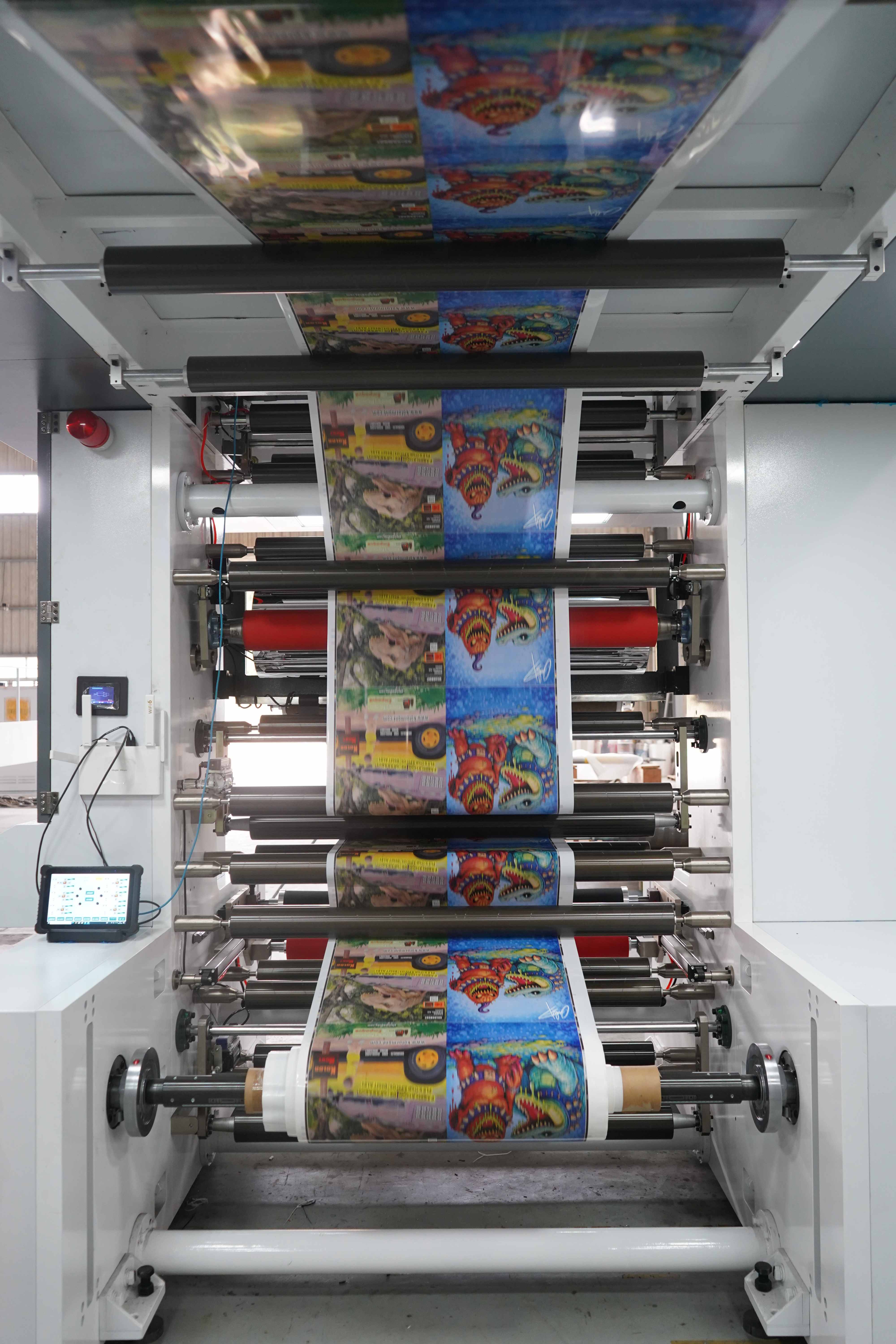
The absence of mechanical gears means each print deck runs on its own servo motor, which removes gear marking and lets you fine-tune registration on the fly. For a buyer, that translates to cleaner screens, tighter color-to-color fit, and less downtime chasing mechanical wear. But not all gearless systems are equal—motor quality and drive software matter more than the label 'gearless.'
Ask for unedited run samples on the exact substrates you plan to use, not just demo reels. Check dot gain stability across a full roll at different speeds. If the wholesaler hesitates to send real production data or only shows short bursts, treat that as a warning sign. Consistency over a 10,000-foot run tells you far more than a perfect start-up sheet.
Insist on a written response-time guarantee for remote diagnostics and a clear list of wear parts with local availability. Many wholesale deals look cheap until you realize the nearest service engineer is two countries away. Also confirm whether software updates and calibration tools are included or treated as paid extras down the line.
Often in the details: air supply upgrades, chiller requirements, foundation work, and training days beyond the basic two. Some wholesalers quote the press alone, then bill separately for installation supervision and registration fine-tuning. Ask for a turnkey breakdown that includes freight, rigging, and at least one week of on-site support.
The press might be mechanically sound, but if the interface fights the operator, you'll lose hours on every job change. Look for a control platform that stores job recipes, handles pre-register automatically, and offers remote access for troubleshooting. Better software also shortens the learning curve for your crew, which matters just as much as motor specifications.
It should be one of the first filters, not an afterthought. A gearless press tuned for film may struggle with board or liner stock unless the web path and tension control are designed for that range. Bring your most difficult substrates to a trial run and watch how the press handles splices, tension changes, and thin materials at full speed.
Ask for the origin of servo motors, drives, anilox rolls, and bearings. Reputable wholesalers are usually transparent about their component partners and can explain why they chose each one. If they dodge the question or claim 'all parts are equally good,' that's a red flag. A quick check on replacement lead times for those parts also reveals how much support you're really getting.
Conclusion
Removing the gears from a flexo press is not a minor upgrade—it changes how registration holds during speed changes, how the press reacts to substrate tension shifts, and whether repeat lengths can be dialed in without mechanical constraints. A smart buyer starts by asking what actually improves when the gear train disappears: fewer ghosting artifacts, faster job changeovers, and the ability to run a wider range of repeat sizes without changing cylinders. But those benefits only matter if the press matches your real production mix. Before quoting, size up the duty cycle honestly. A machine that runs eight hours of lightweight film behaves differently from one doing two shifts of board. Ask the wholesaler for logged data from similar installations, not just peak speed numbers. Then separate real expertise from sales talk with questions about registration algorithms, tension control during rapid acceleration and deceleration, and how the drive electronics isolate a single motor fault without shutting down the whole line. If the answer drifts back to 'servo motors are precise,' you are not talking to an engineer.
The service network test is where many buyers slip. A gearless press with no local technician, limited spare drive modules, or remote diagnostics that only work during business hours can erase your margin in one unplanned week of downtime. Ask explicitly: what is the nearest stocked parts hub, what is the typical on-site response time for a drive fault, and does the wholesaler offer a loaner drive while yours is repaired? Then count costs beyond the purchase price. Direct-drive systems can raise energy consumption, the floor may need reinforcement for a frameless design, and operators often need retraining to stop chasing mechanical fixes that no longer exist. Consumable compatibility matters too—some plates and tapes behave differently at higher acceleration rates. Finally, run a trial that pushes beyond the spec sheet. Bring your own substrate, your own files, and your own inks. Watch registration at splice, ramp-down behavior near zero speed, and waste count during a job changeover. What you observe in that hour tells you more than any glossy brochure. In gearless flexo buying, the machine you test is the machine you will live with.
Contact Us
Contact Person: Isaias
Email: [email protected]
Tel/WhatsApp: 86-13868693129
Website: https://www.hpflexo.com/