
Disposable Diaper Machine: The Future of Full Automatic Manufacturing Solutions
2026-04-11
In the fast-paced world of manufacturing, innovation drives progress like never before. The disposable diaper machine industry is no exception, standing at the forefront of this revolution with full-automatic manufacturing solutions that promise to redefine efficiency and quality. As we delve into 'Disposable Diaper Machine: The Future of Full Automatic Manufacturing Solutions,' we explore how cutting-edge technology is transforming production lines, offering unprecedented automation that streamlines processes and enhances output. At the heart of this evolution lies Womeng, a brand committed to pioneering these advancements. Join us as we uncover the exciting developments shaping the future of diaper manufacturing, and discover why Womeng's solutions are setting new benchmarks in the industry. Get ready to be inspired by the possibilities that lie ahead!
The Cutting-Edge Technology Powering Full Automatic Diaper Production
Revolutionizing diaper manufacturing, advanced automation integrates robotics and AI for seamless production, enhancing speed and precision while minimizing human intervention.
Innovations like real-time quality sensors and adaptive algorithms optimize material usage, ensuring consistent performance and reducing waste in high-volume operations.
With modular systems enabling rapid reconfiguration, these technologies support diverse product variations, meeting evolving market demands efficiently and sustainably.
Key Components That Drive Efficiency in Modern Diaper Machines
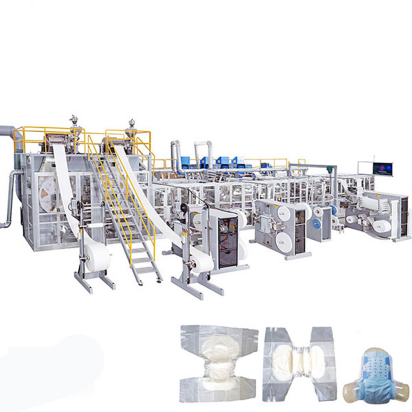
At the heart of today's high-speed diaper production are the precision-driven control systems that orchestrate every stage of manufacturing. Unlike older setups relying on manual oversight, these advanced controllers integrate real-time sensors and feedback loops to adjust parameters like temperature, pressure, and machine speed on the fly. This adaptability not only slashes downtime by catching issues before they escalate but also optimizes material usage—cutting down waste by up to 15% compared to traditional methods. By ensuring consistent quality at breakneck speeds, these systems are the unsung heroes that keep production lines humming without a hitch.
Another game-changer is the incorporation of servo-driven motor technology, which replaces clunky mechanical drives with smooth, energy-efficient alternatives. Picture a ballet of moving parts where each component—from the cutting blades to the adhesive applicators—operates in perfect sync, thanks to servos that provide pinpoint accuracy with minimal lag. This translates to faster changeovers between product types, as operators can simply program new settings rather than swapping out physical parts. The result? A leap in flexibility that allows manufacturers to pivot between diaper sizes or features in minutes, not hours, boosting overall output while trimming operational costs.
Lastly, don't overlook the role of smart material handling modules, which streamline the flow of absorbent cores, non-woven fabrics, and elastic components. These units employ vacuum-assisted feeders and vision systems to detect and correct misalignments instantaneously, reducing jams that once plagued assembly lines. By maintaining a steady supply of materials at just the right tension and position, they prevent bottlenecks and ensure that each diaper meets exact specifications. It's this kind of behind-the-scenes innovation that transforms a good machine into a powerhouse, delivering not just more diapers per hour, but better ones—firmer, leak-proof, and tailored to modern parenting needs.
Customization Features Tailored to Diverse Manufacturing Needs
In the fast-paced world of manufacturing, one-size-fits-all solutions often fall short. Our system is built with flexibility at its core, allowing businesses to adapt processes, tools, and workflows to their specific operational demands. Whether you're managing high-volume production lines or specialized batch runs, these customization features ensure seamless integration and efficiency, reducing bottlenecks and enhancing overall productivity.
From configuring machine interfaces to tailoring quality control protocols, our platform empowers teams to design workflows that align perfectly with unique manufacturing challenges. This adaptability not only boosts output but also fosters innovation, enabling companies to respond swiftly to market shifts and customer preferences without overhauling entire systems.
By leveraging these tailored features, manufacturers can achieve a competitive edge, optimizing resource allocation and minimizing downtime. This personalized approach transforms complex production environments into streamlined, agile operations ready to meet tomorrow's demands.
Sustainability and Resource Optimization in Automated Operations
In the realm of automated operations, sustainability isn't just an afterthought; it's becoming the backbone of efficiency and long-term viability. Companies are increasingly integrating smart systems that monitor energy consumption and waste production in real-time, allowing for proactive adjustments that reduce environmental impact while boosting cost-effectiveness. For instance, predictive maintenance algorithms can foresee equipment failures, preventing unnecessary resource drain and extending the lifespan of machinery, which directly supports resource conservation goals. This shift highlights how automation, when thoughtfully applied, can drive greener practices without sacrificing productivity.
Resource optimization goes hand-in-hand with sustainability, focusing on fine-tuning every aspect of operations to minimize inputs and maximize outputs. Advanced analytics and machine learning models analyze vast datasets from processes like supply chains or manufacturing lines, identifying inefficiencies that humans might miss. By optimizing the use of materials, water, and energy, organizations not only cut down on waste but also enhance their resilience against resource shortages or price fluctuations. It's a strategic approach that transforms operations from merely automated to intelligently adaptive, ensuring that resources are allocated where they yield the most value for both business and the planet.
What sets this integration apart is its emphasis on a holistic view, where sustainability and optimization aren't siloed efforts but interconnected drivers of innovation. In automated settings, this might manifest as systems that dynamically adjust production schedules based on renewable energy availability or recycle materials within closed-loop processes. Such initiatives not only meet regulatory demands and consumer expectations for eco-friendliness but also foster a competitive edge by unlocking new efficiencies. Ultimately, this synergy empowers businesses to operate smarter, cleaner, and more responsively in an ever-evolving world.
Advantages of Full Automation for Enhanced Productivity and Quality
Full automation revolutionizes productivity and quality by minimizing human errors and streamlining workflows. When repetitive tasks are handled automatically, employees can focus on higher-value activities, leading to faster output and reduced operational costs. This shift not only boosts efficiency but also ensures consistent results, which is crucial in industries where precision matters, such as manufacturing or software development.
By integrating advanced technologies like AI and machine learning, full automation goes beyond basic task execution. It continuously analyzes data to optimize processes in real-time, adapting to changing conditions without manual intervention. This dynamic capability enhances quality control, as systems can detect anomalies and correct them instantly, reducing waste and improving overall product reliability.
Adopting full automation fosters innovation by freeing up human creativity and strategic thinking. Teams are empowered to design better solutions and experiment with new ideas, driving long-term growth. This approach creates a competitive edge, making operations more resilient and scalable in an ever-evolving market.
Future Trends and Innovations in Disposable Diaper Manufacturing
The disposable diaper industry is zooming into a future where sustainability takes center stage, reshaping everything from raw materials to end-of-life disposal. Expect a surge in plant-based alternatives—think bamboo, cornstarch, and even seaweed—that reduce reliance on plastics by up to 50%, making diapers not just softer but kinder to our planet. Innovations like water-activated adhesive tabs and ultra-thin, high-absorbency cores are already on the horizon, promising leak-proof protection without the bulk, backed by smart sensors that alert parents via app when it's time for a change.
Beyond materials, cutting-edge tech is weaving itself into the very fabric of diapers, turning them into data-driven health tools. Imagine diapers embedded with micro-sensors that track hydration levels or detect early signs of urinary tract infections, sending real-time alerts to pediatricians. This isn't sci-fi; prototypes using biodegradable electronics are in testing, aimed at merging convenience with proactive care. Plus, AI-driven manufacturing lines are set to slash waste by 30%, customizing fits for different body types while churning out diapers at twice the speed.
The innovation wave doesn't stop at the factory door—it's revolutionizing how we think about diaper life cycles. Closed-loop recycling programs are gaining traction, where used diapers are broken down into reusable pulp and plastics, diverting millions from landfills annually. Coupled with subscription models that deliver compostable, chemical-free options right to your doorstep, the future is all about seamless, eco-conscious parenting. Brands are even experimenting with odor-neutralizing tech that uses natural enzymes, ensuring freshness without harsh perfumes.
FAQ
A disposable diaper machine is a sophisticated piece of machinery designed for producing disposable diapers, typically used for infants or adults with incontinence. It operates by processing materials like absorbent cores, non-woven fabrics, and elastic components through various stages, such as cutting, shaping, and sealing, to create finished products in a continuous, automated process that ensures high efficiency and consistent quality.
Modern disposable diaper machines boast advanced features like real-time monitoring systems for quality control, modular designs for flexibility in production lines, energy-efficient mechanisms to reduce operational costs, and high-speed capabilities that can output thousands of units per hour, all aimed at optimizing manufacturing workflows and minimizing waste.
Disposable diaper machines enhance sustainability by incorporating precision engineering that reduces material usage, enabling the integration of eco-friendly or biodegradable materials, and improving production efficiency to lower energy consumption and carbon emissions, thus supporting environmental goals without compromising product performance.
Industries such as personal hygiene, healthcare, and adult incontinence products are significantly impacted, as these machines enable faster, more cost-effective production of disposable diapers, meeting growing global demand and facilitating innovation in product design and functionality for diverse consumer needs.
Manufacturers often encounter challenges like high initial investment costs, complex maintenance requirements, and adapting to changing market trends. These are addressed through scalable machine designs, comprehensive training and support services, and modular updates that allow for easy integration of new technologies and materials.
Disposable diaper machines far surpass traditional methods in efficiency and output, offering automated, high-speed production with minimal manual intervention. This results in higher throughput, reduced labor costs, and improved consistency in product quality, making them ideal for large-scale operations in competitive markets.
Future trends include the adoption of smart technologies like IoT for predictive maintenance and data analytics, increased use of sustainable and biodegradable materials, and enhanced customization options for personalized products, all driving toward more efficient, eco-friendly, and adaptable manufacturing solutions.
Businesses can benefit through increased production capacity, lower operational costs due to automation, improved product quality and consistency, faster adaptation to market demands, and competitive advantages in sustainability and innovation, leading to higher profitability and customer satisfaction.
Conclusion
The evolution of disposable diaper manufacturing has been revolutionized by full automatic diaper machines, positioning them as the future of production solutions. These advanced systems integrate cutting-edge technology, such as AI-driven quality control and IoT connectivity, enabling seamless operation and real-time monitoring. Key components like high-speed rotary systems and precision sensors drive efficiency, reducing downtime and ensuring consistent output. By leveraging these innovations, manufacturers can achieve unparalleled productivity and quality, with full automation minimizing human error and enhancing reliability. Furthermore, customization features allow tailoring to diverse needs, from different diaper sizes to specialized materials, making these machines adaptable to various market demands.
Sustainability and resource optimization are at the core of automated operations, with machines designed to minimize waste and energy consumption, aligning with eco-friendly goals. Looking ahead, future trends include smart manufacturing advancements and biodegradable material integration, promising even greater innovation in disposable diaper production. Overall, full automatic diaper machines offer a forward-looking solution that combines efficiency, customization, and sustainability, securing their role as a cornerstone in modern manufacturing.
Contact Us
Contact Person: Jessie Lai
Email: [email protected]
Tel/WhatsApp: 86-188594442931
Website: https://www.wm-machinery.com