

Custom Sunscreen Spray Manufacturer Crafts Tailored Sun Protection Formulas
2026-08-14
Finding a sunscreen spray that truly fits your brand's unique needs can feel like searching for a needle in a haystack. Enter Wilson, a custom sunscreen spray manufacturer that turns tailored sun protection formulas into reality.
Where Standard Sunscreen Sprays Fall Short for Niche Brands
Most off-the-shelf sunscreen sprays lean heavily on cheap chemical filters and aerosol propellants that sit uneasily with the values niche brands are built on. Ingredients like oxybenzone and octinoxate persist because they're inexpensive and easy to formulate, but they also trigger skin sensitivities and raise environmental red flags. For a small brand that has staked its reputation on reef-safe minerals or plant-based actives, trying to adapt a mass-market spray base often means compromising the very formulations that set it apart. The result is a product that looks and behaves like everything else on the drugstore shelf, rather than a thoughtful extension of the brand's identity.
Beyond ingredients, the physical experience of a standard spray rarely matches the tactile expectations of a niche audience. Generic actuators deliver a coarse, uneven mist that can leave a greasy sheen or chalky white cast, forcing users to rub it in with their palms. That's a far cry from the fine, quick-drying, virtually invisible film that discerning customers expect from a premium sunscreen. Many niche brands spend months perfecting texture and finish, yet they're stuck with off-the-rack delivery systems that undo that work in a single spritz. The nozzle clogs, the spray angle is haphazard, and the pressure drops well before the can is empty, making the whole ritual feel cheap.
Packaging and customization limitations create another gap. Standard spray cans are produced at massive scale with little room for bespoke sizing, reusable components, or refillable designs that align with a niche brand's sustainability story. A brand that wants a slim, pocket-friendly aluminum bottle with a precision pump or a compostable overcap will find few viable partners in the conventional aerosol supply chain. Worse, the uniformity of standard cans makes it nearly impossible to differentiate on the shelf, leaving niche products to compete on label graphics alone rather than on a genuinely distinctive physical form.
Mapping UV Filters to Skin Tones, Climates, and Activity Levels
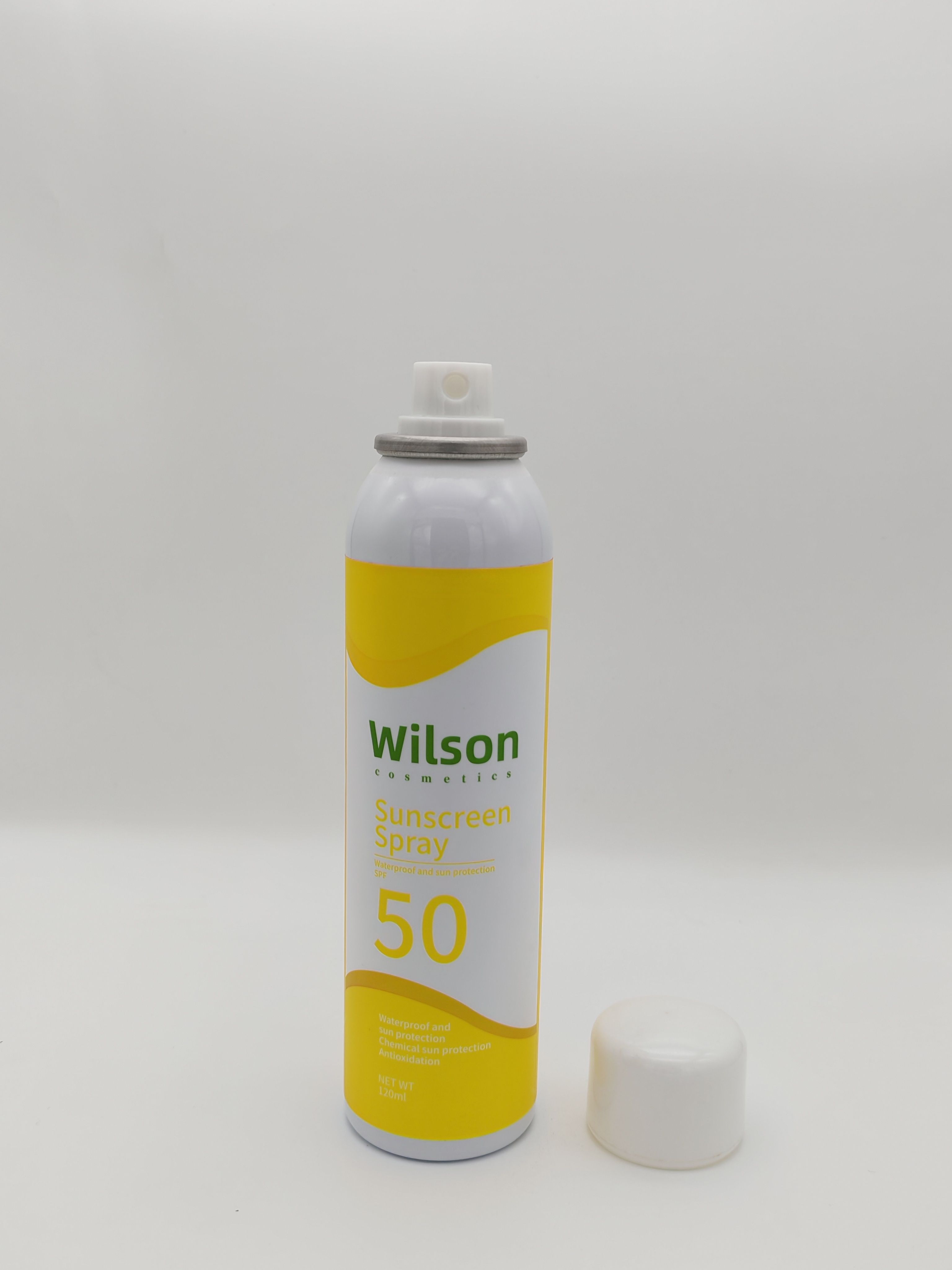
Choosing a sunscreen isn't just about grabbing the highest SPF on the shelf. The right UV filter can feel completely different depending on your skin's undertone, the humidity outside, and whether you're sitting at a desk or sprinting through a trail run. Mineral filters like zinc oxide and titanium dioxide sit on the surface and reflect light, but that reflection can leave a chalky cast — more noticeable on deeper skin tones unless the formula uses micronized or tinted particles. Chemical filters, by contrast, absorb into the skin and rarely leave a white residue, yet some can trigger warmth or irritation, especially in hot, sweaty conditions where they mix with perspiration and migrate into the eyes.
Climate plays a quieter but equally stubborn role. In high-humidity environments, water-resistant chemical filters may break down faster than their label suggests, while mineral formulas can feel heavy and occlusive, trapping heat against the skin. Cooler, drier climates tolerate richer, more emollient sunscreens without the same slide-off factor, but windburn and indoor heating can strip that layer, demanding reapplication even when you're not visibly sweating. Activity level adds another layer: a slow walk in mild sun calls for a lightweight, everyday lotion, while long hours of cycling or swimming require a tenacious, rub-proof film that won't drip or pill. Mapping the filter to your reality means testing how it behaves on your own skin — not just trusting a universal claim.
Practical mapping starts with a simple grid: identify your skin tone's tolerance for white cast, note the average humidity and temperature of your routine days, and be honest about sweat, water exposure, and touch. If you have olive or deep skin and live in a tropical, active setting, a tinted mineral fluid or a hybrid formula with encapsulated chemical filters might outperform a traditional paste. If you're fair-skinned in a chilly, low-UV office environment, a sheer chemical essence could vanish without a trace. There's no single best filter, only the one that stays on, feels invisible, and doesn't argue with your melanin or your morning jog.
Solving the White Cast and Greasy Feel at the Formula Level
Most white cast problems come down to how mineral filters scatter light once the emulsion breaks. Instead of chasing higher SPF with more zinc oxide or titanium dioxide, reformulate the oil phase so the particles stay suspended in a thinner, more uniform film. Coated, small-particle grades combined with a volatile hydrocarbon like isododecane create a fast-setting layer that dries clear rather than sitting on top of the skin and catching light.
Greasy feel tends to peak about ten minutes after application, when the volatile components have flashed off and the remaining emollients start to migrate. Shifting the balance toward short-chain esters and away from butters or heavy triglycerides can flatten that late-stage shine. Adding a low-tack silicone resin—not a thick elastomer gel—gives the formula enough structure to hold the filters in place without dragging or pilling.
The real trick is testing the formula on dark skin under daylight, not just in a lab. If the film shows any white streaks after rubbing, the issue is usually crystallization of organic filters or poor wetting of inorganic particles. Adjusting the dispersant level or swapping a crystalline UV absorber for a liquid one often removes both the cast and the heavy, occlusive feel in a single iteration.
The Production Timeline Behind a Small-Batch Custom Run
Most people assume a small-batch run snaps together in a couple of weeks, but the real timeline stretches much further back. It starts with the sourcing conversation—often six to eight weeks before anything is cut or sewn. You’re not just picking fabric; you’re chasing down mills that will sell less than a thousand yards without laughing, confirming dye lots, and waiting for samples to arrive by freight. That waiting period is where the production schedule quietly gets built, one delayed shipment at a time.
Once materials land, the actual cutting and assembly window is surprisingly short. A skilled team can move through fifty to two hundred units in a matter of days, not months. What slows things down isn’t the sewing—it’s the pauses between stages: pattern adjustments after the first prototype, a reissued button because the original finish scratched too easily, a heat-press test for the custom label. Each pause gets logged as a few extra days, and those days stack into weeks.
By the time a custom run reaches final QC, the timeline has usually doubled from the original estimate—not because of incompetence, but because small batches have no buffer. Large factories absorb delays through parallel lines; a tiny run lives or dies by one sewer’s calendar. The honest production timeline for a small-batch order is not linear. It’s a series of deliberate stops, each one adding a layer of proof that the final piece is exactly what was promised.
Why Custom Testing Beats One-Size-Fits-All SPF Claims
A label saying SPF 50 sounds reassuring, but it rarely tells you how that number holds up on your own skin. Standardized testing uses a narrow slice of the population, often with lighter skin tones, and applies a thick, even layer of product that most people never replicate in real life. Custom testing flips that by measuring protection under your actual conditions—sweat, humidity, water exposure, even your skin's natural oil levels. That's where the gap between a lab result and your Tuesday afternoon at the park becomes impossible to ignore.
Consider how different a sunscreen behaves on dry, sensitive cheeks versus an oily T-zone. One-size-fits-all claims assume every face reacts the same way, but custom testing accounts for those regional differences. It might reveal that a formula slides off after forty minutes of light activity, or that it clumps around the nose, leaving patches with far less coverage. Those are the kind of flaws a generic SPF number never exposes, because it was never designed to look that closely.
The real advantage shows up when you stop asking "is this sunscreen good?" and start asking "is it good for me, right now, in this weather?" Custom testing answers that with data instead of marketing language. It turns a broad claim into a personal benchmark, one you can actually rely on when the UV index climbs and you've been outside longer than planned. That's not a luxury—it's just a more honest way to measure what your skin is up against.
Private Label Sunscreen That Doesn't Smell Like a Hotel Pool
Most private label sunscreens carry that unmistakable chemical tang reminiscent of chlorine and cheap fragrance — but ours doesn't. We stripped away the synthetic perfume and the greasy after-scent, replacing them with a clean, barely-there finish that lets skin smell like skin. The result is a formula that protects without announcing itself, ideal for brands who want their sunscreen to feel like a daily essential rather than a poolside afterthought.
Instead of masking odors with heavy floral or coconut notes, we focused on high-quality UV filters and a lightweight emulsion that absorbs fast, leaving no slick residue or lingering hotel-pool smell. Testers often forget they're wearing sunscreen at all until they check the mirror and see zero sunburn after a long day outside. That kind of invisibility is what sets a premium private label product apart from the usual drugstore bottles.
For businesses building a skincare line, this scent-free approach opens doors to customers who hate traditional sunscreen smells — hikers, office workers, parents reapplying on kids. It pairs well with other fragrance-free products, doesn't clash with perfume or cologne, and gives your brand a modern, understated identity that stands out on crowded shelves.
FAQ
Instead of settling for one-size-fits-all products, brands can specify everything from SPF level and texture to fragrance and packaging, so the final spray aligns with their target market and brand identity.
Yes. We work with different emollients and film formers to create anything from a weightless dry-touch mist to a more hydrating, dewy finish, depending on the audience you're serving.
We formulate with mineral filters like zinc oxide and titanium dioxide, chemical UV filters approved in your target regions, or hybrid systems that balance broad-spectrum protection with cosmetic elegance.
It varies by formula complexity and packaging choices, but many projects start in the low thousands of units. We're flexible with scaling as your distribution grows.
Each formulation is developed with regional requirements in mind, including allowed UV filter percentages and labeling rules. We can also arrange stability and SPF testing through partner labs.
From brief to production-ready batch usually takes eight to twelve weeks. Reworking texture or fragrance can add time, but we keep the process moving with clear milestones.
Absolutely. We can exclude oxybenzone and octinoxate, focus on mineral-only protection, and choose preservative systems that are less likely to irritate sensitive skin.
Conclusion
Most sunscreen sprays on the market are built for mass distribution, which leaves niche brands struggling with formulas that ignore melanin-rich skin tones, humid climates, and high-sweat activities. A custom sunscreen spray manufacturer flips that model by working directly with brand owners to map UV filters to the exact conditions their customers face, whether that means a dry-touch finish for oily skin in tropical heat or a sheer, invisible layer that won't leave a chalky cast on deeper complexions. Instead of accepting the white streaks and slick residue common in generic products, the formulation team adjusts particle coatings, emollient ratios, and solvent systems at the bench level until the spray disappears on skin while maintaining the intended protection profile.
Small-batch production runs follow a tighter timeline than most brands expect, often allowing a private label launch within weeks rather than months because the manufacturer keeps base concentrates ready and only customizes actives, fragrance, and packaging. Testing is done on real skin across a range of tones and under simulated sweat and water exposure, so the SPF number on the label reflects the formula you actually sell, not a generic benchmark. The result is a private label sunscreen spray that smells intentional—citrus, unscented, or a light botanical blend—rather than that heavy, chlorinated "hotel pool" scent that turns customers away before they even check the ingredient list.
Contact Us
Contact Person: Simon
Email: [email protected]
Tel/WhatsApp: +86 13267966849
Website: https://www.wilsoncosmetic.com