

Corrugated Pipe Machine Supplier Selection Tips for a Smooth Production Line Setup
2026-11-02
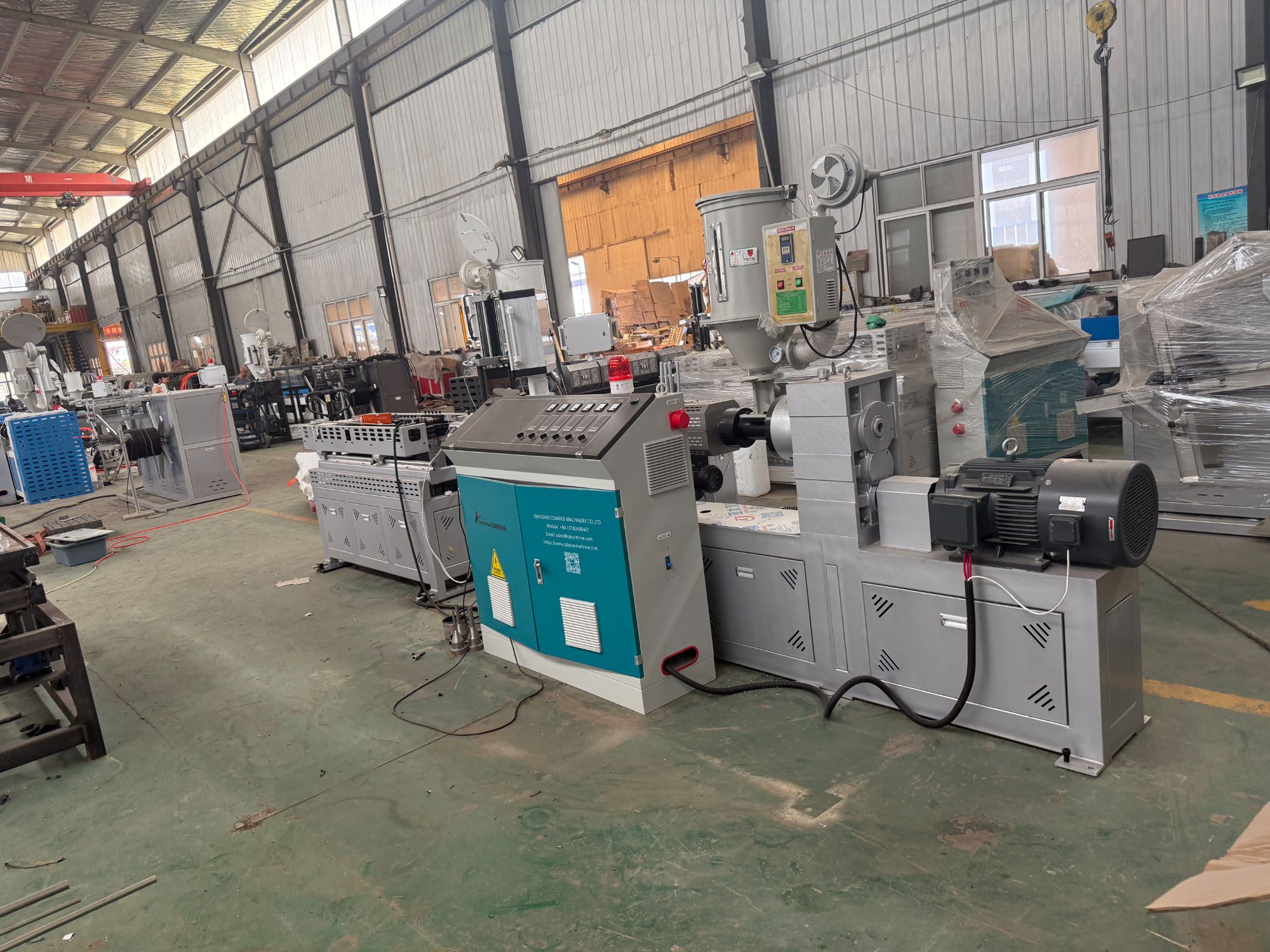
Setting up a corrugated pipe production line? The supplier you pick can make or break your entire operation—from equipment reliability to after-sales support. Too many buyers focus only on price and end up with costly downtime. That’s why we’ve pulled together these practical tips, and why smart buyers keep COMRISE on their shortlist.
See the Machine Run Your Profile First
Most people polish their profiles for human eyes but never check what the machine actually sees. The moment you upload a resume, update a social bio, or tweak a portfolio, an algorithm quietly scores you before any person glances at the screen. Instead of guessing, run your own profile through the same kind of parser—many platforms offer a "view as" mode or you can use a third-party scanner to see which keywords are picked up, which sections get ignored, and how your experience is categorized. That first pass is where you lose or win attention, long before an interviewer ever reads a sentence.
Try feeding your profile into a resume screener or even a simple text-analysis tool. Note the nouns and phrases it pulls out: are they the ones you want? A machine might tag you as "customer support" when you actually led client-success strategy, simply because old job titles carry more weight than your summary. Adjust the phrasing not to game the system, but to make sure the machine's snapshot matches your real story. Swap vague verbs for concrete tools and outcomes, and watch how the parsed profile shifts from generic to distinctive.
There's a danger in over-optimizing for the machine, though. If you stuff keywords just to pass the filter, you'll end up sounding like every other profile that did the same. The goal isn't to trick the algorithm—it's to remove friction between what you've actually done and what the machine reports. Run the simulation, fix the gaps, then leave a few human quirks in place. Those quirks won't help the score, but they'll help the person who eventually reads past the machine's verdict.
Ask How Long a Size Change Really Takes
Most people picture a size change as a fast swap, but the clock starts ticking the moment you hand the garment over. If you are exchanging an off-the-rack item for the same style in a different size, a nearby store can often handle it in a day or two, provided the stock actually exists. When that size has to come from another branch, add two or three business days just for the transfer.
Tailoring tells a very different story. A competent seamstress may only need forty minutes to take in a waist or shorten a hem, yet your piece could sit in a queue for four to seven days. Peak seasons stretch that further, and rush jobs almost always trade precision for speed. So if someone promises a one-hour alteration, ask whether the fitting room is empty and the tailor has nothing else waiting.
Online exchanges are slower for a reason. The return label, the warehouse check-in, the refund or replacement trigger, and the second shipment each add a day or more. Seven to ten business days is a realistic window, and it can double when the replacement size is backordered. Before you commit to a size change, ask the seller to confirm the new size is physically in stock—that single question often saves more time than any expedited label.
Check Whether Spare Parts Sit in Your Region
Checking local parts availability saves you from unexpected downtime. A quick check before ordering can reveal whether the part is stocked at a nearby warehouse or dealer, which often means faster delivery and lower shipping costs.
Several ways to verify this. You can call your regional distributor, log into the manufacturer's parts portal, or use the chat support on their official site. Some systems even show real-time stock levels for your specific postal code.
Keep in mind that displayed stock isn't always guaranteed. A part might be reserved for another order or sitting in a return bin. If the system says "available," it's wise to have the dealer confirm before you commit to a pickup time.
Bring Your Own Compound to the Demo
Most demos stick to a fixed script, but yours shouldn't. Bring a compound you're already working with—a stubborn intermediate, a new catalyst, or even a messy reaction mixture—and we'll run it through the system together. The point is to see how your actual material behaves, not some idealized model compound.
If you're not sure what to bring, grab the one that's been giving you trouble. Small amounts are fine; a few milligrams is usually enough. Solubility quirks, air sensitivity, or unusual functional groups are welcome. They often lead to the most useful conversations because they expose where standard methods break down.
We'll handle the setup and safety review on site, so you can focus on the results. Bring a notebook or just your phone—either way, you'll leave with data that's relevant to your own work rather than a generic brochure example.
Find Out Who Actually Fixes the Line After Startup
When the startup rush settles and the first real customer complaint lands in your inbox, the question stops being hypothetical. It's rarely the person listed on the org chart. The actual fix usually comes from whoever feels the pain most directly — often a support engineer or the developer who wrote the fragile module months ago. Titles don't touch the broken deployment script; hands do.
Instead of relying on blame threads or postmortem documents, watch the first fifteen minutes after an incident. The person who pulls up logs without being asked, re-runs the failed build, and quietly edits the config? That's your real line-fixer. Sometimes it's two people swapping screenshots in Slack, neither with "ops" in their job title.
If you want this to keep happening, make that informal role visible. A short note in the team channel or a pat on the shoulder goes further than a process overhaul. Because once people think the line is someone else's job, the fixes slow down — and everyone notices.
Measure Scrap Rates, Not Just Meters per Minute
Focusing on line speed alone misses a large part of the cost picture. A machine that runs at high meters per minute can still lose money if it is producing defective material. Scrap rate tells you how much raw material, time, and energy are being thrown away. It is often a better indicator of real productivity than speed.
Consider two lines. One runs at 120 meters per minute but has frequent edge trim waste and occasional roll rejects. Another runs at 95 meters per minute with almost no scrap. On paper the first line looks faster, but after accounting for material loss and rework, the second line often delivers more usable output per shift.
Track scrap by shift, material lot, and operator. Look for patterns that correlate with higher waste, such as tension changes, splice points, or startup periods. Reducing scrap by even one or two percentage points can have a larger financial impact than pushing speed higher. Speed without yield control is just burning material faster.
FAQ
Focus on the wall thickness range the machine can handle, the type of welding unit (ultrasonic vs. hot air), and whether they offer quick-change molds for different pipe diameters. A supplier that can't explain why they chose a particular motor or heating system may be hiding gaps.
Request contact details of three existing customers and call them at random times. Ask about response time for spare parts, whether remote troubleshooting is actually effective, and if technicians have visited for repairs. Genuine suppliers won't hesitate to provide references.
Check if they assemble and test machines in-house rather than outsourcing. Watch a live trial run with your chosen pipe profile. Look at the workmanship of the weld seams and the control panel layout — messy wiring often signals future maintenance headaches.
See if they ask about your raw material source, daily output target, and available floor space before quoting. A supplier that jumps straight to price usually won't tailor the line to your situation. Ask them to walk through a typical startup sequence for your product mix.
Beyond the base price, clarify who covers installation, training, and initial mold sets. Some suppliers quote low but charge separately for every additional diameter mold or software license. Get a line-item breakdown before comparing offers.
Ask for the machine's design life and maintenance schedule. Request photos of machines that have been running for five or more years, and check the supplier's spare parts inventory system. A company that can't show older installations may be too new to prove durability.
Inquire about the commissioning process: how many days on-site, who provides the raw material test batch, and what acceptance criteria they use. A supplier that doesn't define successful setup in measurable terms can cause weeks of delays.
Yes, but don't rely on generic claims. Ask for a list of clients making similar pipe types (e.g., drainage, cable conduit, medical tubing) and the output rates they achieved. A supplier with relevant case studies can often solve setup issues faster because they've seen the common failure modes.
Conclusion
Choosing a corrugated pipe machine supplier isn't just about horsepower or price tags. Before signing anything, insist on watching the line run with your own profile and raw material—not a stock demo. This reveals how the machine actually handles your specific dimensions and compound, and it's the fastest way to spot hidden limitations. During that visit, time the size changeover yourself. A supplier might claim twenty minutes, but if the crew struggles for an hour while you wait, that difference will eat your production schedule every single shift. Also ask where spare parts are stored. If the answer is a warehouse on another continent, every breakdown becomes a waiting game. Local inventory or a guaranteed regional hub changes how quickly you can recover from a jammed die or failed sensor.
Bringing your own compound to the demo is non-negotiable. Factory-supplied material is always optimized; your actual mix might run hotter, stick more, or wear screws faster. Run it and measure scrap from the first meter. Line speed means nothing if you're generating ten percent waste—reclaimed material, labor, and downtime quickly erase any throughput advantage. Finally, pin down who repairs the line after startup. Sales engineers disappear after commissioning; you need a clear name and phone number for the service team that will answer at 3 a.m. A supplier who hesitates to give you that contact is telling you something. These checks take a day or two upfront but save months of frustration once the line is installed.
Contact Us
Contact Person: LISA LEE
Email: [email protected]
Tel/WhatsApp: +86 13780696467
Website: https://www.qdpipemachine.com