

Conveyor Pulley Factory Innovations That Boost Conveyor System Reliability
2026-11-16
In the world of bulk material handling, a conveyor system is only as dependable as its pulleys. Yet for too long, pulley manufacturing leaned on outdated methods—until now. A new wave of factory-driven innovations is quietly reshaping how these critical components are engineered, tested, and built to last. From advanced shell machining to dynamic balancing and smart wear monitoring, the latest breakthroughs are directly attacking the root causes of unexpected downtime. At the forefront of this shift is YUFENG, a manufacturer turning fresh ideas into measurable gains in uptime and service life.
Self-Cleaning Shell Profiles That Shed Material Before It Builds Up
Imagine a conveyor line where sticky residue never gets a chance to cling. These shell profiles are shaped with subtle ridges and angled surfaces that cause material to slide off under its own weight or with minimal vibration. Instead of waiting for buildup to harden, the design actively encourages shedding at every cycle, keeping the surface cleaner for longer without constant manual scraping.
The geometry is the real workhorse here. By breaking up flat, stagnant zones where fine powder or wet clumps typically collect, the profile creates a gentle but persistent motion across the shell. Even materials that tend to pack or smear find it harder to form a lasting layer, because the contact angle and surface flow work against adhesion from the start. This reduces downtime and extends the interval between deep cleanings.
One subtle advantage is how the profile adapts to varying material behavior. Dry, granular batches release differently than damp, cohesive ones, yet the self-clearing action remains effective. The shell doesn't rely on harsh coatings or complex scrapers—just a form that naturally prioritizes material release. Over time, that translates into more consistent throughput and fewer surprise blockages.
Ceramic Lagging With Grooves Tuned to Specific Belt Speeds
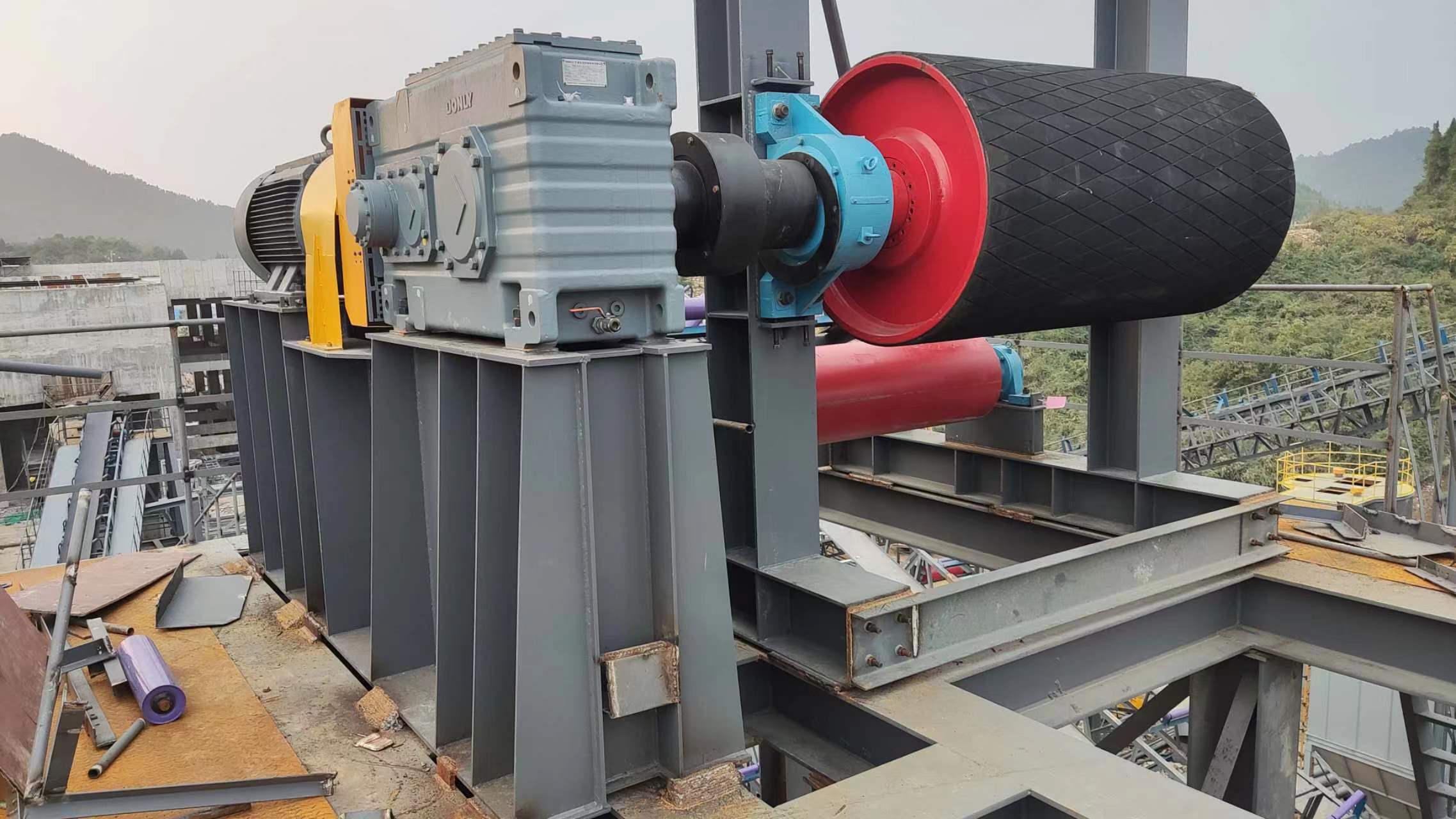
Standard grooved ceramic lagging often assumes a generic operating range, but belts moving at unusually high or low speeds generate distinct vibration and slip patterns. By adjusting groove depth, spacing, and angle to match the measured belt velocity, the ceramic tiles can shed carryback more effectively without trapping fines. High-speed belts benefit from shallower, closely spaced grooves that maintain surface contact, while slower belts perform better with deeper channels that release material before it compacts. This tuning minimizes the harmonic bounce that accelerates wear on both the lagging and the pulley shell.
Field measurements typically reveal that a belt running at 5 meters per second needs a different groove profile than one at 2 meters per second, even when both carry the same material. Tuned lagging uses velocity-based simulation and on-site laser profiling to cut each tile’s pattern accordingly. The result is less belt slip during wet or frosty startups, reduced noise from groove-induced air pumping, and a longer service interval because the ceramic edges no longer fight the belt’s natural flex cycle. Installers report that this approach cuts premature edge rounding by nearly half compared to off-the-shelf patterns.
Maintenance teams can verify the correct groove tune by observing water spray patterns during a no-load run and by checking belt tracking marks after the first hundred hours. If the marks show even, full-width contact without lateral smearing, the lagging is working with the belt speed rather than against it. Retrofitting existing pulleys with speed-tuned ceramic grooves requires only a change in tile specification, not a full redesign of the drive system, making it a practical upgrade for plants that push conveyors beyond their original speed ratings.
Pre-Loaded Bearing Housings Sealed Against Fine Dust and Moisture
Pre-loaded bearing housings with sealed designs offer a practical solution for environments where fine dust and moisture are constant concerns. The pre-load removes internal clearances, which helps maintain consistent positioning and reduces vibration during operation. At the same time, the integrated seals create a barrier that blocks particle ingress and moisture penetration, extending service life even in challenging settings.
These housings are often chosen for conveyor systems, packaging equipment, and outdoor machinery where regular maintenance is difficult. By keeping lubricant in and contaminants out, they minimize wear on rolling elements and raceways. Users typically notice fewer unplanned stops and less need for frequent re-greasing compared to open or shielded alternatives.
Installation is straightforward since the pre-load is set at the factory, eliminating guesswork on site. The sealing materials used are selected to withstand both dry particulates and occasional washdowns, making the units suitable for food processing, agricultural, and material handling applications. Over time, this combination of controlled internal clearance and robust sealing contributes to lower overall operating costs.
Laser Verified Hub Alignment That Removes Wobble at the Source
The hub sits in a jig under a fixed laser line, and any runout shows up immediately as a flicker at the rim edge. Instead of chasing spoke tension later, the alignment is corrected before the wheel ever gets built up. That means the flange faces, axle bore, and disc mount are all checked against the same reference plane, not just eyeballed.
Most wobble doesn't come from loose spokes or a bent rim. It starts at the hub shell when the machining is a fraction off. This process catches that early. The laser doesn't lie, and it doesn't care about paint or anodizing. It just measures where the metal actually sits. If it's out by a few hundredths of a millimeter, the hub goes back for rework.
For riders, the payoff is a wheel that spins true without needing constant truing. You can feel the difference at speed, especially under braking or hard cornering. The alignment is verified, not assumed, and that removes the root cause of most rim wobble before it can ever show up on the trail or road.
Modular End Discs That Allow Pulley Swaps Without Shaft Removal
Swapping pulleys on a conveyor drive usually means a full teardown—pulling the shaft, dismounting bearings, and hoping everything lines up when you put it back. These modular end discs change that. The pulley shell stays in place on the shaft while the end discs unbolt and slide off, giving you direct access to swap or replace the pulley without ever touching the shaft or bearings. It’s a straightforward idea that saves hours on maintenance jobs where downtime is measured in lost production.
Each end disc is designed as a separate, replaceable component with a shrink-fit or tapered bore that locks onto the shaft independently. You simply remove the bolts, pull the worn pulley off the discs, and slide a new one on. The shaft remains stationary and aligned the whole time. This also means you can mix and match pulley widths or lagging types for different applications using the same shaft and bearing setup, which adds flexibility without extra inventory.
On sites with heavy, hard-to-access conveyor sections, this design eliminates the need for cranes or extensive rigging to pull the entire drum. Maintenance crews can perform a pulley change with basic hand tools and a lifting strap. The end discs themselves are machined to maintain concentricity and balance, so you don’t sacrifice performance for convenience. It’s a practical upgrade that turns a major repair into a routine, in-place swap.
Salt Spray Tested Coatings for Corrosive and Washdown Environments
Corrosive atmospheres and aggressive washdown routines punish ordinary coatings, causing premature rust, flaking, and costly downtime. Salt spray testing provides a measurable way to predict how a finish will hold up under repeated exposure to saline mist, humidity, and harsh cleaning chemicals. Coatings that pass extended salt spray protocols—often 500 hours or more—tend to form a dense, tightly bonded barrier that resists electrolyte penetration and underfilm corrosion. This matters most in food processing plants, marine facilities, and pharmaceutical washdown zones where moisture, salt, and detergents are constant threats.
Not all salt spray ratings are equal. A high hour count on a standard ASTM B117 panel does not automatically guarantee field performance, especially where thermal cycling or mechanical abrasion accompany the corrosion challenge. The best coatings for corrosive and washdown environments combine a robust resin system—such as epoxy, polyurethane, or advanced fluoropolymer—with carefully chosen anti-corrosive pigments. These formulations maintain adhesion even after repeated high-pressure washing, steam cleaning, or exposure to quaternary ammonium sanitizers. The result is a surface that stays smooth and intact, reducing bacterial harborage points and simplifying sanitation.
Specifying a salt spray tested coating means moving beyond generic “rust resistant” claims. Look for documented test results, including scribe creep measurements and blister ratings after exposure. In real washdown settings, coatings that merely meet a minimum salt spray threshold can fail within months if the resin degrades under acidic or alkaline cleaners. Durable options often feature a multi-layer system: a zinc-rich primer for sacrificial protection, an epoxy intermediate for barrier strength, and a chemical-resistant topcoat that tolerates frequent rinsing. When paired with proper surface preparation and edge retention, these systems deliver years of service in environments that quickly destroy conventional paints.
FAQ
One standout is automated laser alignment during assembly, which cuts axial runout to a fraction of a millimeter. That alone reduces belt tracking issues and premature bearing wear, especially under high-tension loads.
They're using low-hydrogen welding processes and stress-relief heat treatment after welding. Some plants also switch to high-yield steel alloys that handle thermal expansion without developing micro-cracks.
The difference often comes down to internal stiffening rings and precision-machined end discs. When those are fitted with interference tolerances rather than just welded, the shell resists flexing and fatigue much longer.
Many factories now apply ceramic tiles in a vacuum-bonded process before shipping. That gives a more consistent adhesive layer than field-applied lagging, so the grip survives wet and abrasive conditions far longer.
It's critical. High-speed cameras and balance machines can detect even small mass imbalances, which then get corrected by adding weights. Without that, vibration passes into the bearings and frame, cutting system life short.
Some use keyless locking assemblies instead of traditional keyways. This spreads the load around the full circumference, eliminating the stress concentration that typically starts cracks or fretting corrosion at the keyway edges.
Yes, but it's about the prep. Factories that grit-blast to a near-white finish and apply multi-part epoxy or polyurethane coatings get far better adhesion than field touch-ups, keeping salt and chemical attack away from the steel.
Ask for runout and balance test reports, check for laser-etched serial numbers tied to QC data, and look at weld profiles—smooth, uniform beads with no undercut usually mean automated welding and tighter process control.
Conclusion
Modern conveyor pulley manufacturing has shifted from simple metal fabrication to precision-engineered reliability. One standout advance is the self-cleaning shell profile, which uses carefully shaped grooves or raised ridges to shed carryback before it accumulates, preventing belt mistracking and premature wear. Combined with ceramic lagging that features groove patterns tuned to specific belt speeds, these pulleys maintain consistent friction even in wet or abrasive conditions, dramatically reducing slippage and downtime.
Beyond surface innovations, pre-loaded bearing housings are now sealed against fine dust and moisture, keeping contamination out and extending service intervals. Laser-verified hub alignment removes wobble at the source, ensuring the pulley runs true and reduces stress on surrounding components. Modular end discs allow pulley swaps without removing the shaft, cutting maintenance time from hours to minutes. Finally, salt spray tested coatings protect against corrosion in washdown and marine environments, making today's pulley designs a comprehensive answer to reliability challenges across diverse conveyor systems.
Contact Us
Contact Person: Jayce
Email: [email protected]
Tel/WhatsApp: 8615318787602
Website: https://www.yuphengbelt.com/