

China SiC Powering Next-Gen Electric Vehicles
2026-09-10
The race to electrify everything has a hidden bottleneck: silicon power electronics are reaching their physical limits under the high voltages and fast switching demanded by next-generation electric vehicles. That's why China's rapid scale-up of silicon carbide (SiC) is more than a supply chain story—it's an inflection point for EV performance. From traction inverters to on-board chargers, SiC enables lighter systems, faster charging, and longer range. At the center of this shift, suppliers like HUAYI TECH are delivering the high-quality SiC substrates and epitaxial wafers that automakers need to move from prototype promises to production reality. In this post, we unpack how China's SiC ecosystem is quietly redefining what electric vehicles can do.
The Material Shift Making Chinese EVs Lighter and Faster
Chinese automakers are quietly rethinking the very bones of their electric vehicles, swapping traditional steel for advanced aluminum alloys, carbon fiber composites, and high-strength thermoplastics. This material shift isn't just about shaving kilograms—it's about reaping a cascade of performance gains. Lighter bodies mean the same battery pack can push the car further, or a smaller pack can deliver the same range, cutting cost and charge time without sacrificing driving feel.
The push for weight reduction goes hand in hand with structural innovation. Integrated die-casting, pioneered and perfected by several Chinese EV brands, replaces dozens of welded parts with a single massive aluminum piece. This not only trims mass but also improves rigidity and crash energy absorption, enabling faster acceleration and sharper handling. Engineers are using multi-material mixes—placing carbon fiber in high-stress areas and aluminum in load-bearing sections—to optimize strength-to-weight ratios in ways that were once reserved for supercars.
Beyond the chassis, lightweight materials are invading smaller components: magnesium seat frames, composite suspension links, and even recycled plastics for interior panels. Suppliers across China have scaled production of these materials, driving costs down to levels that make them viable for mainstream EVs rather than just premium flagships. The result is a new generation of electric vehicles that feel more agile, brake with less effort, and stretch every kilowatt-hour further—all thanks to a smarter choice of what they're made of.
Wafer Thinning, Defect Control, and the Race to 200mm
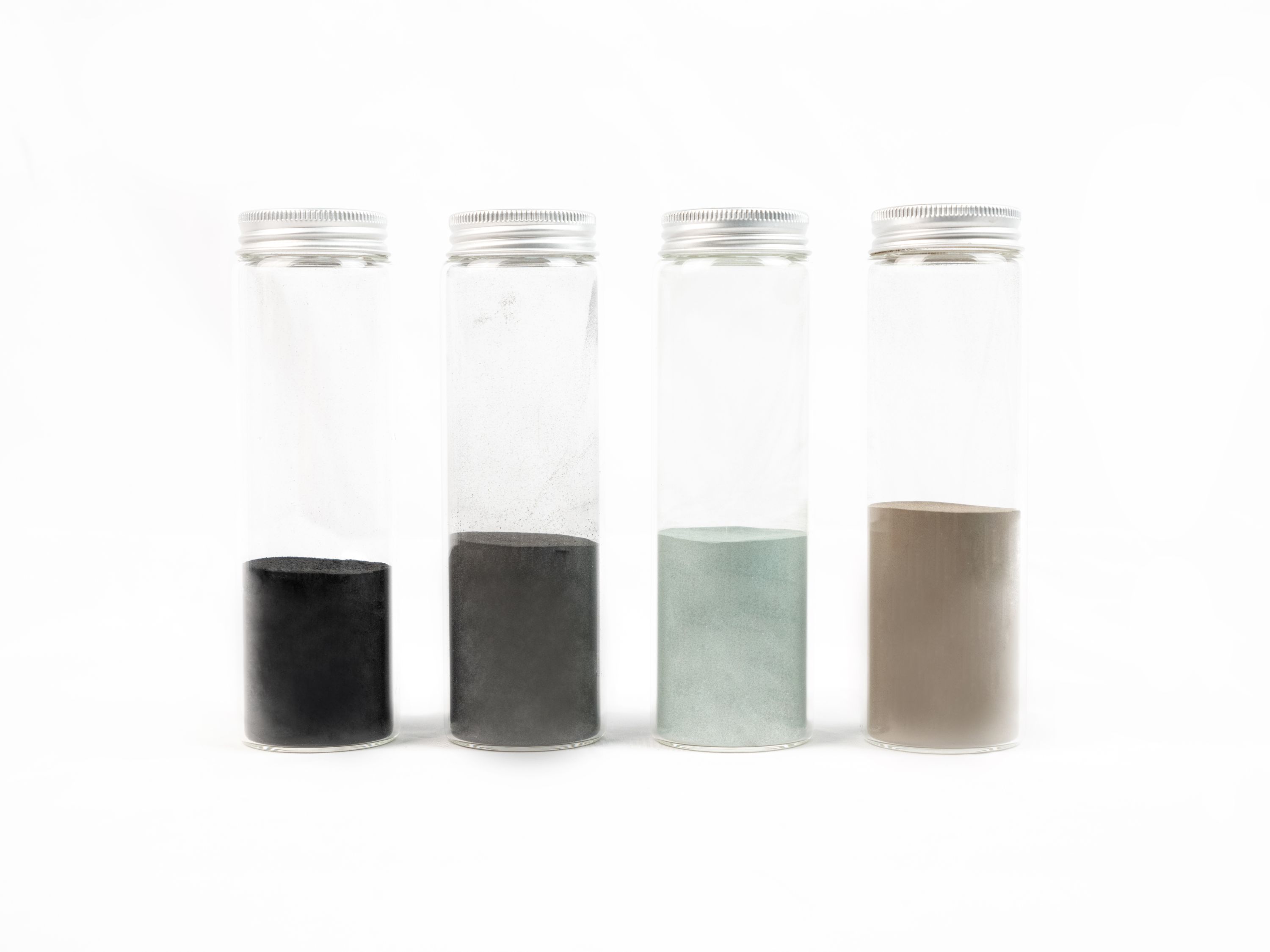
The renewed demand for 200mm wafers in analog, MEMS, power devices, and RF front-end modules has turned wafer thinning into a critical battleground. Thinning the substrate below 100 µm slashes package height and improves thermal dissipation, but it also amplifies mechanical stress across the entire wafer. For 200mm lines running older equipment, maintaining thickness uniformity across a full cassette becomes just as important as hitting the final target value.
Defect control during thinning is where yields are won or lost. Grinding-induced subsurface damage, edge chipping, and residual stress can survive into later metallization steps, especially for automotive-grade parts where a single latent crack is unacceptable. Process teams now rely on in-line infrared metrology and automated defect classification to catch anomalies early, often adjusting wheel speed or coolant flow on the fly rather than waiting for post-grind inspection.
The race to 200mm is not about raw capacity alone. It is about pushing thinning limits while holding defect density low enough for zero-failure markets. Fab engineers retrofit grinders with custom wheel profiles, adopt two-step polish or dry etch after mechanical thinning, and tune CMP consumables for the mixed device types that 200mm fabs produce. The winners in this space are those who treat thinning and defect monitoring as a single continuous loop, not separate steps.
Why 800V Systems Turn Silicon Carbide from Luxury to Necessity
The jump from 400V to 800V architecture changes the math for power semiconductors almost overnight. At double the voltage, the same power demand requires half the current, which slashes resistive losses and lets engineers use thinner, lighter wiring. But silicon IGBTs struggle at these levels—their switching losses climb sharply, and the devices run hot enough to demand bulky cooling. Silicon carbide MOSFETs handle 800V with far less stress, switching faster and wasting less energy as heat, which directly translates into longer range and smaller thermal management systems.
Early 800V platforms like the Porsche Taycan treated silicon carbide as a premium upgrade, something reserved for top-tier trims where cost mattered less than performance. That calculus has shifted. Mainstream EVs built on 800V architectures—Hyundai’s E-GMP, Kia’s EV6, and a growing list of Chinese models—now rely on SiC to hit their efficiency targets without making the battery pack larger or the cooling loop more complex. Removing SiC from these designs would force a compromise: either accept lower charging speeds, add weight, or push the thermal envelope to a point where reliability suffers.
Cost remains the final hurdle, but it is falling in a way that mirrors the early days of lithium-ion cells. Wafer sizes are growing, defect densities are dropping, and the gap between SiC and silicon is no longer a dealbreaker when measured against the system-level savings. An 800V car built with silicon alone would need more cells, more copper, and a heavier cooling system to match the range of a SiC-equipped rival. That reality, more than any single technical spec, is what turns silicon carbide from a luxury checkbox into a baseline requirement for serious EV platforms.
City by City: How Local Policies Are Accelerating SiC Adoption
底特律和深圳这类城市正在用地方政策实实在在地推动碳化硅功率器件的落地。密歇根州对车用SiC模块生产线给出了税收减免,而深圳则直接给使用SiC逆变器的电动公交车发放额外运营补贴,这种真金白银的支持让不少企业把量产计划提前了。
除了给钱,一些城市还通过公共采购和基建标准来拉动需求。汉堡要求新建的快速充电站必须采用基于SiC的功率转换系统,理由很简单——能效更高、占地更小;首尔则给采用SiC器件的本地半导体企业提供研发配套资金,最高能覆盖项目成本的40%,连中小型设计公司也敢去试水了。
这种城市间的政策竞赛正在形成一种示范效应。奥斯汀和名古屋原本都不在SiC产业地图上,现在却各自设立了专项基金和人才培训计划,专门吸引相关企业落户,试图在本地把从衬底到模块的链条补起来。地方政府的动作比国家层面更快,也更敢试错。
The Unseen Thermal Wins That Extend Battery Range
Most drivers only notice thermal management when it fails—a cold-soaked battery that charges slowly or a cabin that gulps range on a winter morning. But the real gains happen quietly. Modern EVs use heat pumps that scavenge warmth from the motor, inverter, even the outside air, and move it where it matters. Instead of burning battery energy to heat a resistive coil, they redirect existing heat. The result is a battery that stays closer to its ideal operating window, and a range figure that doesn’t collapse the moment temperatures drop.
Preconditioning while plugged in is another silent win. Warming the pack before departure means the car doesn’t have to spend its own energy bringing cells up to temperature. That energy stays in the battery for driving. Some systems also use the thermal mass of the pack itself as a buffer: heat generated during driving or charging is stored and released slowly, reducing the need for active heating later. It’s not flashy, but over a long trip it adds real miles.
Even small design choices matter. A more efficient coolant loop, better insulation around the pack, or software that anticipates elevation changes and adjusts cooling proactively can stretch range by a few percent. These aren’t headline numbers—no one markets a 3% thermal efficiency gain—but on a cold highway, they make the difference between arriving with comfort margin and watching the range estimate tick down faster than the odometer.
Beyond the Inverter: SiC’s Role in Charging and Beyond
As vehicle platforms shift to 800V batteries, silicon carbide is quietly reshaping onboard chargers and DC-DC converters. A 22kW SiC-based OBC can shed several kilograms compared to its silicon counterpart while operating at higher switching frequencies, which shrinks magnetics and heatsinks. The real win shows up in bidirectional designs: SiC's low reverse recovery charge makes it practical to push energy back into the grid or a home battery without stacking parallel devices just to handle the peaks.
That same behavior extends beyond the vehicle. DC fast-charging stations using SiC modules deliver more power in smaller cabinets, often cutting cooling demands enough to install units in tight urban lots. Emerging applications like solid-state transformers and medium-voltage grid interfaces lean on SiC's ability to switch kilovolts cleanly, enabling compact power conversion for microgrids and renewable integration that would be impractical with traditional IGBTs at these frequencies.
FAQ
China has moved aggressively from SiC substrate production to epitaxy and device fabrication. Firms like SICC and TankeBlue now supply wafers that were once dominated by U.S. and Japanese players. This vertical integration cuts lead times and gives Chinese EV makers a cost edge.
SiC can handle higher voltages and temperatures with less energy loss. In an EV inverter, that means less heat to dissipate, smaller cooling systems, and more of the battery's energy reaching the wheels. It also allows faster switching, which improves motor control.
BYD has its own SiC module line for its Han and Tang models. StarPower and CRRC are expanding into automotive-grade SiC MOSFETs, while Sanan and CETC focus on wafer and epitaxy supply. These players are quickly moving from pilot lines to high-volume output.
The upfront cost is higher, but the overall system savings often offset it. A SiC inverter can be smaller and lighter, reduce battery capacity needs for the same range, or extend range by 5-10%. For premium EVs where performance sells, the math works.
Growing high-quality 6-inch and 8-inch SiC crystals without defects remains tough. Yield rates are still below silicon, and equipment for high-temperature processing is expensive. China is investing heavily, but it will take a few more years to match the yields of established foreign suppliers.
By cutting switching and conduction losses in the inverter and onboard charger, SiC boosts overall efficiency. Independent tests show a 5-8% range improvement compared to silicon IGBTs under real-world conditions, which can mean 20-30 extra kilometers on a full charge.
Very likely for 800V architectures and high-performance models. For low-cost city cars, silicon IGBTs may linger, but as SiC wafer prices fall and 8-inch fabs mature, the crossover point will arrive sooner than many expect.
Beijing has designated SiC as a strategic material under its Made in China 2025 initiative, with subsidies for fabs, research grants, and local procurement preferences. That policy push is why so many Chinese players have entered the field in a short time.
Conclusion
Silicon carbide is quietly redefining what Chinese electric vehicles can do on the road. The swap from traditional silicon to SiC in power electronics strips out weight and wasted heat, allowing motors to spin faster and batteries to hold their charge longer. Engineers chasing wafer thinning and tighter defect control are pushing toward 200mm substrates, a shift that cuts cost per chip while lifting reliability. At the same time, the spread of 800V architectures turns SiC from a premium upgrade into a practical must-have: without it, faster charging and higher efficiency would remain stuck on paper. Local policy plays a quieter role, with city-level incentives nudging automakers and suppliers to adopt SiC in everything from sedans to delivery vans.
The benefits reach beyond the inverter. In onboard chargers and fast-charging stations, SiC handles high frequencies with less loss, trimming charge times and easing grid strain. Thermal gains are just as telling—less heat means smaller cooling loops and more range from the same battery pack. Chinese firms are not just following this shift; they are shaping it through aggressive investment in crystal growth, epitaxy, and module packaging. The result is a tighter link between material science and everyday driving, where lighter, faster, and longer-range EVs become the default rather than the exception.
Contact Us
Contact Person: Junting Leo
Email: [email protected]
Tel/WhatsApp: +86 18615009766
Website: https://www.huayimaterial-china.com/