

China Blown Film Masterbatch: Elevating Film Durability with Precision Color and Additive Dispersions
2026-07-29
In the competitive world of blown film manufacturing, achieving consistent color and functional additive dispersion remains a persistent challenge. Xinwancai tackles this head-on with its innovative masterbatch solutions, designed to elevate film durability while delivering precise, vibrant hues. Discover how our advanced technology transforms raw polymers into high-performance films that stand out on the shelf and endure under stress.
The Art of Even Dispersion in Blown Film Masterbatches
Achieving uniform color in blown film is a delicate craft, one that hinges on the flawless distribution of pigment within the masterbatch. Even dispersion isn't just a technical requirement—it's the very essence of quality, determining the final film's opacity, strength, and visual appeal. Without it, manufacturers risk streaks, specks, and costly downtime.
The art lies in selecting the right carrier resin and processing conditions, ensuring that each pigment particle is fully wetted and separated. This demands a deep understanding of polymer chemistry and machinery, coupled with a relentless focus on detail. Only then can one create a masterbatch that flows seamlessly into the base polymer, delivering consistent, vibrant results.
Mastering this art requires patience and experimentation. Even the smallest adjustments in screw design or temperature profiles can mean the difference between a perfect film and a production nightmare. It’s a continuous pursuit of perfection, where experience and intuition guide the way.
Why Additive Choice Impacts More Than Just Color
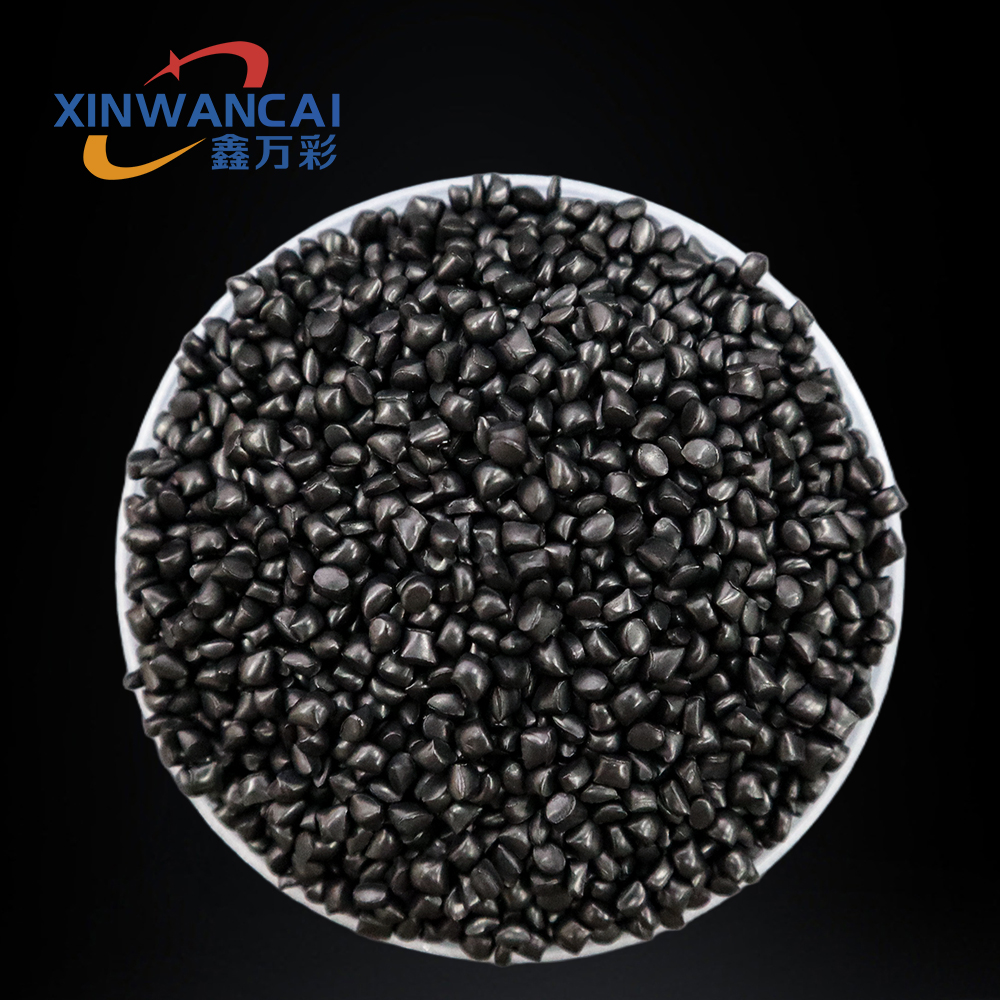
When manufacturers select an additive, they often focus solely on achieving a specific hue, but the implications run far deeper. The choice of colorant can alter the material’s thermal stability, impacting how it withstands heat during processing or end use. A pigment that delivers a brilliant shade might also accelerate degradation when exposed to UV light, leading to premature fading or structural weakening. It’s not just about aesthetics; it’s about how the entire product performs over time under real-world conditions.
Beyond durability, additive selection influences mechanical properties in ways that aren’t immediately obvious. Some colorants can act as nucleating agents, changing the crystallization behavior of polymers and thus affecting stiffness or impact resistance. A deep black achieved with carbon black, for instance, may reinforce the material, while another black pigment could make it more brittle. Even the dispersion quality matters—poorly distributed additives create stress points that compromise strength. These hidden trade-offs mean that a color decision is essentially a material engineering decision.
There’s also the matter of processing behavior. Additives can shift melt flow, alter shrinkage rates, or cause plate-out on molds, all of which disrupt production efficiency and consistency. A shift in viscosity might require adjustments to cycle times or temperatures, driving up energy costs or scrap rates. And in sensitive applications like food packaging or medical devices, the wrong choice could raise concerns about chemical migration or biocompatibility. Ultimately, the additive you pick shapes not just the look, but the entire lifecycle and viability of the product.
Balancing Clarity, Strength, and Processability
When designing materials, achieving a harmonious balance between clarity, strength, and ease of processing often feels like navigating a tightrope. Clarity ensures that the material allows light to pass through with minimal distortion, a factor dictated by refractive index uniformity and the absence of imperfections. Yet, pursuing optical perfection can predispose the structure to brittleness, undermining its strength and durability in demanding applications. This interplay forces a careful trade-off where each property cannot be optimized in isolation without compromising the others.
Processability adds another layer of complexity, as the chosen manufacturing method must accommodate the material's thermal and rheological behavior without introducing defects that scatter light or concentrate stress. Techniques like injection molding or extrusion impose high shear and rapid cooling, which can align polymer chains and induce internal stresses that ruin both transparency and mechanical integrity. The real challenge lies in formulating compositions that retain their optical and structural merits despite these harsh processing conditions, often requiring innovative additive packages or subtle adjustments in molecular architecture.
A successful compromise emerges when the material’s formulation is tailored to suit the entire lifecycle—from precursor to finished component. This involves selecting base polymers with inherently high light transmission, reinforcing phases that minimally disrupt the matrix's continuity, and processing aids that lower viscosity without leaving hazy residues. The result is a material that doesn't just meet specifications on paper but performs reliably in real-world fabrication, proving that thoughtful integration trumps pursuing superlative single-attribute performance.
From Pellet to Film: Mastering the Dispersion Dance
Transforming plastic pellets into a flawless film isn’t just a mechanical process—it’s a delicate choreography of heat, pressure, and motion. The dispersion dance begins the moment raw resin enters the extruder, where controlled shear and temperature gradually coax the material from solid pellets into a homogeneous melt. Every variable, from screw speed to barrel profile, must be tuned precisely; too aggressive, and the polymer chains may degrade—too gentle, and the melt remains lumpy, riddled with inconsistencies that later appear as gels or fisheyes on the finished film.
The real artistry lies in how additives—colorants, stabilizers, slip agents—are blended into the polymer matrix. These secondary components, each with their own particle size and surface energy, can cluster stubbornly if not properly dispersed. This is where the dance intensifies: distributive mixing spreads the additives throughout the melt, while dispersive mixing breaks down agglomerates into primary particles. The goal is a seamless integration where every additive performs its role without compromising the film’s clarity or mechanical properties.
Mastering this dispersion dance means reading the melt’s behavior and adjusting in real time. Signs of a well-balanced process are invisible in the final product but unmistakable to the trained eye: a film that unwinds smoothly, feels consistently thick, and reflects light uniformly. It’s a skill that blends scientific principle with hands-on intuition—a reminder that behind every roll of perfect film is a performer who knows when to lead, when to follow, and when to let the material find its own rhythm.
China’s Edge in Masterbatch Consistency and Reliability
When you look at masterbatch production in China today, what stands out isn’t just scale—it’s the rigorous, almost obsessive focus on process control. Leading facilities weave together real-time spectrophotometric monitoring with automated dosing systems so tightly that batch-to-batch color variation often falls below a delta E of 0.3. That’s the kind of precision that used to be the exclusive domain of Japanese or German plants. Behind the numbers lies a pragmatic approach: domestic equipment manufacturers have worked closely with masterbatch producers to develop customized twin-screw extrusion lines where melt temperature, shear, and residence time are dialed in for specific polymer-carrier combinations, not just generic recipes.
Reliability here is equally a story of supply-chain maturity. Chinese suppliers now stock multiple months of pre-qualified pigments and additives from a vetted network of global and domestic chemical firms, allowing them to lock in a formulation and replicate it for years without drift. On the ground, labs run retention samples from every production lot in accelerated weathering chambers—sometimes exceeding 2,000 hours of xenon-arc exposure—and won’t release a batch until it clears a proprietary filter-pressure-rise threshold. This quiet, industrial-grade thoroughness means that when a converter in Chicago or Stuttgart receives a container of Chinese masterbatch, the pellets perform identically to the lab submission sealed six months prior, shipment after shipment.
Future-Proofing Films with Tailored Additive Packages
Designing films that stand the test of time means blending protection and performance right at the molecular level. Tailored additive packages push beyond generic solutions—every stabilizer, slip agent, or UV blocker is selected to match the exact stressors a film will face, whether it’s high heat, aggressive chemicals, or endless hours under harsh sunlight. It’s about building resilience into the very makeup of the material, so the film doesn’t just survive its environment but actively resists degradation from day one.
Customization is what separates forgettable films from those that become staples in demanding industries. Instead of treating additives as an afterthought, forward-thinking developers weave them into the polymer matrix with surgical precision. This might mean balancing anti-fog and anti-static properties for packaging that breathes and stays clean simultaneously, or deciding how much antioxidant is enough for a marine-grade liner without compromising flexibility. The result feels less engineered and more intuitive—a film that behaves exactly as needed without constant maintenance or unexpected failure.
True future-proofing also accounts for shifts in regulations and sustainability expectations. Modern additive packages can include bio-based plasticizers or light-activated stabilizers that extend a film’s service life while keeping recyclability a priority. By aligning material chemistry with long-term goals, the film isn’t just tougher for today’s challenges—it evolves as standards tighten, avoiding obsolescence. It’s a quiet kind of innovation that may go unnoticed at first, but rewards manufacturers with loyalty from clients who never have to second-guess their film’s reliability.
FAQ
Blown film masterbatch is a concentrated mixture of pigments and additives encapsulated in a carrier resin, tailored for the blown film extrusion process. By uniformly dispersing high-precision colorants and functional additives into the polymer matrix, it reinforces the film's mechanical properties, prevents weak points, and enhances tear resistance and overall longevity, all while maintaining consistent color and performance even in thin-gauge films.
China has emerged as a hub for advanced masterbatch technology, combining cost efficiency with rigorous quality control. Chinese manufacturers often integrate modern compounding techniques and extensive testing, offering masterbatches that deliver superior dispersion, batch-to-batch consistency, and customizable properties that match or exceed international standards, making them a reliable choice for boosting film durability without unnecessary expense.
Precision color dispersions ensure that each pigment particle is fully wetted and separated, resulting in vibrant, streak-free coloration. This not only enhances the visual appeal of the final film—critical for branding and shelf impact—but also avoids agglomerates that can weaken the film, maintaining both aesthetics and structural integrity from the first meter to the last.
Typical additive packages include UV stabilizers to combat sun degradation, antioxidants for heat protection during processing and use, slip agents for easier handling, anti-block additives to prevent film layers from sticking, and processing aids that reduce melt fracture. Some formulations even include anti-fog or antimicrobial additives, all dispersed in a way that protects the film without compromising clarity or strength.
Poorly dispersed masterbatch can cause filter blockages, pressure fluctuations, and melt fractures during extrusion. It leads to visible defects like specks or color streaks, uneven gauge, and reduced film tensile strength. Over time, this inconsistency increases machine downtime, scrap rates, and ultimately raises production costs, while the end product fails to meet quality expectations.
Yes, advanced custom color matching and additive formulation are central to modern masterbatch production. By working with a specialized supplier, you can specify exact Pantone shades, opacity levels, and a combination of functional additives designed for your film's application—whether for food packaging, agricultural coverings, or industrial liners—resulting in a masterbatch that fits seamlessly into your process and delivers targeted durability.
Conclusion
In blown film manufacturing, true quality hinges on the even dispersion of pigments and additives—a subtle art that directly shapes film durability. Without uniform distribution, weak spots form, causing premature failure under stress. Modern masterbatch technology goes far beyond mere coloring; advanced formulations allow precise control over particle size, enabling each component—whether a slip agent, UV stabilizer, or processing aid—to perform at its peak. This demands a careful balance: pushing for glass-like clarity often undermines strength or extruder throughput. China’s blown film masterbatch producers have honed proprietary techniques to dissolve these trade-offs, delivering films that marry toughness, transparency, and effortless high-speed processability.
What sets Chinese masterbatch apart is an uncommon consistency born from tightly integrated production chains and rigorous quality oversight. From pellet selection through the final dispersion “dance” during extrusion, every parameter is locked in, erasing batch-to-batch variation that cripples downstream operations. Converters gain the freedom to run longer cycles with minimal adjustments, slashing waste and downtime. Looking forward, the shift toward customized additive packages—combining antioxidants, anti-fogs, and clarifying agents in one pellet—is future-proofing films against shifting packaging demands. By closely co-developing solutions with clients, Chinese manufacturers create bespoke blends that extend shelf life, boost recyclability, and meet tough regulatory standards, reinforcing their role as reliable global partners in film innovation.
Contact Us
Contact Person: JACK
Email: [email protected]
Tel/WhatsApp: 86 18650130917
Website: https://www.xinwancai.com/