

Best Siemens Reducers: The Ultimate Selection Guide
2026-07-24
Selecting the right Siemens reducer can make or break your motion control project. With countless options on the market, it's easy to feel overwhelmed. At Soochee, we've spent years mastering these precision powerhouses, and we're sharing our hard-won insights to help you cut through the noise. This guide distills the essentials—no fluff, just what you need to pinpoint the perfect match for your application.
Why Siemens Reducers Dominate Industrial Automation
Siemens reducers have carved a formidable reputation in industrial automation by consistently delivering precision, efficiency, and reliability. Their gear units are engineered with meticulous attention to detail, leveraging advanced manufacturing techniques and high-quality materials. This results in minimal backlash, optimal torque transmission, and a long service life, even under the most demanding conditions. From assembly lines to packaging machinery, their reducers ensure smooth motion control, reducing downtime and boosting overall productivity. The ability to customize solutions for specific applications further sets Siemens apart, as they offer a broad portfolio ranging from helical and bevel gears to worm and planetary configurations, each designed to excel in its niche.
Another key factor behind their dominance is seamless integration with digital ecosystems. Siemens reducers are designed to work hand-in-glove with their extensive automation portfolio, including SINAMICS drives and SIMATIC controllers. This integration enables real-time monitoring, predictive maintenance, and easy configuration through platforms like TIA Portal. By embedding smart sensors and connectivity, operators can track performance metrics such as temperature, vibration, and energy consumption, preventing unexpected failures and optimizing maintenance schedules. This level of intelligence transforms a mechanical component into a digitally aware asset, driving the shift towards Industry 4.0 and solidifying Siemens’ role as a one-stop shop for automation technology.
Global support and a commitment to innovation also underpin their market leadership. Siemens maintains a vast network of service centers and application engineers, ensuring rapid technical assistance and spare parts availability worldwide. Their reducers comply with stringent international standards, making them a trusted choice in sectors like automotive, food and beverage, and material handling. Continuous R&D efforts lead to breakthroughs in efficiency and compactness, such as the use of synthetic lubricants and optimized tooth profiles that reduce energy losses. By combining mechanical excellence with digital prowess and responsive service, Siemens reducers provide a compelling value proposition that competitors find hard to match, making them the backbone of countless automated processes.
Matching Gearbox Series to Your Torque and Speed Needs
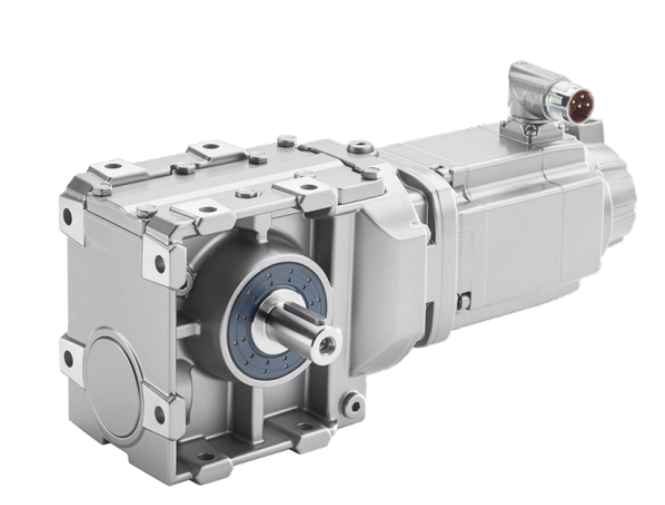
Choosing the right gearbox is less about finding the most powerful unit and more about understanding how torque and speed work together in your specific application. A high-torque requirement at low speeds demands a different gear arrangement than a setup needing rapid, lightweight motion. The key is to map the operational profile—peak torque, continuous speed, and the nature of the load—to a gearbox family that can deliver those exact parameters without over-engineering the solution. For instance, planetary gearboxes shine in compact, high-torque scenarios thanks to their load-sharing design, while simple spur gear setups might be perfectly adequate for moderate, constant-speed tasks.
Beyond the numbers, the interaction between torque and speed defines thermal behavior, efficiency, and even the usable life of the gear train. A gearbox rated for high torque at intermittent duty may overheat if forced into continuous high-speed operation. Matching a series to your needs means examining the thermal limits and duty cycle alongside the raw ratings. Some series, like worm gearboxes, offer self-locking advantages but sacrifice efficiency, making them ideal for intermittent hoisting rather than continuous conveyance. Being precise about your real-world duty cycle—not just the theoretical peak—helps you pick a series that performs in the long run.
Field experience often reveals that starting with the motor's performance curve and working backwards simplifies the selection. Consider the torque-speed curve of your drive: where does the motor run most efficiently, and can the gearbox keep it there? A mismatch might force the motor into an inefficient zone, generating extra heat and wasting energy. The gearbox series should act as a bridge that allows the prime mover to operate happily while outputting the desired torque and speed. This holistic view prevents common pitfalls like selecting a gearbox based on its nominal rating without accounting for the speed at which that torque is actually needed, and ultimately leads to a drivetrain that feels tailor-made for the task at hand.
Installation Environments: Ingress Protection and Cooling Demystified
When placing equipment in the field, two factors often end up driving the decision more than any spec sheet: how well the unit keeps the outside world out, and how efficiently it gets rid of its own heat. It's easy to oversimplify—just pick the highest IP rating and bolt on a fan, right? But in practice, that kind of thinking leads to over-engineered boxes that still fail because the environment had a say no one expected.
Ingress protection is usually boiled down to two digits: the first covers solids like dust and grit, the second handles liquids in any form from dripping condensation to high-pressure washdowns. A rating like IP65 might sound impressive, but on a sun-baked rooftop, the same sealed design that keeps out dust can become a miniature oven, slowly cooking internal components. That's where cooling enters the picture—natural convection might be enough indoors, but once you add full sealing, you've just trapped the heat. Fan-cooled enclosures often rely on filtered intakes, which trade some dust resistance for actual airflow; for truly harsh environments, closed-loop cooling like air-to-air heat exchangers or even liquid cooling keeps the electronics safe without ever letting outside air touch them.
Matching the installation site to the thermal strategy means reading between the lines of the rating. An IP67 enclosure submerged momentarily in water tells you nothing about how long it can run at full load inside a hot, stagnant cabinet. Some installers add sunshields or mount units in the shadow of larger structures, effectively cheating the ambient temperature spec. Others force-cool the space around the device rather than the device itself. There's no universal recipe—every combination of dust, moisture, and heat writes its own set of rules, and the only way to demystify the pairing is to test it in context.
Size, Weight, and Efficiency: The Space-Saving Payoff
When you strip away the excess, what remains is a device that feels almost impossibly light in the hand. The slim profile doesn’t just look sleek—it actively reshapes how you interact with it. Sliding it into a crowded bag or holding it during a long call becomes a non-event, freeing you from the bulk that once defined portability.
That lean silhouette carries more than just aesthetic weight. With fewer moving parts and a tighter internal architecture, the system runs cooler and quieter. You’ll notice it in the absence of fan noise during intense tasks, and in the way the battery seems to stretch further than you’d expect from such a compact frame. Efficiency here isn’t a spec—it’s a quiet, constant companion.
The real magic, though, is in the space you reclaim. A desk once dominated by a tower and tangled cables can now breathe. The minimalist footprint doesn’t just save inches—it rewrites your relationship with your workspace. Less clutter, less distraction, and more room for what actually matters.
Maintenance Secrets for Decades of Trouble-Free Operation
One of the best-kept secrets to decades of smooth operation lies in consistent, low-key inspections that catch minor issues before they escalate. Instead of waiting for something to break, develop a habit of listening for unusual sounds, checking for slight vibrations, and visually scanning components for wear or corrosion. These small, almost effortless daily checks become second nature and often reveal early warning signs that manuals rarely mention.
Another overlooked secret is the disciplined use of high-quality lubricants and consumables, even when cheaper alternatives are available. The right grease, oil, or coolant can dramatically extend the life of moving parts by reducing friction and preventing micro-abrasions. Pair this with a strict replacement schedule for filters and seals, and you’ll dodge the slow degradation that often goes unnoticed until it causes a costly failure. It’s not about spending more money—it’s about spending it on the right things at the right intervals.
Finally, embrace the power of detailed, handwritten logs rather than relying solely on digital records. Jotting down observations, running temperatures, or small anomalies creates a narrative that helps you spot patterns over years. This analog approach, combined with a genuine curiosity about how your machinery behaves in different conditions, often leads to simple tweaks—like adjusting a belt tension or cleaning an overlooked vent—that add up to decades of trouble-free performance.
Beyond the Catalog: Custom Ratios and Specialty Coatings
Standard formulations are just a starting point. When your project demands unique performance characteristics—whether it's enhanced adhesion to difficult substrates, extended pot life for intricate applications, or resistance to extreme environmental conditions—we step in to tailor the coating to your exact needs. Our team works closely with yours to understand the specific challenges, adjusting resin-to-hardener ratios, incorporating specialized additives, or modifying solvents to create a solution that performs where off-the-shelf products fall short.
Specialty coatings open doors to possibilities beyond conventional protection and aesthetics. From high-heat surfaces that would blister ordinary paints to floors requiring anti-static properties in sensitive electronic environments, these formulations are engineered for purpose. We develop coatings with customized conductivity, slip resistance, or even bio-based content without compromising on durability or finish quality. Each batch is meticulously tested against real-world conditions to ensure it meets the precise parameters set by your application.
What truly sets this approach apart is the willingness to explore ratios and combinations that larger manufacturers might avoid as too niche or complex. By collaborating directly on formulation, you gain a partner invested in the outcome, not just a supplier pushing a catalog number. The result is a coating system that aligns perfectly with your workflow, equipment, and end-use demands—often at a better value than forcing a one-size-fits-all product to work where it was never designed to.
FAQ
Siemens reducers stand out due to their exceptional engineering, high efficiency, and reliability. They are designed to handle demanding loads with minimal maintenance, making them suitable for continuous operation in sectors like manufacturing, energy, and automation.
Start by evaluating key parameters: required torque, speed ratio, mounting position, and environmental conditions. Siemens offers a broad range of gear types—helical, bevel, and worm—each suited for different applications. Consulting the official sizing tools or a Siemens specialist can ensure you match the reducer to your load and duty cycle precisely.
Siemens provides several series, including the MOTOX helical, bevel-helical, and worm gear units. The FLENDER gear units are also renowned for heavy-duty tasks. Each type offers unique benefits: helical gears for high efficiency, bevel gears for right-angle drives, and worm gears for compact, low-noise solutions.
Yes, Siemens offers extensive customization options. You can specify motor adapters, mounting configurations, cooling methods, and even special coatings for harsh environments. Their modular design allows for tailored solutions without compromising on performance or lead times.
Regular oil analysis, checking seal integrity, and monitoring vibration levels are critical. Siemens gearboxes are designed for long service intervals, but adhering to the recommended lubrication schedule and promptly addressing unusual noise or temperature spikes will prevent premature wear.
Their gear units feature optimized tooth profiles and low-friction bearings to minimize power loss. Many models comply with IE3 and IE4 motor efficiency standards when paired with Siemens motors, and the integrated design reduces overall system energy consumption.
Absolutely. Siemens offers variants with enhanced sealing, corrosion-resistant materials, and certifications for use in potentially explosive atmospheres (ATEX). They are built to withstand dust, moisture, and temperature extremes, ensuring reliable operation in challenging settings.
Siemens has a global service network offering installation guidance, troubleshooting, and spare parts. They also provide digital tools like the SIDRIVE IQ platform for condition monitoring, enabling predictive maintenance and minimizing downtime.
Conclusion
Siemens reducers have cemented their status as the backbone of industrial automation, not by chance but through a meticulous fusion of engineering precision and real-world adaptability. Their dominance stems from a catalog that mirrors the demands of diverse torque-speed profiles—whether it’s the compact, high-efficiency helical units for tight spaces or the robust planetary gears that shrug off punishing radial loads. The secret lies in how seamlessly these gearboxes integrate into harsh environments: advanced ingress protection keeps contaminants out, while smart cooling designs prevent thermal runaway, ensuring you never compromise between performance and longevity. Add to this the ability to tweak ratios or specify specialty coatings for corrosive settings, and you move beyond off-the-shelf limits, crafting a solution that fits like a glove without the premium of full custom builds.
Yet what truly sets these reducers apart is the long game—maintenance regimes that border on forgettable, thanks to features like lifetime lubrication and sealed bearings. Weight and size reductions don’t just save installation real estate; they cut energy consumption in continuous-duty cycles, paying back the investment year after year. Field-proven tactics, from vibration analysis to simple inspection routines, can stretch operational life into decades, turning a one-time purchase into a generational asset. Ultimately, selecting the best Siemens reducer isn’t about ticking boxes in a datasheet; it’s about envisioning your entire drivetrain ecosystem, where every element from thermal limits to aftermarket support converges into a single, reliable choice that quietly outperforms expectations.
Contact Us
Contact Person: Jenny Jaa
Email: [email protected]
Tel/WhatsApp: 0086 152 9510 6006
Website: https://www.china-motor-supplier.com