

Best Dry-Type Transformer Options for Reliable Power Distribution
2026-08-16
Reliable power distribution isn't just about keeping the lights on—it's about protecting equipment, reducing downtime, and meeting modern safety standards. Dry-type transformers have become the go-to choice for facilities that demand low maintenance, fire resistance, and clean operation without the hassle of liquid cooling. But with so many options on the market, finding the right unit can feel overwhelming. From cast resin to vacuum pressure impregnated designs, each type brings unique strengths to the table. In this guide, we'll break down the best dry-type transformer choices available today, including standout solutions from Chang Song, so you can make an informed decision for your next project.
Why Dry-Type Units Keep Showing Up in Critical Power Rooms
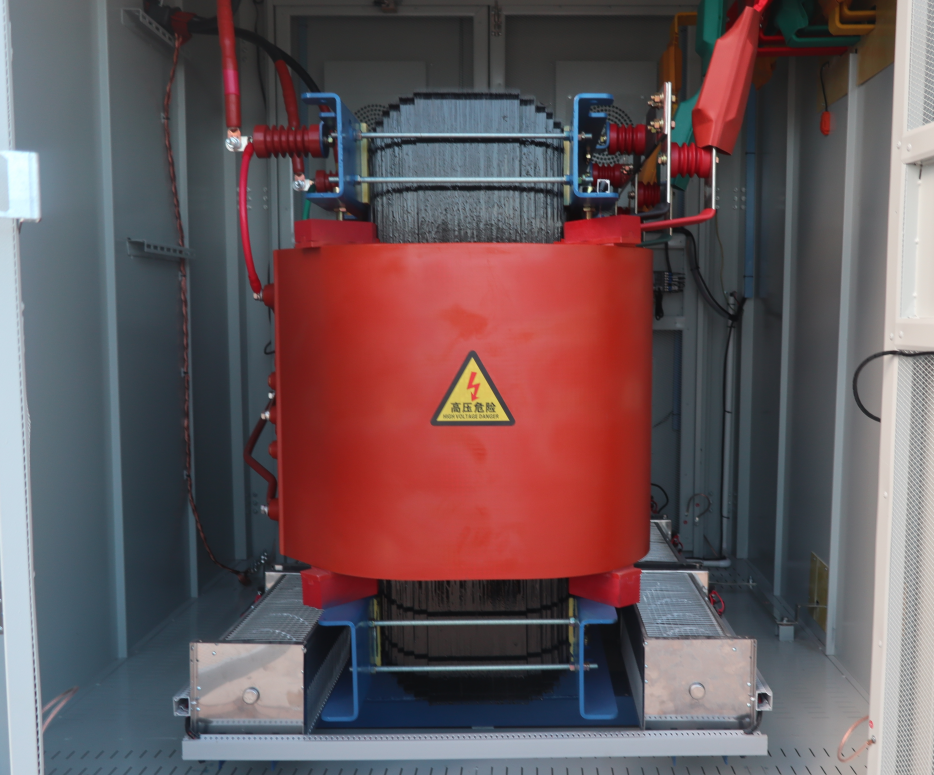
Walk into any data center, hospital wing, or industrial control room and you'll spot the same quiet workhorse: the dry-type transformer. Unlike their oil-filled cousins, these units need no catch basins, no leak monitoring, no special fire-rated vaults. That alone rewrites the layout playbook. Engineers can tuck them into mezzanines, place them next to switchgear, or hang them from ceilings without triggering a cascade of safety reviews. The absence of liquid insulation doesn't just simplify installation—it removes an entire category of catastrophic failure from the risk register. No oil to overheat, no coolant to test, no containment trays to inspect. In spaces where uptime is measured in decimal places, that kind of passive safety is hard to ignore.
But there's a subtler reason these units keep claiming prime real estate. Modern dry-type designs have closed the efficiency gap that once pushed engineers toward liquid-filled alternatives. Low-loss core materials and advanced winding techniques now let them run cooler under the same load, which means less energy wasted as heat and less strain on the surrounding HVAC. Pair that with cast-coil or vacuum-pressure impregnated insulation, and you get a transformer that shrugs off dust, moisture, and even mildly corrosive atmospheres—common realities in industrial settings. No gaskets to degrade, no nitrogen blankets to maintain, no oil sampling logs. Maintenance shrinks to a visual inspection, an infrared scan, and maybe a torque check on lugs. For facilities managers already stretched thin, that's not a nice-to-have; it's the difference between scheduled downtime and unplanned chaos.
Perhaps the most underappreciated driver is the regulatory tailwind. Fire codes, insurance underwriters, and corporate safety standards increasingly penalize flammable liquids inside occupied buildings. A dry-type unit sidesteps those battles before they start. No need for secondary containment, no special drainage plans, no hazmat inventory reports. That translates into faster permitting, lower insurance premiums, and fewer awkward conversations with the local fire marshal. Meanwhile, as power density climbs in critical rooms, the ability to place transformation right at the point of use—without a dedicated transformer vault—becomes a competitive advantage. The industry has noticed. What began as a compromise for small commercial jobs has become the default for mission-critical infrastructure, and the trend shows no sign of reversing.
Insulation Choices That Decide Whether Heat Stays Manageable
Most people assume insulation is just about thickness, but the real difference comes down to material behavior under real conditions. Fiberglass batts lose a surprising amount of effectiveness if they're compressed even slightly, while dense-packed cellulose tends to hold its R-value better in irregular cavities. Choosing the wrong type for a given wall assembly can turn a well-intentioned upgrade into a humidity trap that makes summer heat feel worse than before.
Reflective barriers, on the other hand, only earn their keep when there's an air gap facing the right direction. In a vented attic, a radiant barrier can cut ceiling heat gain noticeably, yet the same product installed directly against roof sheathing does almost nothing. The key is matching the insulation's strength to the specific heat path: conduction, radiation, or air leakage. Skip that step and you're paying for performance that never shows up on the thermostat.
Another overlooked factor is how insulation interacts with thermal mass. A high-mass wall with exterior rigid foam behaves very differently from a lightweight framed wall stuffed with the same R-value. The heavy wall stores heat and releases it slowly, which can be a blessing in dry climates and a curse in humid ones. Manageability isn't just about slowing heat transfer; it's about timing that transfer so the building doesn't fight its own cooling system.
Enclosure and Ventilation Pairings That Extend Real-World Uptime
A well-matched enclosure and ventilation setup does more than keep internal temperatures in check—it directly determines whether equipment survives dust, humidity, and thermal cycling. Pairing a gasketed IP54 enclosure with a low-restriction filtered fan, for example, draws in just enough ambient air to remove heat while the filter media blocks the fine particulates that slowly choke unprotected electronics. The real uptime gain comes from matching the fan's airflow curve to the enclosure's static pressure, not from oversizing the fan and hoping for the best.
For sites where ambient air is already hot or contaminated, open-loop ventilation often becomes a liability. Sealed enclosures paired with air-to-air heat exchangers or compact thermoelectric coolers maintain a closed thermal loop, so no outside air ever reaches the components. This pairing matters most in metalworking shops, wastewater plants, and outdoor telecom cabinets, where conductive dust and corrosive gases can cause creeping failures long before a thermal alarm triggers. Operators who treat the enclosure and cooling method as one system—not separate purchases—tend to replace fewer power supplies and I/O modules over a five-year span.
A practical way to extend uptime is to watch how a specific pairing behaves during seasonal shifts. A filtered fan that works perfectly in spring may allow condensation inside the enclosure when autumn humidity rises and night temperatures drop. Adding a thermostat-controlled heater or switching to a heat exchanger with internal air circulation keeps the dew point above the internal surface temperature. These adjustments often sound minor, but they prevent the intermittent faults that maintenance teams waste hours chasing. The most reliable installations are rarely the most complex—they are the ones where enclosure sealing, airflow path, and heat load were thought through together.
Cast Coil and VPI Compared Without the Sales Brochure
Putting cast coil and VPI side by side usually means wading through glossy claims. Strip those away and the actual differences come down to how each insulation system handles moisture, thermal cycling, and partial discharge. Cast coil locks the windings in solid epoxy, which gives high mechanical strength and excellent resistance to humidity—ideal for dusty or damp environments. VPI, by contrast, relies on a vacuum-and-pressure varnish or resin impregnation that fills voids but leaves a more flexible, less monolithic structure. That flexibility can be a real advantage where windings expand and contract with load swings, because the insulation moves with the copper instead of fighting it.
The trade-off appears most clearly in repair and lifecycle costs. A damaged cast coil section is typically non-repairable and must be replaced as a unit; epoxy does not forgive. VPI windings can often be re-impregnated or rewound locally, which keeps repair bills lower and downtime shorter. On the flip side, cast coil tends to run quieter and resists contaminants with almost no maintenance, while VPI requires cleaner operating conditions and more careful handling to avoid compromising the impregnated layers. Neither design is universally better—one rewards environments where moisture and dirt are the enemy, the other rewards operations where adaptability and long-term serviceability matter more than a sealed, set-and-forget build.
In practice, the decision often comes down to how the transformer will be treated over its life. If it will sit unattended in a humid or corrosive atmosphere, cast coil's sealed mass usually holds up better. If it will face frequent overloads, mechanical shocks, or a maintenance team that expects to repair rather than replace, VPI's forgiving nature usually pays off. What matters is matching the insulation's failure mode to the plant's reality, not the cover of a brochure.
Load Profiles That Make Standard Dry-Type Ratings Misleading
Many engineers still rely on nameplate kVA when specifying dry-type transformers, but that number quietly falls apart under certain load shapes. A transformer rated for continuous full-load operation may run hotter than expected when the load is pulsed or cyclical, because thermal time constants interact with peak currents in ways the standard rating does not capture.
Harmonic-rich loads are another common trap. Standard dry-type ratings assume a nearly sinusoidal current, yet modern facilities often feed drives, rectifiers, and LED lighting that inject substantial harmonic distortion. Those extra frequency components raise eddy-current and stray losses inside the winding and core, pushing temperatures above what the kVA figure suggests. The result is accelerated insulation aging even when the measured RMS current stays within the nameplate limit.
Fans and blowers provide a textbook case. A motor may draw 110% of rated current for thirty seconds, then drop to 40% for several minutes. The average load appears modest, but each surge drives hot-spot temperatures higher than a steady-state calculation would predict. Specifying a standard dry-type unit on average kVA alone can leave a facility with unexpected thermal trips, shortened service life, or the need for forced-air cooling that was never part of the original plan.
Thermal Checks That Predict Reliability Better Than Spec Sheets
Spec sheets give you thermal resistance values measured under pristine lab conditions, but real boards rarely behave that way. Solder voids, uneven clamping pressure, aging thermal interface material, and nearby heat sources all skew actual junction temperatures. Running a thermal check on a live assembly—whether with thermocouples or an infrared camera—exposes these hidden mismatches long before they show up as field failures.
A better approach is to load the device to its typical operating point and map the temperature gradient across critical components. Look for hot spots that don't align with the layout, or parts running hotter than their neighbors under identical load. These thermal signatures often point to poor die attach, delamination, or current crowding that no datasheet number will ever reveal. Repeated thermal cycling during the check can also highlight early solder fatigue by tracking how rapidly temperatures drift between cycles.
What makes thermal checks more predictive is that they capture the system's actual thermal impedance, not just the component's. You see how heat spreads through the board, how the enclosure affects airflow, and how transient loads cause temperature swings. This real-world data lets you catch degradation before it becomes a hard failure, giving you a reliability forecast that no static spec sheet can match.
FAQ
They eliminate the risk of liquid leaks and reduce fire hazards, which simplifies indoor installation and brings down long-term maintenance demands. Their solid insulation also handles humidity and dust better than many people expect.
Oil-filled units still edge ahead at very high voltages and sustained heavy loads, but dry-type designs have closed the gap significantly. Upkeep is often simpler because there's no oil to test or replace, and you avoid containment requirements.
Cast resin and vacuum pressure impregnated designs are among the most dependable. Cast resin suits harsh or humid environments, while VPI offers strong thermal performance and is a practical option for many industrial settings.
Focus on insulation class, temperature rise, impedance, and inrush current tolerance. Also check whether the enclosure suits the installation site and whether the unit can handle harmonic loads from modern electronics without overheating.
Yes, with the right enclosure rating such as NEMA 3R or 4X. Outdoor placement demands extra protection from rain, dust, and UV exposure, but this is fairly straightforward and doesn't compromise performance.
Underestimating harmonic distortion, skipping ventilation clearance, or ignoring periodic cleaning of cooling ducts can all shorten service life. Another frequent issue is installing a unit with the wrong temperature rise for the surrounding ambient conditions.
Calculate the total connected load, apply a demand factor, then add headroom for future growth and starting currents. It's better to run at 80–85% of rated capacity than to push a unit to its limit, which keeps winding temperatures lower.
In many cases yes, especially for medium-voltage distribution and general industrial loads. They excel where fire safety and environmental regulations are strict. For extremely high kVA ratings or continuous overload scenarios, an oil-filled design might still be the better tool, but dry-type covers most common industrial needs well.
Conclusion
Dry-type transformers keep showing up in critical power rooms for reasons that have less to do with marketing checklists than with how they handle real operating stress. The insulation system is the first differentiator. Epoxy cast coil designs tend to manage heat more evenly across the winding, while vacuum pressure impregnated (VPI) units rely on varnish penetration to seal out moisture and contaminants. Neither is universally better, but the choice should follow the room's ambient conditions and expected load profile, not the brochure's headline efficiency. Enclosure and ventilation pairing matters just as much. A well-sealed enclosure with inadequate airflow can trap heat and shorten insulation life faster than any overload. The most reliable installations treat the enclosure, fan placement, and filter maintenance as one continuous thermal path rather than separate accessories.
Load profiles often make standard dry-type ratings misleading. A transformer rated for a linear, balanced load can run dangerously hot when harmonics or heavy single-phase loads are present, because extra eddy-current losses do not show up on the nameplate. Before selecting a unit, it pays to map actual demand peaks, crest factor, and harmonic content instead of trusting kVA alone. Thermal checks provide a more honest picture than spec sheets. Infrared scanning under normal operating load reveals local hotspots at terminations, core edges, or winding surfaces that laboratory tests never capture. Cast coil and VPI constructions respond differently to thermal cycling, so a unit that passes factory heat-run may still develop insulation stress over years of intermittent overload. For reliable power distribution, the best option is not the one with the highest efficiency number, but the one whose insulation, enclosure, and thermal behavior have been validated against the specific load profile it will face.
Contact Us
Contact Person: Tonglun Chen
Email: [email protected]
Tel/WhatsApp: 8618906642555
Website: https://www.cncsele.com