
Autonomous Handling: Top Approaches for Smarter Logistics
2026-10-28
Every minute a pallet sits idle, your bottom line feels it. Autonomous handling isn't just about replacing drivers—it's about rethinking flow. From dynamic route planning to AI-driven forklifts, the smartest logistics operations are adopting a mix of tools. And industry leaders like HANGCHA are proving that autonomy doesn't mean losing human insight. Here's what you need to know before the next wave hits.
Robots That Map Their Own Paths Through the Warehouse
Instead of following painted lines or fixed magnetic tape, these robots build a live mental model of the aisles, racks, and unexpected obstacles. Each unit carries a compact LiDAR unit paired with an inertial measurement sensor, sweeping its surroundings dozens of times per second. As soon as a pallet is dropped in the middle of a lane or a forklift blocks a corner, the robot recalculates a new route on the spot—no waiting for a central server to issue instructions.
What makes the approach stand out is how it handles gradual changes over a shift. The map isn't a one-time snapshot; it fades old readings and reinforces fresh ones, so the robot naturally adapts to a rearranged staging area or a half-built order. This lets a small fleet spread out without deadlock, since each machine avoids areas that others are actively updating, all while keeping its own path concise enough for tight turns between high shelves.
Vision-Guided Arms That Pick Without a Script
Traditional robotic arms follow fixed waypoints, blind to the mess in front of them. Vision-guided systems flip that logic: the arm watches the bin, reads the jumble of shapes, and chooses its own next move. There is no scripted path, no exact teach point for every possible orientation. The camera feeds the arm a live understanding of depth, edges, and surface angles, letting it reach for a part that may have shifted, tipped, or tangled itself in a pile.
The real test comes with parts that arrive oily, reflective, or loosely stacked. A glossy surface can look like an edge, a shadow like a gap. Good vision guidance has to sort those signals apart, adjust suction or grip pressure when a part is slightly off-center, and recover quickly after a missed pick. That kind of resilience usually comes from blending 2D and 3D data, not from a single photo or a hard-coded assumption about what the object should look like.
The biggest change shows up when a production line switches from one product to another without hours of reprogramming. An operator can place an unfamiliar sample under the camera, let the arm map its geometry, and watch it start handling the new shape within minutes. Failures still happen, but the system stores each miss and adjusts its strategy, gradually learning the rough, unpredictable conditions that no fixed script can cover.
Cobots That Share the Dock With Human Crews
On a busy loading dock, cobots now roll alongside forklift drivers and pallet handlers without safety cages or yellow tape separating them. They read body language, slow down when someone steps into their path, and hand off crates at chest height instead of forcing workers to bend or stretch.
The shift isn't about replacing people but absorbing the repetitive strain. A cobot can hold a 40-pound box steady while a human wraps it, or wheel a cart of returns to the right bay while the crew handles exceptions. Supervisors still make the calls; the machines just shorten the distance between decision and action.
What surprises many operators is how quickly the dock feels normal again. The machines beep softly, yield at blind corners, and even pause during shift huddles. In practice, they become less like robots and more like quiet, tireless teammates who never complain about the late truck.
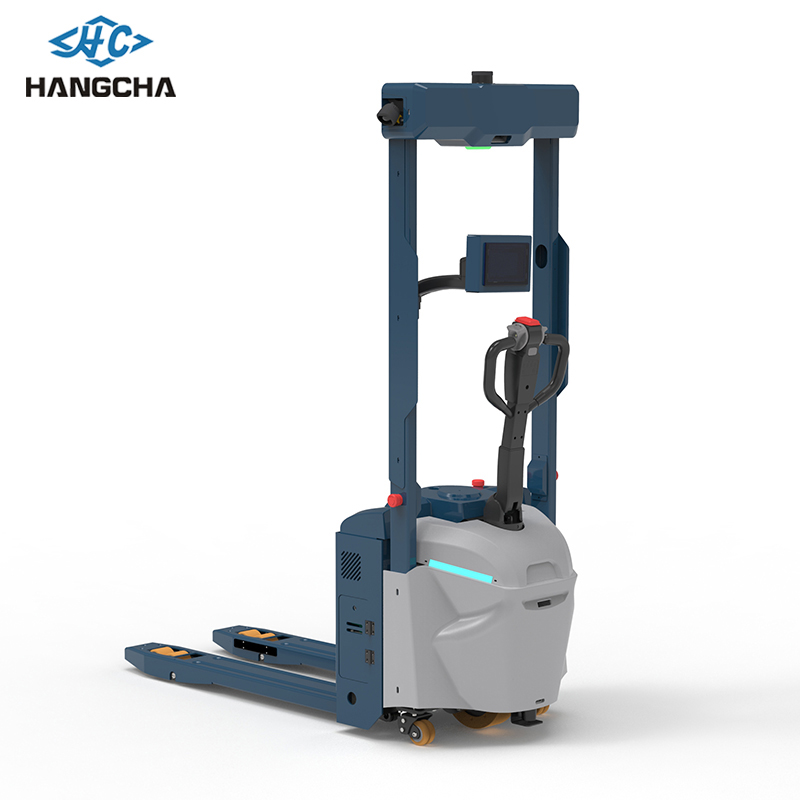
Autonomous Forklifts That Learn From Every Load
Each pallet picked up, every tight corner navigated, and the subtle shift of a load's weight feeds directly back into the forklift's control system. Rather than relying on a fixed set of pre-programmed paths, these machines continuously refine their own movement algorithms. A slightly off-center load on Tuesday informs how the forks adjust their grip on Thursday. Over weeks, the forklift develops an intuitive sense for balance, acceleration, and braking that no static instruction manual could capture.
What makes this learning loop truly practical is its ability to handle the messy, unpredictable reality of a busy warehouse. Floors develop cracks, pallets arrive with inconsistent dimensions, and lighting changes from morning to afternoon. The forklift treats every one of these variables as a data point, not an error. After hundreds of lifts, it can anticipate how a particular weight distribution will shift during a turn, adjusting its speed before a human operator would even notice the imbalance.
The result is a fleet that grows safer and more efficient without requiring constant software updates or manual retraining. Operators can step in for unusual tasks, but the day-to-day movement of goods becomes almost self-managing. This approach quietly redefines what industrial automation means: not replacing human judgment, but building a machine intuition that compounds with every single load it carries.
Digital Twins Test Material Flow Before It Happens
A digital twin gives operations teams a live, virtual sandbox for material flow long before a single conveyor starts moving. Instead of relying on spreadsheets or waiting for physical installations, the model mirrors every route, intersection, and buffer zone in the facility. Planners can inject real order profiles, shift patterns, and equipment speeds, then watch where congestion builds or where a lane stays idle for hours. The result is a much sharper picture of how goods will actually move through the space, not just how they should move on paper.
This approach shifts the conversation from post-launch troubleshooting to pre-launch experimentation. You can deliberately stress the system, maybe by routing a sudden spike in demand through one dock or disabling a picking station, and see the ripple effects in minutes. Because the digital twin runs on the same logic as the real control systems, the feedback isn't theoretical. It reveals whether a proposed shortcut will create a traffic jam at a merge point or whether a reserve area can absorb a surge without starving the downstream stations.
What makes this practical is the speed of iteration. A change that would take days to test physically, if it could be tested at all, becomes a simple parameter adjustment. Layouts, batch sizes, AGV paths, and replenishment triggers can all be swapped in and out. Teams often discover that a minor tweak in staging logic removes a recurring bottleneck that no amount of extra labor could fix. By the time the physical system is commissioned, the material flow has already been through dozens of realistic cycles, so the first real shift runs closer to plan than traditional ramp-ups ever could.
Onboard AI That Adjusts Routes in Real Time
Most navigation systems wait for traffic to build before suggesting an alternative. This one watches how you actually drive—your tolerance for tight streets, your preference for highway exits, the time of day you usually leave—and uses that to shape every reroute. It won't send you through a shortcut that shaves two minutes but adds three stressful turns.
When a crash closes two lanes ahead, the onboard unit doesn't just beep and show a red line. It quietly recalculates using live feeds from nearby vehicles and weather sensors, then proposes a detour that fits your habits. The route change arrives with a short reason: "Faster via A8, but you'll hit the school zone." Over time, it learns that you prefer predictable arrival over marginal time savings.
FAQ
It refers to using robots, automated guided vehicles, and intelligent software to move, sort, and manage goods with minimal human intervention, cutting delays and errors in warehouses and distribution centers.
We're seeing a mix of LIDAR-based navigation, machine vision, collaborative robotic arms, and fleet management software that lets different machines coordinate in real time.
AMRs navigate dynamically around obstacles instead of following fixed routes, so they adapt to changing layouts and rush periods, often boosting pick rates by double digits.
Yes, retrofit kits and vision-based systems can upgrade standard pallet jacks or conveyor lines, letting facilities phase in autonomy without a full overhaul.
Continuous data from sensors feeds into machine learning models that predict traffic bottlenecks, optimize storage slots, and schedule maintenance before breakdowns happen.
Scalable robot-as-a-service models and modular mobile robots lower the entry barrier, so smaller operations can start with a few units and expand as volume grows.
Modern systems use computer vision to identify anomalies and either reroute around obstacles or flag items for human review, so exceptions don't stop the whole line.
Upfront integration costs, legacy software compatibility, and workforce retraining are common hurdles, but many operations find payback within two years through labor efficiency and fewer errors.
Conclusion
Warehouse floors are no longer static grids of fixed conveyors and scripted pick stations. Not long ago, that kind of flexibility would have demanded a full engineering overhaul. Robots now build their own maps on the fly, learning narrow aisles and shifting pallet stacks without waiting for a programmer to redraw the layout. Vision-guided arms handle the messy part of order fulfillment—grasping items they’ve never seen from mixed bins—while cobots roll alongside human crews on the dock, reading body language and slowing down when someone steps into their path. It’s less about replacing people and more about removing the drudgery that slows a shift down.
The harder work happens before and during the move. Digital twins let managers simulate a new material flow, test peak-season surges, or reconfigure staging areas without touching a single rack. Once operations start, onboard AI re-routes autonomous forklifts and mobile robots around congestion, blocked lanes, or a sudden spill. Those forklifts also get sharper with every load, adjusting lift speeds and travel paths based on past runs. Taken together, these approaches turn material handling from a fixed-cost chore into a system that adapts, predicts, and trims wasted motion in ways a clipboard and stopwatch never could.
Contact Us
Contact Person: Liuxue
Email: [email protected]
Tel/WhatsApp: +86-19084200370
Website: https://www.hf-ec.com/